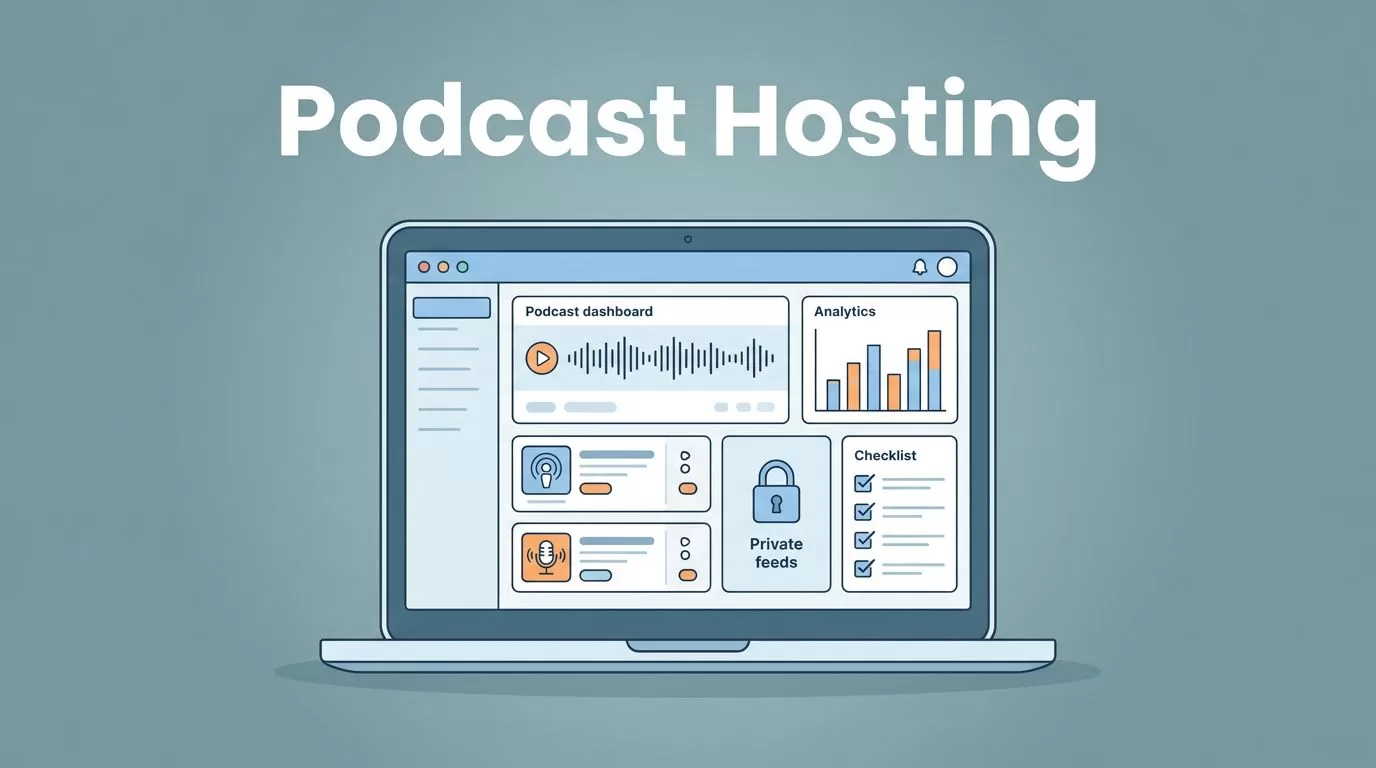
Picking podcast hosting looks simple until the limits, analytics, and team needs show up. I want a host that works for one show today and still makes sense if I add more later. That is why Transistor.fm keeps landing on my shortlist.
I do not choose a host for storage alone. I choose it for control, data, and how much friction it removes from publishing. If I can run multiple shows, manage private feeds, and keep my branding clean, I pay attention.
The criteria I use before I pick a host
Before I commit, I check the same core items every time. The order matters, because a shiny feature means little if the basics feel weak.
| What I check | Why it matters |
|---|---|
| Analytics | I need to know which episodes hold attention and which apps people use. |
| Private podcasts | This opens training, client, and membership use cases. |
| Multiple shows | One account should grow with me instead of trapping me in one feed. |
| Website and player options | A built-in site and player save setup time. |
| Team access | Uploads, edits, and approvals need to move without chaos. |
When I want a deeper read on listener behavior, I compare what the host gives me with my podcast analytics breakdown. If I need paid or internal audio, I also look at private podcast features before I decide.
I buy podcast hosting for control first, then for convenience.
That mindset keeps me from paying for features I will never use. It also keeps me focused on what matters once the show starts growing.
What Transistor.fm does well for real shows

Transistor makes a strong case because it packages the boring parts neatly. I can host unlimited podcasts on one account, and that matters if I run a network, agency, or branded content mix. I also get unlimited team members, which is more useful than it sounds. One person can publish, another can review, and nobody has to share a single login.
The analytics side is one of the biggest draws. I get episode-level data, app trends, and subscriber insights, so I can see what people actually hear. For a show that supports a business, that information is worth more than a fancy theme.
I also like the website side. If I want a show page that feels polished without stitching together extra tools, the podcast website builder is part of the appeal. Distribution is covered too, with RSS feeds and publishing paths that work across the major listening apps. On higher plans, Transistor adds dynamic ads and auto-posting to YouTube, which helps if I want one episode to do more work.
Support matters as well. Live customer support is included across plans, and that makes the platform feel like a business tool instead of a hobby box. API access is also included, so I can connect podcast data to other tools in my stack.
Here is the plan structure I would use as of April 2026, with the note that pricing can change.
| Plan | Current price | Best fit |
|---|---|---|
| Starter | $19/month | One show, smaller audiences, early testing |
| Professional | $49/month | Most business podcasts, dynamic ads, more room to grow |
| Business | $99/month | Networks, agencies, branded podcast work |
| Enterprise | $199+/month | Higher volume, custom needs, large teams |
Starter includes 20,000 downloads per month and 50 private subscribers. Professional moves to 100,000 downloads and 500 private subscribers. Business raises that to 250,000 downloads and 3,000 private subscribers, and it removes branding. Yearly billing lowers the effective monthly cost because Transistor gives 12 months for the price of 10.
If I only needed a single casual show, I might not need all of that. For a business podcast, though, the package starts to look practical.
How I compare it with other podcast hosting choices
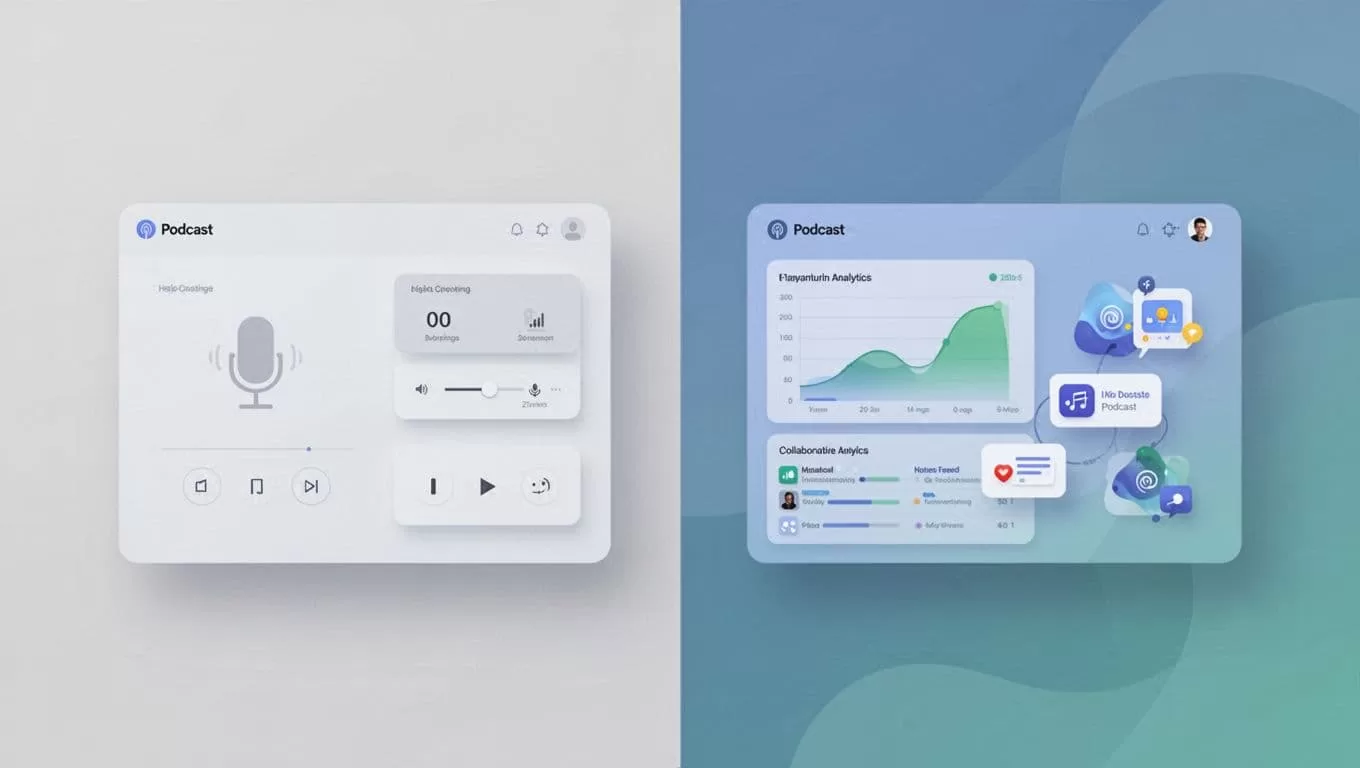
I do not treat Transistor as the only decent host. Instead, I compare it with the broader market and ask what I am really paying for. For a wider view, I use a current podcast hosting roundup and a recent Transistor review to sanity-check my own shortlist.
The choice gets clearer when I match the host to the job. If I need the cheapest possible setup, I look elsewhere. If I only have one hobby show, a leaner platform may be enough. However, if I run multiple shows, want private feeds, or need a clean handoff for a team, Transistor starts to feel like the safer base.
That is also why I care about distribution and branding together. A podcast can sound great and still feel hard to manage. With Transistor, I get the feed, the site, the player, and the analytics in one place. That saves time every week, which is often the real cost of podcast hosting.
If I am starting from zero, I also keep my how to start a podcast guide nearby. Good hosting matters more when the launch is simple and the workflow stays clean.
Transistor.fm fits best when I want a business-ready host with room to grow. It is strongest for multiple shows, private podcasting, strong analytics, and team use. It is less attractive if I only care about the lowest price.
That is the tradeoff I keep coming back to. I do not want a host that just stores audio. I want one that helps the show stay organized, measurable, and easy to run.