You likely spend hours every week on the same repetitive tasks within your advertising platforms. Adjusting bids, rotating creative assets, or checking performance reports are necessary, but these chores pull your attention away from high-level strategy. Most marketers feel trapped by this operational grind, leaving little time for genuine growth initiatives.
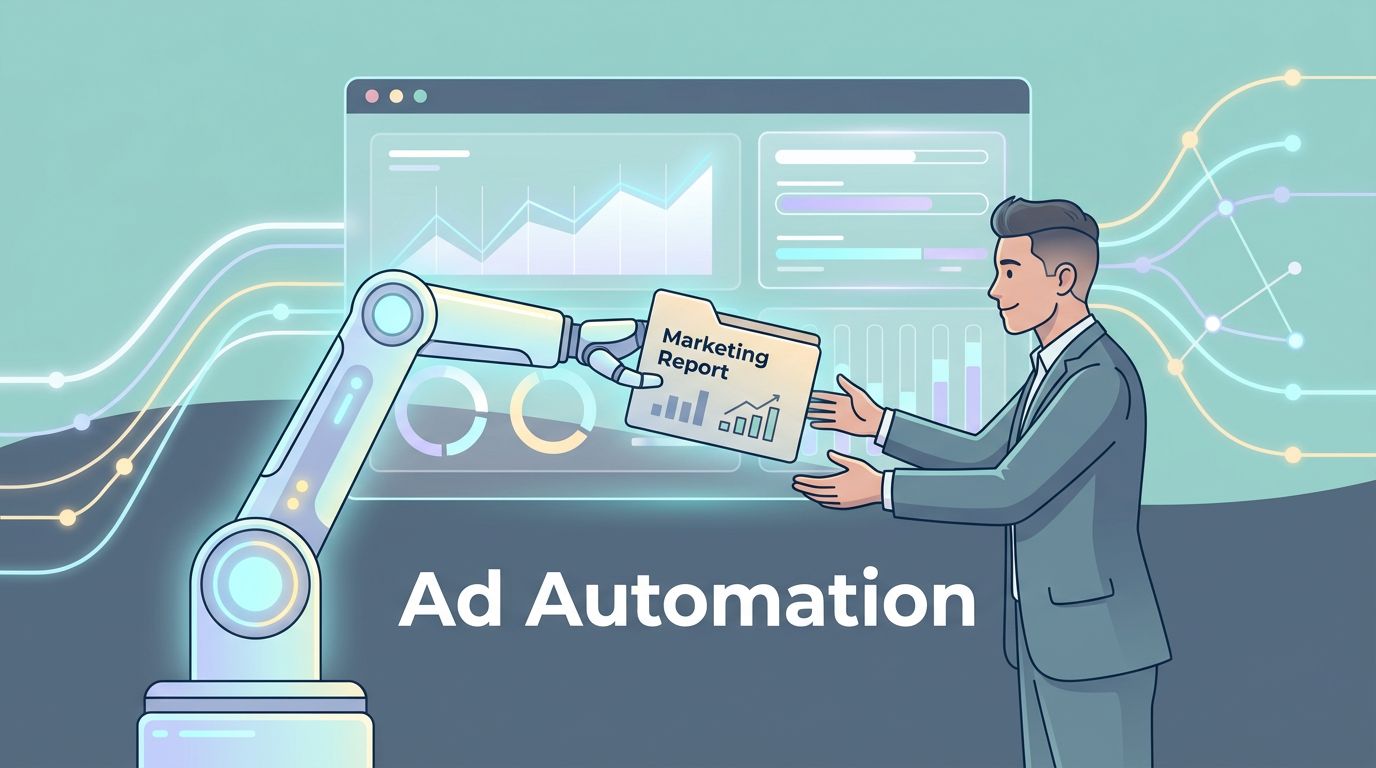
Instead of accepting these manual burdens as part of the job, you can use ad campaign automation to reclaim your schedule. Platforms like Twin.so allow you to build autonomous agents that execute these tedious workflows for you. By shifting from manual execution to oversight, you transform your daily routine into a more productive experience.
The shift toward autonomous agents means you stop being a human clicker and start becoming a campaign architect. When your technical stack handles the repetition, you gain the clarity needed to scale your efforts effectively.
How Twin.so Changes Ad Management
Twin.so functions by letting you create digital employees that operate within your existing toolset. You describe a process in plain language, and the system deploys an agent to perform that task around the clock. Unlike traditional software that simply triggers alerts or suggests changes, these agents actually log into your accounts and take action.

This approach replaces the need for complex coding or rigid rule-based setups. If you have a process for updating audience lists or monitoring spend thresholds, an agent can follow those steps whenever conditions are met. Because these agents operate 24/7, your campaigns stay optimized even while you are asleep or focused on other projects.
Understanding the benefits of these automated digital advertising workflows is the first step toward reclaiming your time. You are not just setting rules; you are delegating operational tasks to a system that remains vigilant. This consistency often yields better results than manual management, which is prone to human error and delays.
Streamlining Your Daily Ad Workflows
Operational efficiency is the primary goal of any robust automation strategy. You can start by offloading routine tasks that require logging into multiple dashboards. For example, an agent can monitor performance across platforms, pull the necessary data, and update your internal spreadsheets or databases without your intervention.
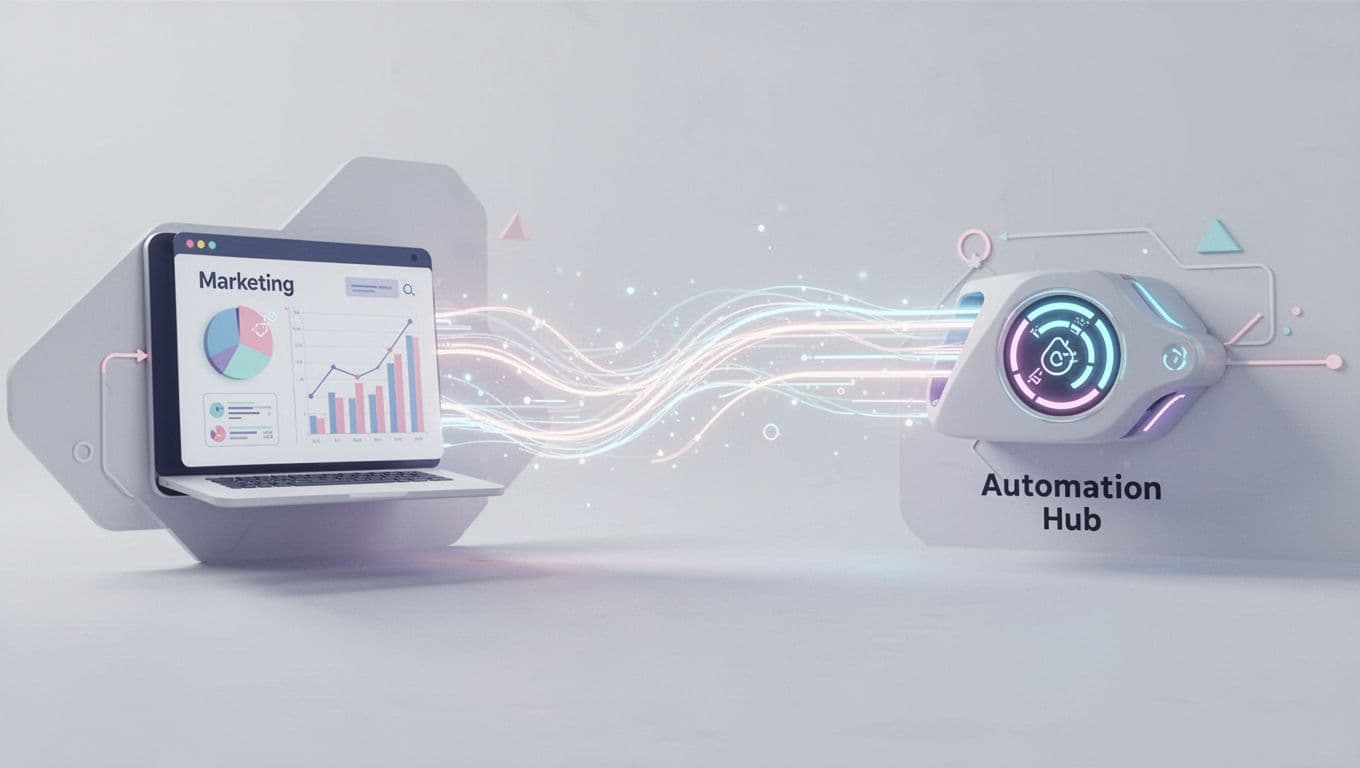
When you standardize your processes, you minimize the risk of missing performance spikes or budget overruns. You can design agents to watch for specific fatigue signals in your creative assets and trigger a rotation when engagement dips. If you want to dive deeper into how marketing automation workflows for ad campaigns function, you can review structured sequences that reduce manual time by significant margins.
| Task Category | Manual Action | Automated Action |
|---|---|---|
| Bid Management | Adjusting bids based on performance | Agent updates bids based on set goals |
| Audience Updates | Exporting and uploading lists | Agent syncs lists from your CRM |
| Creative Rotation | Manually swapping assets | Agent rotates ads when fatigue hits |
| Reporting | Compiling data in spreadsheets | Agent posts live updates to Slack |
Once these flows are in place, the data moves automatically. You no longer have to manually move information between your CRM and your ad manager. This ensures your systems stay perfectly synced, which is vital for maintaining accurate tracking and attribution.
Building a Scalable Marketing Stack
Growth teams often struggle with the limitations of their own capacity. When you hit a ceiling because you cannot manage more campaigns without hiring more staff, automation becomes a necessity. It is not just about saving time; it is about scaling your output without linear increases in headcount or fatigue.
If you are looking for best AI tools for business growth, consider how agent-based systems complement your existing software. They bridge the gaps between disconnected platforms, allowing your tools to work together as a cohesive unit. This integration allows you to focus on testing new strategies while the system manages the maintenance of your existing ones.
Many marketers also rely on automated social selling for sales teams to extend their reach beyond paid media. By combining paid ad management with organic social automation, you create a unified growth engine. The key is to start small by automating one time-intensive task, proving the results, and then expanding that logic across your entire marketing department.
Maintaining Control Over Automated Systems
Delegating tasks to agents does not mean you lose oversight. The most effective users of automation keep a clear feedback loop in place. You still decide on the strategic direction, such as which markets to enter or which creative themes to test. The automation handles the tactical execution of those decisions.
You should regularly review the activity logs of your agents to ensure they align with your current objectives. Because these agents operate on your behalf, they essentially act as a reflection of your instructions. If your goals shift, you simply update the instructions you provided to the agent. This agility is one of the main advantages of using modern tools that understand plain language commands.
If you ever feel overwhelmed by the setup process, look into how to implement social selling tools or similar frameworks to guide your initial configuration. Most platforms offer templates or existing agent profiles that you can adapt to your specific needs. Start with a single, well-defined task before you attempt to automate complex, multi-stage processes across your account.
Measuring Performance and Impact
Automation provides a clear benefit in terms of performance consistency. When you remove the variability of manual timing, you often see improved ROAS and lower acquisition costs. According to recent research on marketing automation with AI for ad campaigns, companies that adopt these intelligent systems frequently see significant efficiency gains within just two months.
You can quantify this impact by tracking the time spent on manual management before and after deployment. Look for trends in your performance metrics, such as how quickly you react to budget changes or audience data. When the system handles the heavy lifting, your KPIs often improve because the machine reacts faster and more objectively than a tired human analyst.
Remember that the ultimate goal is to generate more value from your campaigns while you focus on the creative side of your business. Your software should support this transition rather than creating more work for you. If a task feels too complex for an agent, break it into smaller steps. Most successful automations start as simple, repetitive actions that grow more sophisticated as you gain confidence in the system.
Maximizing Your Results
You now possess the capability to change how your marketing team functions. By treating operational tasks as things to be delegated to agents rather than managed by hand, you move toward a model of constant, automated optimization. This is how you stay competitive in a market that rewards speed and data-driven decisions.
Start by identifying the one task that drains your energy every week. Describe the steps required to complete that task clearly and concisely. Once you have a working agent, monitor its performance for a few days to verify it matches your expectations. You will likely find that this first successful automation provides the momentum needed to tackle larger challenges.
Growth is rarely a straight line, but with the right systems in place, it becomes much easier to maintain your pace. Focus on building systems that serve your strategy. When your ad campaigns manage themselves, your capacity for innovation grows. You can then direct your energy toward higher-impact decisions that drive your business forward.