Automating Your Hunt for Local Business Leads with Twin.so
Finding qualified local business leads often feels like a slow, manual grind. You might spend hours scouring maps, directories, and company websites just to build a list of prospects that might not even be interested. Most sales and growth...
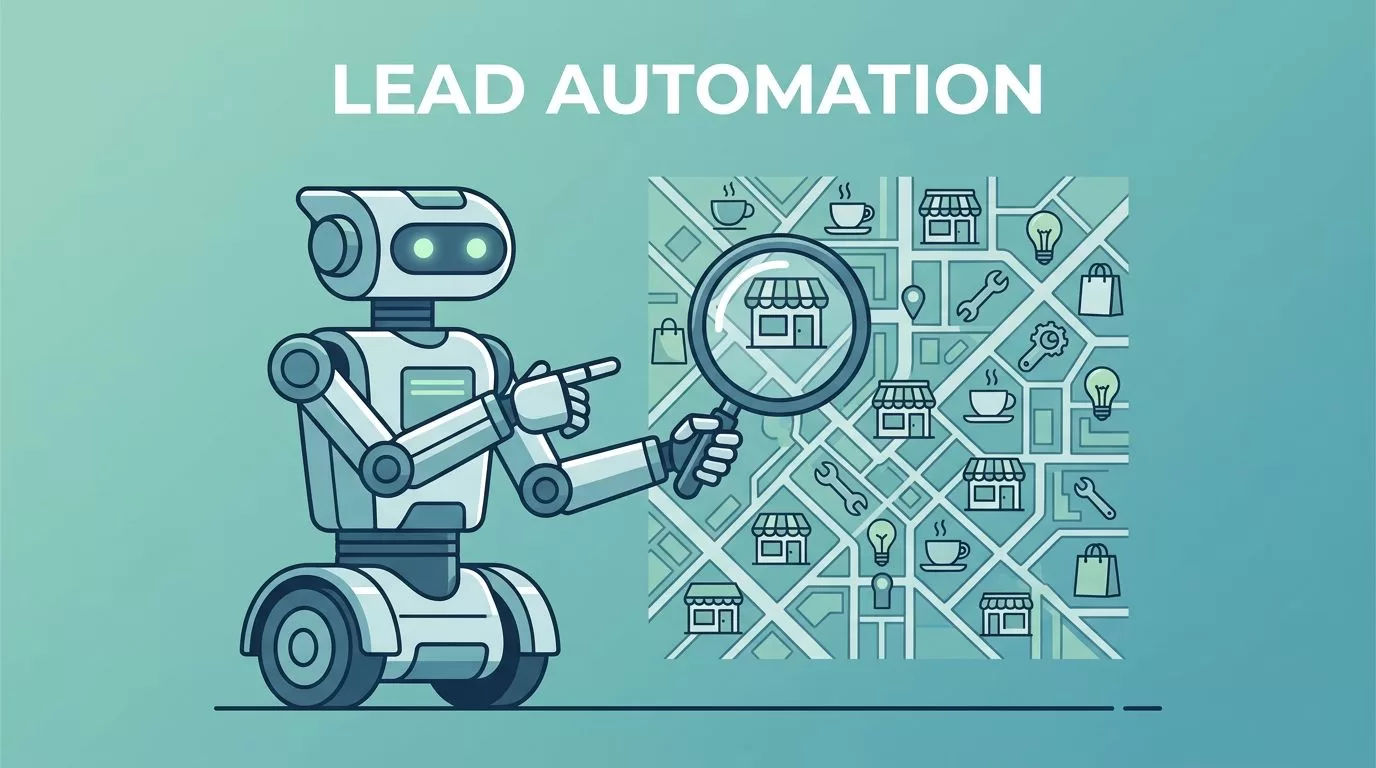
Finding qualified local business leads often feels like a slow, manual grind. You might spend hours scouring maps, directories, and company websites just to build a list of prospects that might not even be interested. Most sales and growth teams waste too much time on this repetitive research. When you switch to automation, you stop the busywork and start closing deals.
Twin.so offers a way to build AI agents that handle this research for you. These agents browse the web just like a human would, but they work around the clock without getting tired. By setting up these digital assistants, you can transform your prospecting from a manual chore into an automated pipeline.

Defining Your Target Audience First
Automation is only as good as the instructions you give it. Before you set an AI agent loose on the web, you need a clear profile of your ideal client. Think about the specific industries, geographies, and company sizes that actually convert for your business. If you target everyone, you end up with a list of unqualified noise.
Focus your filters on specific signals that indicate a need for your service. For example, if you offer SEO services, look for businesses with low review counts or outdated website designs. These are immediate indicators of a potential pain point. Once you define these criteria, you can translate them into simple, plain-English instructions for your AI agent.
If you are new to the basics of data-driven outreach, scaling local B2B lead generation provides a solid foundation for defining your ideal customer profile. You want to ensure your setup targets high-intent companies, not just any business in a directory.
Setting Up Your AI Prospecting Agent
Once you know who you are looking for, you can create a custom agent in Twin.so. The platform allows you to describe your goal in natural language. Instead of writing complex code, you tell the agent which websites to visit and what information to extract. You might ask it to scan local maps or niche directories for businesses in a certain area that match your service categories.
The agent will visit these sites, click through to business profiles, and pull key data points like contact names, email addresses, phone numbers, and website links. It mimics your own research process but operates at a speed no human can match. After it gathers this raw data, it can also perform basic validation checks to ensure the information is accurate.
Properly evaluating lead generation software for teams helps you understand which data points matter most for your specific outbound strategy. You should focus on capturing structured output that you can easily plug into your CRM or email platform later.
Filtering for Quality and Buying Signals
High-volume lists are useless if the contacts are bad. When using automated tools, prioritize quality over the sheer number of leads. You can configure your agent to apply strict filtering rules during the search process. For instance, instruct the agent to skip any business that does not have an active website or a certain minimum star rating on public review platforms.
This step effectively acts as your first pass of qualification. By filtering at the source, you ensure that your sales team only interacts with companies that show real potential. Some teams even set up agents to pull secondary data like recent social media activity to gauge if a business is currently growing or hiring.
For those looking to understand how local B2B lead generation works at a practical level, many experts now use Google Maps to find verified, active listings. You can direct your Twin.so agent to specific regions and categories to ensure your list stays relevant to your service area.
Integrating Data Into Your Sales Workflow
An agent that just saves lists to a CSV file is helpful, but one that pushes data directly into your sales stack is a massive time-saver. Twin.so integrates with thousands of tools, including your CRM. You can configure your agent to automatically update a record in Salesforce or HubSpot whenever it finds a new, qualified lead.
This creates a self-sustaining loop. Your agents find the leads, enrich the data, and drop them into your pipeline. Your only job becomes the final human touch: crafting the personalized outreach that secures the meeting. This level of automation keeps your sales prospecting tools running with minimal manual maintenance.
Remember to keep an eye on your bounce rates as you grow your lead volume. Maintaining email list hygiene for sales is vital. If your automated list building starts yielding too many invalid addresses, adjust your agent’s scraping parameters to include a secondary validation step through an email verification tool.
Refining and Scaling Your Outreach
As you deploy your agents, treat the process as an experiment. Start with a small geographic area and a narrow business category to verify your results. Once the agent proves it can pull high-quality leads, you can expand its reach to new regions or different industries. Monitoring the performance of these agents allows you to tweak their instructions based on which leads actually respond to your outreach.
If a particular industry consistently fails to convert, tell the agent to ignore that category in the future. If a specific region is yielding higher-than-average engagement, double down by increasing the scope of your agent’s search there. This iterative approach allows you to build a sophisticated, high-performance lead engine that evolves alongside your business.
Ultimately, the goal is to spend your time closing, not searching. By automating the discovery of your next potential client, you give your team the time and space to focus on high-value conversations. Your automated agents act as a force multiplier, turning a labor-intensive process into a predictable, scalable source of growth.
Final Thoughts
The key to success with automated lead generation is starting with specific, well-defined parameters. When you provide clear instructions, your agents consistently find high-quality prospects that match your target audience. You reduce the time spent on manual research while keeping your pipeline full of relevant opportunities.
Focus on creating a system where the data flows directly into your sales tools without extra steps. This keeps your team efficient and allows them to concentrate on meaningful outreach. As you refine your search criteria, your outbound performance will naturally improve. Start by building your first agent today and watch how it transforms your approach to finding new business.
