Better Social Media Prompts for Someli
Generic social posts come back flat when the prompt is flat. If you ask for “a caption about our product,” the model has to guess the audience, the angle, the tone, and the CTA. On Someli, better prompts work like a brief, not a...
Generic social posts come back flat when the prompt is flat. If you ask for “a caption about our product,” the model has to guess the audience, the angle, the tone, and the CTA.
On Someli, better prompts work like a brief, not a brainstorm. You define the outcome, the reader, the format, and the guardrails. The model returns usable copy instead of mush.
The fix is simple. Give it more structure, fewer assumptions, and a clear job to do.
Key Takeaways
- Generic prompts leave too many blanks, so the output drifts.
- Audience, platform, voice, and goal should be inside every prompt.
- Hooks, CTAs, and repurposed versions need separate instructions.
- Prompt formulas save time and make results easier to compare.
- A review loop beats a one-shot request every time.
Why Generic ChatGPT Prompts Fall Flat
A vague prompt is not a strategy. It is a guess.
When the prompt says “write a social post,” the model fills in the missing pieces with average assumptions. That can work for a rough draft. It does not work when you need the post to speak to a specific buyer, match a brand voice, or push a clear action.
A better prompt removes the guessing. It says who the post is for, where it will live, what it should achieve, and how the final output should look.
Here is the difference in practice.
| Prompt part | Generic prompt | Better Someli prompt |
|---|---|---|
| Audience | Write about our service | Write for busy small business owners |
| Format | Make a social post | Make three LinkedIn hooks and one caption |
| Voice | Keep it engaging | Keep it plain, direct, and confident |
| Goal | Promote our offer | Drive trial signups with one CTA |
If you want a wider set of examples, this roundup of ChatGPT prompts for social media marketing in 2026 shows the same pattern. Stronger inputs lead to more useful drafts.
If the model has to guess the audience, it will guess wrong more often than not.

The Prompt Structure Someli Needs
Treat every prompt like a short creative brief. You do not need long instructions. You need the right ones.
1. Start with the audience and the problem
Say exactly who you are writing for. Then name the pain point.
“Founders who are comparing project management tools” is better than “business people.” “Creators who need more saves on Instagram” is better than “social media users.”
That small change gives the model a target. It also gives you better hooks, because the output starts from a real need.
2. Lock the platform and format
Social media prompts should never stop at the topic. A LinkedIn post, an Instagram caption, a TikTok script, and a carousel each need a different shape.
Name the format in the prompt. Ask for the length too. If you want a hook first, say so. If you want line breaks, say so. If you want a thread, say how many posts it should include.
3. Define the voice and the boundaries
Voice is where generic outputs get sloppy. If you skip it, the model often adds fluff, filler, or fake enthusiasm.
Use 3 to 5 clear traits. Try “plainspoken, confident, helpful, no hype, no slang.” Then add hard limits. For example, “No emojis. No buzzwords. No fake urgency.”
That is enough. You do not need a brand manifesto inside the prompt.
4. Tell it what to return
Do not ask for “ideas” if you need final copy. Ask for exactly what you want back.
Request the number of options, the structure of the response, and the decision rule. If you want the best option first, say that. If you want variants grouped by angle, say that too.
Reusable Prompt Formulas for Social Media
Use the same logic every time. Change the variables, not the structure. That is how you move faster without losing control.
- Caption prompt
“Write 3 Instagram captions for [audience] about [topic]. Use a [brand voice] tone. Open with a sharp hook. Include one concrete benefit and one CTA to [action]. Keep each under 90 words.” - Hook prompt
“Give me 10 opening lines for a LinkedIn post about [topic]. Make 3 curious, 3 direct, 2 contrarian, and 2 proof-based. Keep the language plain. Avoid clickbait.” - CTA prompt
“Write 5 CTA options for [goal]. Make one soft, one direct, one urgent, one question-based, and one proof-based. Keep them short and specific.” - Repurposing prompt
“Turn this blog post into one LinkedIn post, one X post, one Instagram caption, and one short email teaser. Keep the core message the same. Adjust the tone and length for each platform.”
For campaign work, ask for a sequence, not a single post. A launch week, a lead-up series, or a three-post objection-handling run gives you more usable content than one isolated caption.
If you want better campaigns, ask for content by stage. Example: awareness post, trust post, proof post, CTA post. That gives Someli a job it can actually do.

Turn Prompts Into a Social Workflow
One good prompt is useful. A repeatable workflow is better.
Start with one strategic brief. Then ask for multiple angles, not multiple random posts. That lets you compare hooks, CTAs, and tones side by side. It also makes review easier, because you are judging options against the same goal.
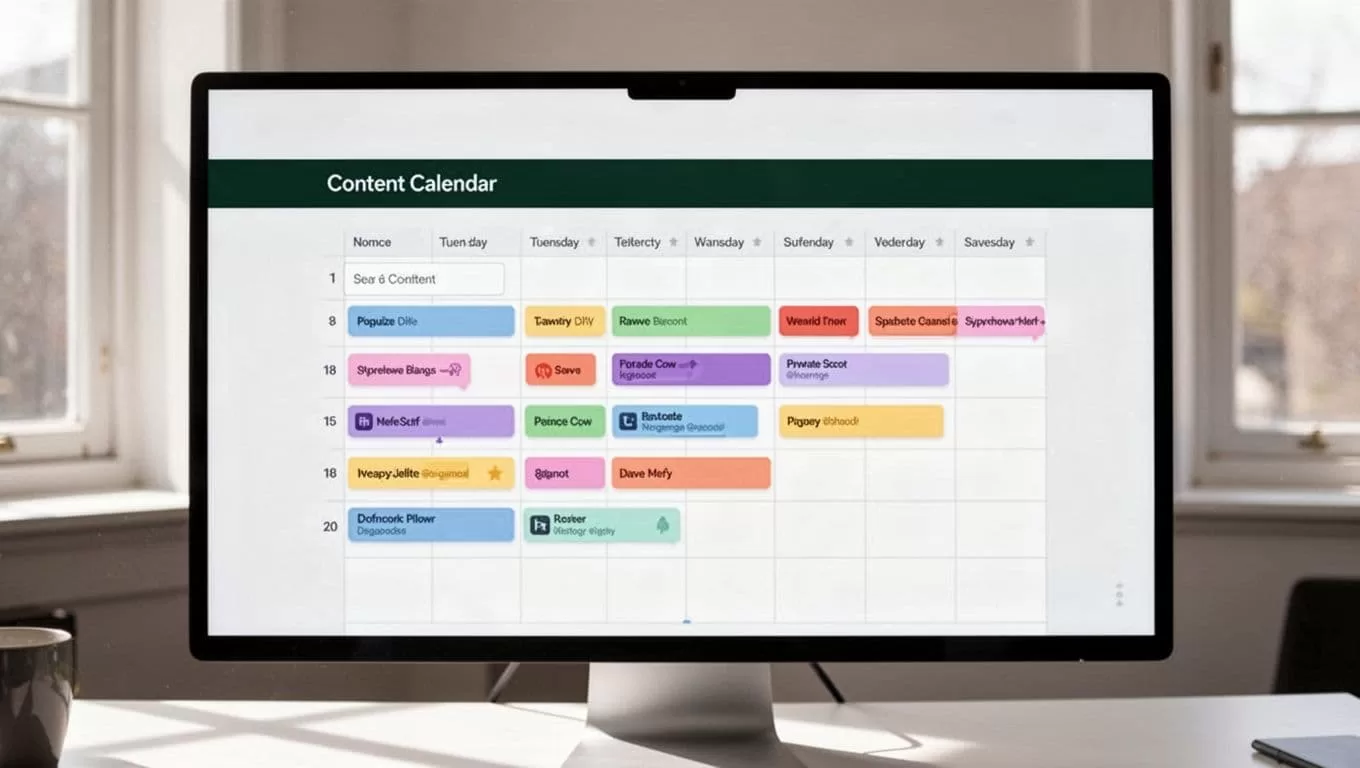
Next, build your content calendar from the strongest outputs. Group posts by funnel stage or campaign theme. Keep one source message, then spin it into platform-specific versions. That is where social media prompts save real time.
A practical workflow looks like this:
- Draft one brief with audience, offer, platform, and voice.
- Ask for 5 to 10 angles.
- Pick the strongest 2 or 3.
- Ask for platform-specific versions.
- Review for voice, accuracy, and CTA.
- Reprompt only the weak part.
That final step matters. Change one variable at a time. If the hook is weak, fix the hook. If the CTA is soft, tighten the CTA. Do not rewrite the whole prompt unless the brief is wrong.
Community examples can help too. This Social Media Marketing thread on AI prompts is useful because it shows how people adjust prompts in practice. The value is in the pattern, not in copying the wording.
One prompt makes one draft. A brief makes a content system.
Conclusion
Better social media prompts are not longer. They are sharper. The biggest jump comes when you stop asking for “a post” and start asking for a specific outcome.
On Someli, that means naming the audience, locking the format, setting the voice, and telling the model exactly what to return. Do that, and you get cleaner hooks, stronger CTAs, and better repurposed content.
The difference between weak and strong output is usually one missing line in the prompt. Fix the brief, and the draft gets better fast.
