Affiliate Abuse Prevention With Rewardful
Affiliate abuse can turn a referral program into a payout problem. Affiliate abuse prevention starts before your first partner link goes live, not after a suspicious commission appears. Rewardful gives you referral tracking, commission logi...

Affiliate abuse can turn a referral program into a payout problem. Affiliate abuse prevention starts before your first partner link goes live, not after a suspicious commission appears.
Rewardful gives you referral tracking, commission logic, and review controls. Your team still needs written rules, a hold period, a review record, and a clear decision owner.
Set those controls before you invite affiliates.
Set Up Affiliate Abuse Prevention in Rewardful
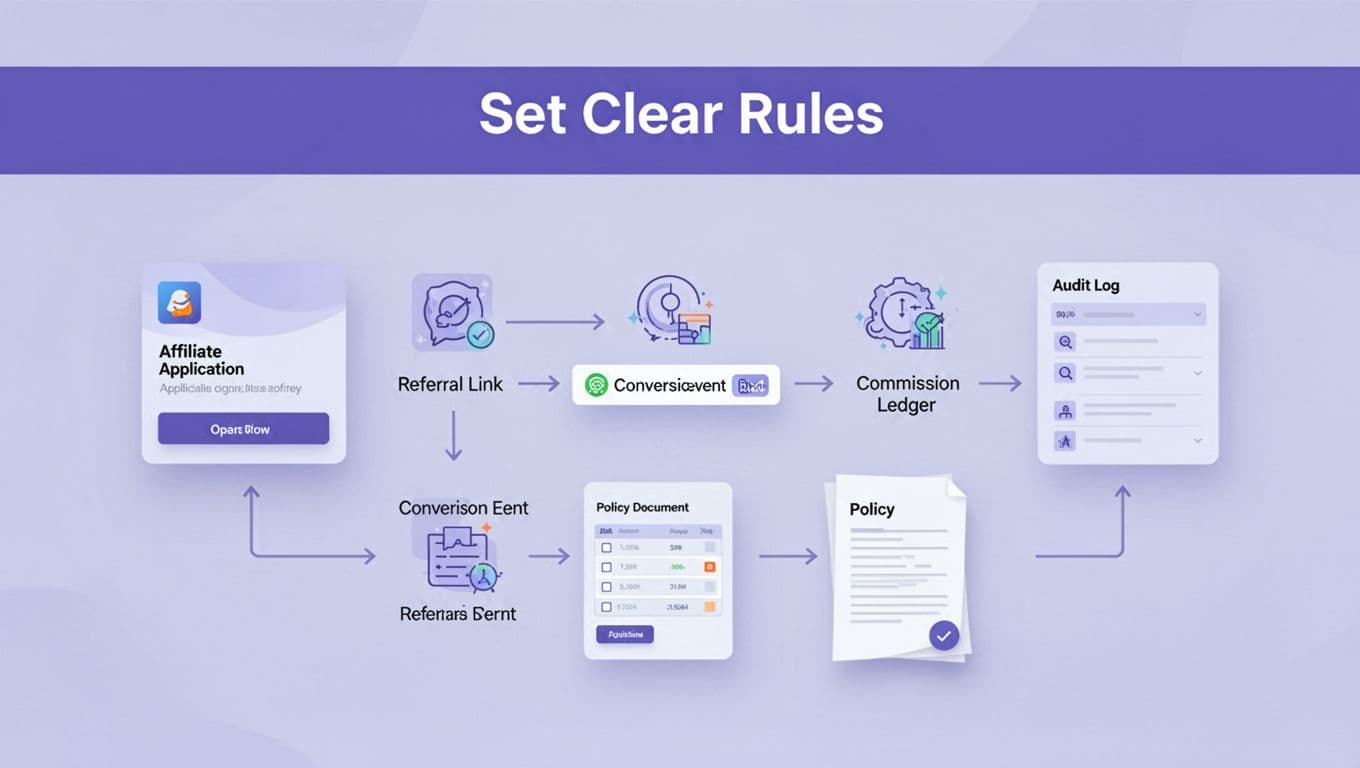
Start by mapping your full conversion path. Follow one test customer from an affiliate link or coupon through checkout, payment, commission creation, refund window, and payout.
Rewardful tracks affiliate activity through Stripe or Paddle. Your billing platform remains the payment system of record. Rewardful does not move money, issue customer refunds, edit subscriptions, or access card data through its Stripe connection. Review the current Stripe permissions for Rewardful before you connect a live account.
Map the conversion events you will trust
A click is not a customer. A created commission is not a cleared payout.
Write down the events that qualify for each stage:
- A visitor arrives through an approved affiliate link or code.
- The visitor creates an account or starts checkout.
- The customer completes a qualifying payment.
- Rewardful records a pending commission.
- The commission clears the hold period.
- Finance approves the payout batch.
Test this path using your own internal account, then reverse the test data. Confirm that attribution survives checkout and that the sale amount matches collected revenue, not list price.
If you use Paddle, preserve the referral value in your checkout passthrough data. A backend update that replaces the whole passthrough object can remove attribution without an obvious error.
Assign owners before an exception arrives
Give each decision one owner. Affiliate managers review traffic and partner conduct. Revenue operations validates account and payment records. Finance controls final payouts. Support can report customer complaints but should not approve commissions.
Use three internal statuses for every case:
- Needs review for a pattern that requires evidence.
- Approved for a valid referral that can move forward.
- Rejected for an invalid referral or commission reversal.
Rewardful also has affiliate states such as active, disabled, and suspicious. A suspicious or disabled affiliate cannot continue tracking new activity or earn new commissions. Use that action after you document the reason and preserve the evidence.
Set Campaign Boundaries Before Recruitment
A broad affiliate offer attracts broad behavior. Define what affiliates can promote, where they can promote it, and which customers can trigger a commission.
Your campaign rules should match your sales motion. A self-serve SaaS trial may need different controls than an annual contract with a sales-assisted close.
Restrict paid search and unwanted traffic
Decide whether affiliates may bid on your brand name, use paid search, run retargeting ads, or send traffic through incentive sites.
Rewardful’s Traffic Source Control can block referral credit from selected search sources at the campaign level. Rewardful names Google, Bing, Baidu, and Yandex as supported sources. The customer can still buy, but the affiliate does not receive credit.
This control does not replace a policy. State the rule in your affiliate terms. Include examples of prohibited brand bidding, misleading ads, browser extensions, coupon scraping, and fake review pages.
A blocked commission fixes one transaction. A written traffic policy gives you a basis to review the partner’s entire account.
Set rules for coupons and internal use
Coupon attribution is useful when buyers do not click an affiliate link. It also creates risk when codes spread through deal forums, employee chats, or paid-search ads.
Assign one coupon to one affiliate where possible. Do not share a generic affiliate code across several partners. Exclude employee purchases, contractor accounts, test workspaces, and existing customers unless your program explicitly pays for those actions.
Run a monthly report that compares each affiliate’s link conversions with coupon conversions. A sudden coupon-only spike deserves a review. It may be valid. It may also show code leakage or traffic that does not meet your terms.

Hold Commissions Until Revenue Clears
The fastest way to overpay affiliates is to release commissions when a card first succeeds. New subscriptions can refund, fail a later payment, or turn into support cases.
Set a pending period that matches your actual refund policy. Rewardful’s default pending period is 30 days, and its refund-handling guidance recommends aligning the hold with your own refund window.
Build payout rules around collected revenue
Define the commission base in plain language. It may be collected subscription revenue after discounts, taxes, credits, and refunds. Do not leave this open to interpretation.
For example, if a customer uses an affiliate coupon on a $100 plan and pays $80 after a discount, calculate the commission from the amount collected if that is your policy. Rewardful’s Paddle guidance states that commissions use the amount the customer actually paid after discounts or account-balance debits.
Keep pending, due, paid, and voided commissions in separate reporting columns. Pending commissions are an obligation under review. They are not earnings.
Treat refunds and disputes as different cases
Rewardful can adjust commissions when Stripe or Paddle reports refunds. A full refund can remove the related commission. A partial refund can reduce it.
Do not assume that a refund workflow covers every card dispute or chargeback scenario. Review your Stripe or Paddle records and reconcile disputed revenue manually. Your billing platform controls the financial event. Rewardful calculates referral attribution and commission records from the connected billing data.
Review Suspicious Conversions With Evidence
Self-referrals are common. An affiliate may buy their own plan through a referral link or code to collect a commission. Sometimes the purchase is legitimate. Sometimes it is not.
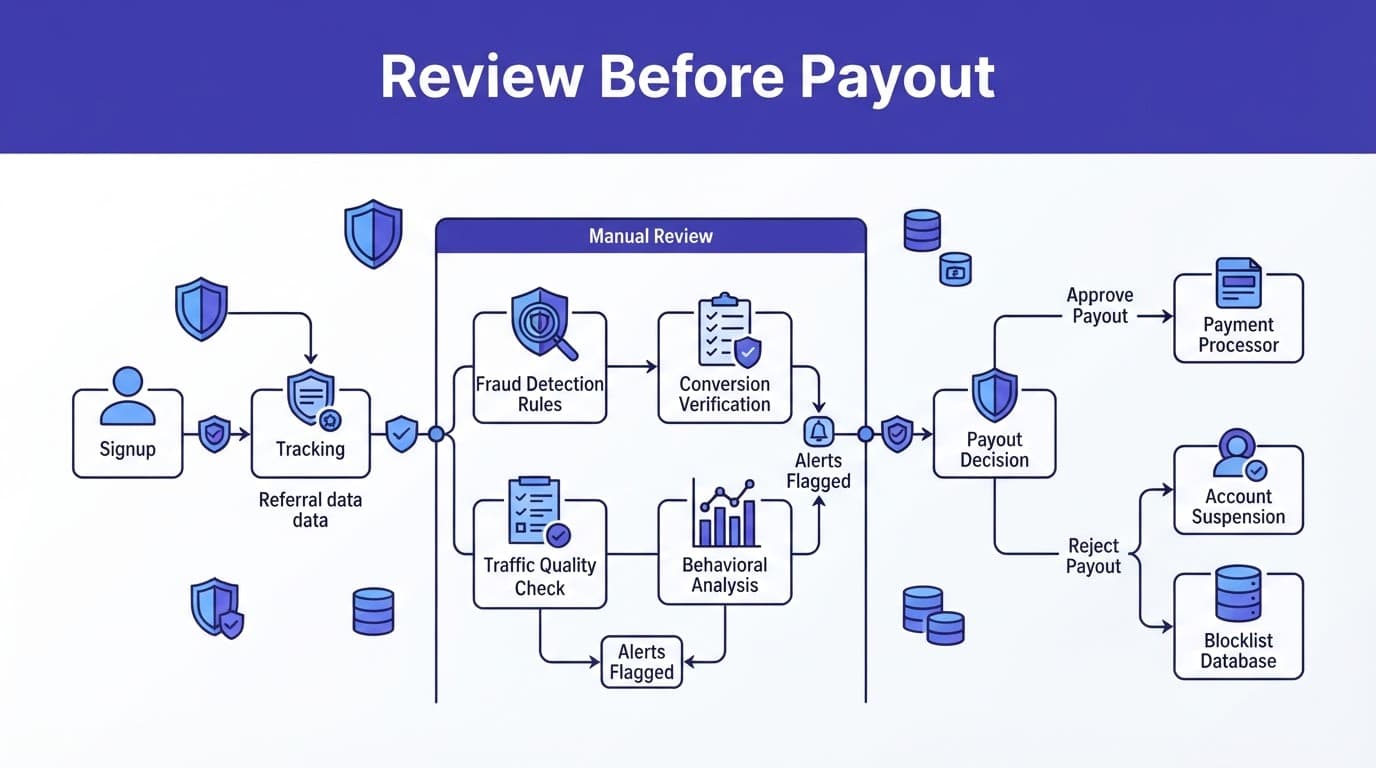
Rewardful can identify potential self-referrals and send an alert. Its self-referral review process lets you assess the case instead of treating every flag as fraud.
Use a fixed review record
Review the same evidence for every suspicious conversion. Avoid decisions based on one data point, such as an email domain or a shared IP address.
Store these fields in a spreadsheet, CRM record, or internal database:
- Affiliate name and Rewardful ID.
- Referral ID, customer ID, invoice ID, and commission amount.
- Link or coupon used, campaign, and conversion date.
- Customer email domain, company name, and account creation date.
- Payment status, refund status, and chargeback status.
- Evidence reviewed, reviewer name, decision, and decision date.
Keep the original record unchanged. Store the investigation result separately. This gives you an audit trail when an affiliate disputes a decision or a finance teammate checks a past payout.
Reverse, deactivate, or withhold the right record
A single invalid referral does not always require a permanent affiliate ban. Match the response to the evidence.
If the affiliate made an honest attribution mistake, reverse or deactivate the referral and explain the rule. Rewardful explains how to deactivate or delete a referral. Deactivation stops future commissions while preserving the historical record.
If the pattern repeats, mark the affiliate suspicious or disable the account. Withhold unsettled commissions that are tied to the violation. Do not reverse commissions without a documented reason, a linked customer record, and a reviewer decision.

Give Affiliates Rules They Can Follow
Good affiliates do not want vague terms. They need to know how they earn, when they get paid, and which actions can void a commission.
Publish the policy before approval. Add it to the affiliate application, dashboard, and welcome email.
State the operating rules in writing
Your terms should cover the commission rate, recurring-commission limit, cookie window, payout schedule, minimum payout threshold, and pending period.
Also state that you do not pay commissions for:
- Self-referrals, employee purchases, test accounts, and internal purchases.
- Canceled, refunded, disputed, or unpaid invoices.
- Brand bidding or paid-search activity if your campaign prohibits it.
- Misleading claims, impersonation, unsolicited bulk messages, and unapproved incentives.
- Coupon distribution through prohibited sites or channels.
Explain the investigation process. Tell affiliates that you may ask for traffic source details, campaign URLs, screenshots, or ad-account evidence. Set a response deadline. State that unresolved cases remain on hold.
Communicate decisions without turning them into arguments
Send a short decision notice with the referral or commission ID, the policy section, and the action taken. Do not accuse an affiliate of fraud when the evidence supports only an attribution issue.
Offer a simple appeal path. A different reviewer should assess new evidence when the amount or partner relationship warrants it. This keeps your program fair without making exceptions invisible.
Interfaces and features can change. Check Rewardful’s current affiliate and campaign settings before you publish language that describes a dashboard action.
Launch With a Small, Measurable Control Set
Do not open the program to hundreds of partners on day one. Start with a limited group of approved affiliates and review the first payout cycle closely.
Track approved customers, cleared commissions, refunds, reversals, self-referral alerts, review minutes, and correction time. Click volume does not show program health. A partner can create many clicks and few retained customers.
Use this pre-launch checklist:
- Connect Stripe or Paddle and complete one controlled test purchase.
- Confirm referral links and coupon attribution work through your checkout.
- Set a pending period that matches the refund policy.
- Configure campaign-level traffic restrictions where needed.
- Publish affiliate terms and prohibited-promotion rules.
- Create an investigation record with required evidence fields.
- Assign an owner for approvals, reversals, suspensions, and payouts.
- Test a refund and confirm the commission changes as expected.
- Set a monthly review for refund rate, reversal rate, and retained referred revenue.
- Keep the last approved payout report and the reviewer decisions.
Measure accepted outcomes, not dashboard activity. Fifty generated commission records are not useful if your team spends hours correcting them. Compare the review time against the revenue and retained customers each affiliate produces.
Build a Program Finance Can Trust
Affiliate abuse prevention is a controlled payout process. Rewardful can track referrals, flag potential self-referrals, apply campaign controls, and adjust commissions for refund events. Your team decides what evidence is sufficient and which payouts clear.
Use a pending period, written terms, documented exceptions, and regular reconciliation. Every paid commission should trace back to a real customer, a valid payment, and an approved policy decision.

