Generative AI A/B Testing with Mida.so
A good A/B test can take weeks when every headline, layout change, or CTA needs developer support. Generative AI A/B testing shortens the build cycle, but it doesn’t remove the need for sound experiment design. Mida.so helps marketing...

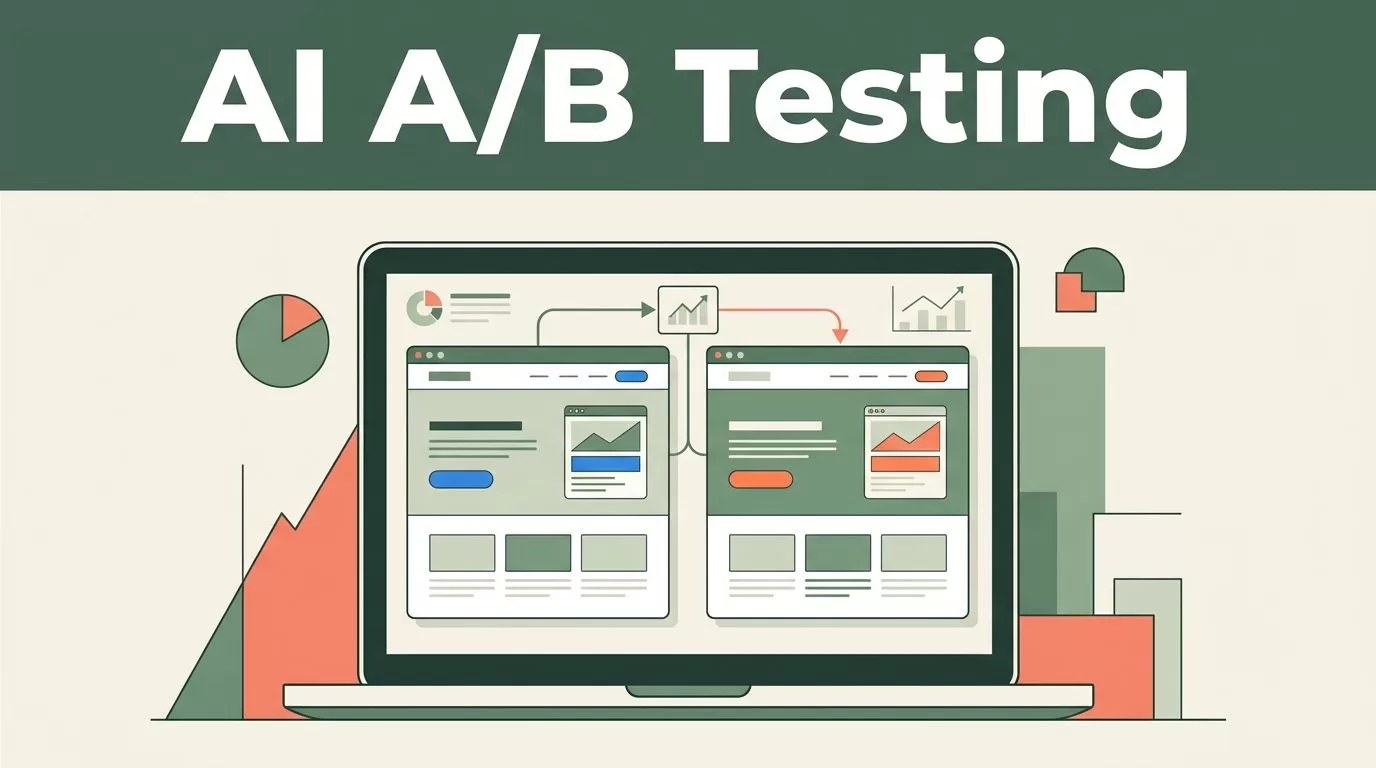
A good A/B test can take weeks when every headline, layout change, or CTA needs developer support. Generative AI A/B testing shortens the build cycle, but it doesn’t remove the need for sound experiment design.
Mida.so helps marketing and CRO teams turn plain-language requests into live website variants. You still need a clear hypothesis, brand review, enough traffic, and reliable measurement. The workflow below shows how to use Mida.so without treating AI output as a guaranteed winner.
Key Takeaways
- MidaGX can convert prompts, screenshots, and visual selections into JavaScript and CSS variants.
- Start every test with one conversion goal and a specific IF/THEN/BECAUSE hypothesis.
- Use AI to produce options, not to approve claims, design, or statistical conclusions.
- Validate traffic quality, sample size, page speed, and tracking before calling a test.
- Connect Mida.so with tools such as GA4, Google Tag Manager, Shopify, WordPress, and Slack.
Why Mida.so Fits Generative AI A/B Testing
Traditional experimentation often has two separate queues. The marketing team writes the test request. The development team turns it into code. The analytics team later checks whether the result is trustworthy.
Mida.so brings more of that workflow into one testing platform. Its MidaGX feature is a Chrome extension that lets you describe a page change in plain language. You can ask for a larger product image, a different CTA position, or a shorter hero section.
You can also select an area with a pen tool. MidaGX uses that selection and your instruction to generate JavaScript and CSS for the variant. The output appears in the visual editor, where you can inspect the change before launching it.
This matters for teams testing landing pages, product messaging, and conversion flows. You can create a first version without waiting for a new engineering ticket. A developer can still review the code when the change affects complex functionality, checkout behavior, or shared components.
Mida.so also includes AI support for hypothesis writing. After you provide screenshots of Version A and Version B, its tool can produce an IF/THEN/BECAUSE statement. That gives the experiment a reason instead of turning it into a random design comparison.
The basic logic should remain simple:
- IF the page leads with a clearer business outcome
- THEN more qualified visitors will start the signup flow
- BECAUSE the message answers the visitor’s main question earlier
That structure is more useful than asking AI to “make the page convert better.” The first prompt describes a testable change. The second asks for an unsupported outcome.
For general A/B testing principles, Adobe’s guide on setting goals and testing one element provides a useful reference. Mida.so can speed up execution, but the test still needs a controlled comparison.
Set Up a Mida.so Experiment Before Generating Variants
Start with the page and conversion event. Don’t open the AI builder before deciding what you want to learn.
A landing page test might focus on demo requests. A product page test might measure add-to-cart clicks. A signup flow test might track completed registrations rather than button clicks. Choose one primary metric that matches the business action.
Write the baseline down before changing the page. Record the current conversion rate, traffic source, device mix, and important technical conditions. Without a baseline, the result becomes a collection of numbers with no clear comparison.
The MidaGX setup flow begins in the Mida dashboard. You can use the option to try GX, install the Chrome extension, name the experiment, select the target website, and choose the AI build option. Review the generated variant in the editor before assigning traffic.


Use a narrow prompt with a defined scope. For example:
“On the SaaS landing page, replace the hero headline with a customer outcome. Keep the existing font, color, spacing, and CTA destination. Change only the headline.”
That prompt protects the rest of the page. It also makes the result easier to evaluate. If the headline, navigation, images, and form all change together, you won’t know which change affected the outcome.
Next, check the generated code and the live preview. Look for layout shifts, broken responsive behavior, missing click events, and changes to form validation. Test the page at common desktop and mobile widths.
Mida.so supports connections with GA4 and Google Tag Manager, along with platforms such as Shopify, WordPress, Webflow, Wix, and Slack. Use those integrations to connect the experiment with the systems already storing your events and team alerts.
Mida describes its testing script as lightweight, with published materials citing a size of roughly 15 to 18 KB. Treat page speed as a test condition, not an assumption. Compare load behavior with and without the testing script in your own environment, especially on mobile pages.
Build Variants That Answer One Business Question
AI can generate many page changes quickly. That speed creates a problem when the team produces several attractive variants without a clear learning goal.
Keep the first test narrow. Change one major element or one related group of elements. A headline and supporting sentence can form one messaging test. A button color, button label, and button position create a broader CTA test.
For a landing page, useful test areas include:
- The hero headline and supporting copy
- The primary CTA label and location
- The order of benefits, proof, and product details
- The number of form fields
- The placement of customer logos or case-study evidence
Use real customer language when you write prompts. Pull phrases from sales calls, support tickets, search queries, and survey responses. Ask AI to organize that evidence into variants. Don’t ask it to invent customer outcomes, security claims, or performance numbers.
For example, a product marketer might test:
- Control: “Project management for growing teams”
- Variant: “Give every client project one clear owner”
The second message makes a sharper promise about responsibility and visibility. The test can measure demo starts, but the team should also review lead quality after submission.

A CTA test needs the same discipline. “Get Started” may be appropriate for a free product. “Book a 20-Minute Demo” sets a different expectation for a sales-led funnel. The better label depends on visitor intent, sales capacity, and the next step after the click.
Review every AI-generated variant for brand and legal compliance. Check capitalization, terminology, accessibility, contrast, localization, and approved product claims. AI can produce clean code and poor messaging at the same time.
Don’t allow a variant to alter hidden elements without checking them. The generated code should not change tracking parameters, cookie behavior, pricing logic, checkout functions, or form destinations unless those changes are part of the experiment.
Teams discussing AI and experimentation often focus on output volume. A practical A/B testing discussion is a reminder that more generated ideas don’t replace a controlled test.
Launch, Measure, and Validate the Result
Before launch, create a short test record. Include the hypothesis, page URL, audience, traffic allocation, primary metric, secondary metrics, start date, and stopping rule.
Use a stable audience when possible. If you test paid visitors, don’t mix a new campaign with an established campaign halfway through the experiment. Large changes in traffic source can affect intent more than the page variant does.
Check the experience in production before sending full traffic. Complete the form. Click the CTA. Confirm the correct thank-you page or product action. Test logged-in and logged-out states where they apply.
Once the test starts, watch for technical errors first. Confirm that both variants receive traffic. Check that the primary conversion event fires once, not twice. Compare Mida.so results with GA4 or your analytics system when the integration is active.
Don’t declare a winner because one version leads after a few hours. Early results can reflect traffic timing, campaign mix, weekday patterns, or random variation. Keep the test running until it reaches the sample size and duration defined in your plan.
Statistical significance is not a feature that AI can generate. It depends on valid data, traffic volume, conversion rate, test duration, and the analysis method you use. A high percentage lift from a small number of conversions is a signal to investigate, not proof of a permanent improvement.
Review secondary measures before rollout. A CTA variant may increase clicks but reduce completed forms. A shorter form may increase submissions while lowering sales-qualified leads. Track the full conversion flow when the business outcome happens after the page.
A useful result has three parts:
- The observed change in the primary metric
- The confidence or uncertainty around that change
- The effect on downstream quality and revenue
A practitioner resource on A/B testing AI models can add context, but your own experiment data must drive the decision. External examples don’t replace your traffic, audience, or measurement setup.
Scale the Workflow Without Losing Control
After a valid test, document the result and the implementation decision. Store the final hypothesis, screenshots, audience settings, code changes, and analytics notes. This prevents the team from repeating the same test six months later.
Use MidaGX for high-volume iteration, not automatic publishing. A useful operating model has three review points:
- The marketer checks whether the variant matches the hypothesis.
- The designer or brand owner checks presentation and compliance.
- The analyst checks tracking, traffic allocation, and result quality.
For larger teams, Mida’s MCP Server can let AI assistants such as Claude, ChatGPT, Cursor, and Copilot interact with tests through natural-language requests. That can help teams create, preview, edit, and analyze experiments through the Mida REST API. Keep permissions restricted and require approval before any test reaches production.
Mida.so can reduce the time between an idea and a working experiment. It can’t decide whether the idea deserves testing. Your team still owns the question, the audience, the evidence, and the rollout decision.
Conclusion
Generative AI A/B testing works best when AI handles repetitive production work and people control the decision process. MidaGX can turn a prompt or visual selection into a usable variant, which reduces the delay between a hypothesis and a live test.
Start with one page, one primary metric, and one clear change. Review the code and copy, validate the conversion flow, then wait for enough reliable data. Faster variant creation is useful, but valid measurement is what makes the result usable.

