Choose a SaaS Affiliate Platform With Rewardful
Affiliate growth gets expensive when a partner referral can’t be tied to the invoice that paid it. A SaaS affiliate platform should connect clicks, customers, commissions, and payouts in one auditable process. Rewardful is a close fit...

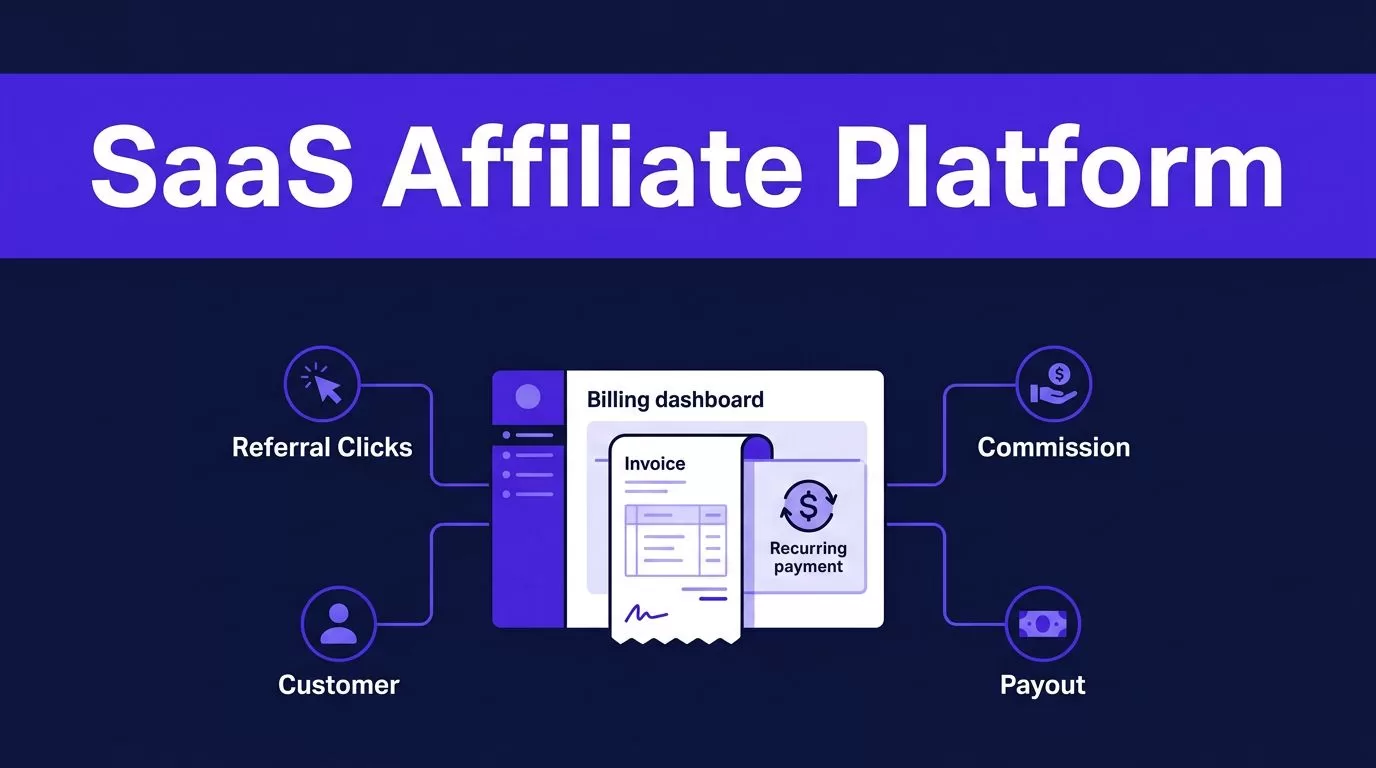
Affiliate growth gets expensive when a partner referral can’t be tied to the invoice that paid it. A SaaS affiliate platform should connect clicks, customers, commissions, and payouts in one auditable process.
Rewardful is a close fit when Stripe is your billing source of truth. Its SaaS affiliate software is built to track subscription referrals and commission changes tied to billing events.
Start with your payment stack and program rules. The pricing page comes later.
How a SaaS affiliate platform fits your billing stack
Rewardful isn’t a general add-on for every checkout system. It fits best when your SaaS bills through Stripe Invoices, including subscription invoices and one-time invoices.
Start with the payment event
Connect Stripe first. Then create a campaign, add Rewardful to your website, and test the referral path before inviting partners.
The expected record flow is simple. A visitor arrives through a referral link or code. They sign up. Their customer record is attributed to the partner. Stripe collects an eligible invoice. Rewardful calculates the commission.
That billing connection matters. A signup alone doesn’t prove revenue. A paid invoice does.
If your checkout runs through another payment processor, don’t assume a tracking script solves the gap. Confirm that Rewardful supports your checkout, billing workflow, and customer creation process before you commit.
Define the job of the program
Decide whether you are building an affiliate program, a customer referral program, or both. An affiliate usually promotes your product to an audience. A customer referral program rewards existing users for bringing in peers.
Those programs can use different rewards, terms, and approval rules. Don’t put both into one vague campaign if your team needs separate reporting.
Every commission record should show the partner, customer, paid invoice, commission rule, and current payout status.
That record is what your finance and support teams need when a partner questions an earnings figure.
Use a practical comparison framework
Compare tools against your actual operating process, not a feature list. A platform can look complete in a demo and still fail at attribution, billing, or payout review.
| Comparison area | What to verify in Rewardful |
|---|---|
| Billing source | Your revenue events come from supported Stripe invoice flows. |
| Attribution | You can use the links, coupon codes, and campaign structure your partners need. |
| Commission rules | Rates match your monthly, annual, trial, and refund policies. |
| Payout operations | Your team can review due commissions and retain payment records. |
| Program access | The plan supports your campaign count, team size, and portal needs. |
Map the attribution path
Rewardful tracks referral activity, subscription events, and commission changes tied to upgrades, downgrades, cancellations, and paid invoices. Its Stripe App Marketplace listing also lists link tracking, coupon-code tracking, flexible commissions, and mass payouts.
Write the path down before setup. Include the referral link, landing page, signup form, Stripe customer, invoice, and commission record. This makes gaps visible before you pay partners.
Run a test with a new email address and a real low-value payment. Check the partner, campaign, customer, invoice, and calculated reward.
Reject mismatched payment stacks early
Rewardful is strongest when Stripe billing data can resolve who earned what. It doesn’t replace your CRM, tax process, payment-provider account, or internal approval policy.
If your product has an app store checkout, offline contracts, several billing systems, or a custom invoicing process, document each revenue path. Then confirm how it will reach Rewardful. Don’t build a program around assumptions.
Compare Rewardful plans against affiliate revenue
Rewardful’s public plans are based on monthly revenue generated through affiliates, not total SaaS revenue. As of August 2026, the public pricing structure shows Starter at $49 per month, Growth at $99 per month, and Enterprise from $149 per month.
| Plan | Monthly affiliate revenue limit | Best fit |
|---|---|---|
| Starter | Up to $7,500 | One campaign and a small operating team |
| Growth | Up to $15,000 | Multiple campaigns and a more branded program |
| Enterprise | Over $15,000 | Larger programs with added support needs |
Rewardful lists a 14-day free trial on its public pricing page. Annual billing can also include two free months. Check the live plan page before purchase because prices, limits, and included features can change.
Price is not the full program cost
The cheapest plan is not always the lowest-cost option. A low subscription price means little if the system creates payout disputes, missing attribution, or manual correction work.
Rewardful’s Stripe pricing overview describes the same affiliate-revenue thresholds. Confirm how the monthly limit is measured and what happens when your program crosses it.
Starter is a practical starting point for one public program. Growth is the better fit when you need unlimited campaigns, a branded portal, a custom domain, private invite-only campaigns, or custom rewards. Enterprise is for programs above the published limit and teams that need higher-touch support.
Set commission rules before you recruit
A good SaaS affiliate platform calculates the reward you intended to offer. It can’t repair unclear terms after a partner starts promoting your product.
Pay recurring commissions after cash clears
Rewardful supports percentage-based and fixed-fee commissions. For subscription software, you can also structure recurring rewards around eligible paid invoices.
Write the rate, eligible plan, commission duration, billing interval, and payment trigger in plain language. “30% recurring” is incomplete. Does it apply for one month, one year, or the customer’s entire lifetime? Does it cover upgrades? Does it apply to annual plans paid upfront?
Base the reward on paid revenue. Don’t release commissions for a free trial on day one if the customer can cancel before payment.
Account for refunds and plan changes
A customer may cancel, receive a refund, downgrade, dispute a payment, or use account credit. These events can change the final commission amount.
Rewardful can automatically adjust commission records when Stripe billing changes. Your team still needs a written policy for edge cases. Set a commission approval window that gives refunds and payment disputes time to appear.
Keep annual subscriptions separate from monthly plans if their reward terms differ. Otherwise, a large upfront invoice can produce a payout your program didn’t intend to make.
Treat affiliate payouts like financial operations
Tracking is only half the job. The other half is paying the correct person the correct amount once.
Reconcile before you mark a payout as paid
Export due commissions. Compare them with the payment file or payment-provider confirmation. Then save the payout date, paid amount, payment reference, and reviewer in your records.
Rewardful’s core plans have no standard percentage transaction fee on affiliate revenue. Its Managed Payouts process carries a 3% processing fee and states that distributions take three to five business days.
Don’t promise a universal payout date to affiliates. Payment timing can depend on approval status, invoice timing, payment-provider details, and account review.
An exported commission is not a completed payout until the payment record matches the approved amount.
Give every exception an owner
Most payout issues fall into a small number of categories. The affiliate has missing payment details. A payment failed. A refund changed the reward. The referral is disputed. Two payout requests exist for the same commission.
Check whether the commission is due, processing, or paid in Rewardful. Then check the related Stripe invoice and payment-provider reference. Don’t send a second payment because the first one looks delayed.
Keep payout files, Stripe references, affiliate tax records, and approval history together. Your accountant may need those records later.
Test attribution before you scale recruitment
Don’t launch to 200 affiliates after one successful click test. Start with a controlled group and compare records against billing data.
Launch with a small approved batch
Invite a limited set of trusted partners. Give each one a known referral link or code. Test a signup, a paid subscription, an upgrade, a cancellation, and a refund when possible.
Use real production paths, not only a staging environment. A checkout update, cookie setting, pricing-page change, or script conflict can break attribution after a test passes.
Keep a last trusted commission report. If a site release causes a sudden attribution drop, you need a record to compare against.
Review a weekly sample
Each week, select attributed customers and compare the Rewardful record with Stripe. Check the partner, campaign, customer, paid invoice, reward amount, and refund status.
Track missing attribution, duplicate claims, self-referrals, internal purchases, refund reversals, and time spent resolving disputes. Measure paid customers with confirmed attribution, not clicks alone.
A high click count can hide a broken program. The useful number is revenue that your team can verify and pay without correction work.
Choose Rewardful by your business stage
Your stage determines how much structure you need. Don’t buy Enterprise features before you have a repeatable partner channel.
Match the plan to the program
Pre-revenue teams should first prove that affiliates can send qualified customers. Use a narrow offer and a small partner group. Don’t create five campaigns before one converts.
Early Stripe-based SaaS teams can use Starter when one campaign and limited team access are enough. This works well for a single public affiliate offer with a clear recurring commission policy.
Growth-stage teams should move to Growth when they need separate programs for affiliates, customer referrals, agencies, or private partners. The branded portal, custom domain, and private campaign controls become useful when partner operations grow.
Choose Enterprise when affiliate-driven revenue exceeds the published Growth limit or when your team needs Enterprise support options. Confirm the sales process and current feature terms before changing plans.
Use this selection checklist
Before starting a Rewardful trial, confirm these points:
- Stripe Invoices capture the revenue events you want to reward.
- Your website can place and test the required tracking setup.
- You know whether links, coupon codes, or both will drive attribution.
- Your terms define recurring rewards, annual billing, trials, refunds, and upgrades.
- A named owner will approve commissions and resolve payout exceptions.
- Your current campaign and team requirements fit the plan limit.
Final Decision
Rewardful is a strong choice when Stripe invoices are the source of truth and your team wants recurring affiliate tracking without percentage fees on core affiliate revenue.
The platform works best with clear commission terms, tested attribution, and a payout review process. Treat SaaS affiliate platform selection as an operating decision, not a checkbox in your growth stack.

