Scale Stripe Affiliate Tracking With Rewardful
Affiliate revenue can grow faster than your commission process. A few partner links become dozens of campaigns, subscription changes, refunds, and payout questions. Stripe affiliate tracking works when every paid customer has a clear attrib...


Affiliate revenue can grow faster than your commission process. A few partner links become dozens of campaigns, subscription changes, refunds, and payout questions.
Stripe affiliate tracking works when every paid customer has a clear attribution path and every commission follows a written rule. Rewardful handles the tracking and commission layer. Your team still owns the offer, the payment logic, and the final payout decision.
Build the data path first. Invite more affiliates after it survives real subscription events.
Know what Rewardful and Stripe each own
Stripe is the billing system. It records customers, Checkout Sessions, subscriptions, invoices, refunds, and disputes.
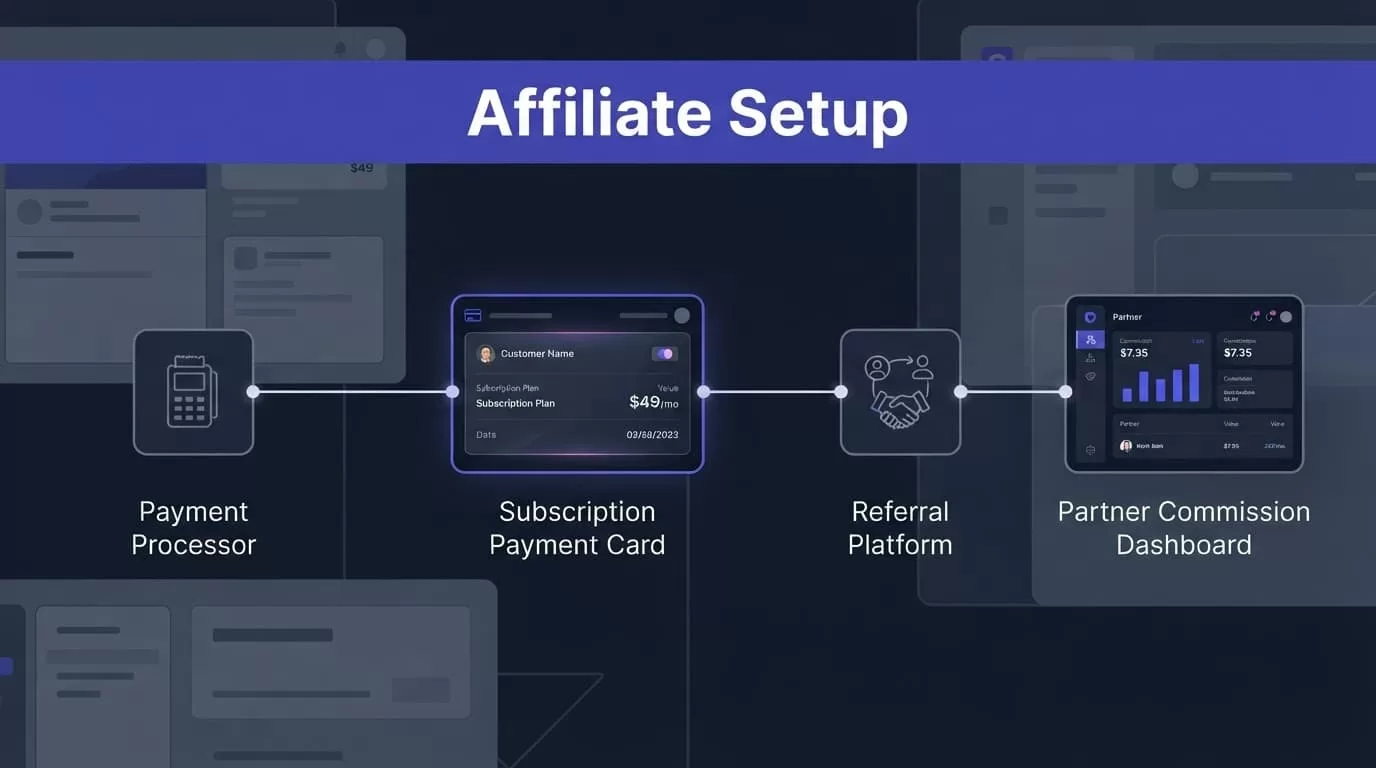
Rewardful is the affiliate system. It captures referral activity, connects it to Stripe activity, applies campaign rules, and calculates commissions. The Rewardful Stripe integration starts with a “Connect with Stripe” authorization flow that lets Rewardful monitor the Stripe account for referral tracking.
Your internal records sit beside both tools. They answer questions neither tool should answer alone:
- Which partner agreed to which commission terms?
- Who approved a non-standard payout?
- Why was a commission rejected, changed, or reversed?
- Which Stripe event supports the final payment?
Set a record-owner model before launch
Use Stripe as the financial event record. Use Rewardful as the referral and commission record. Use your finance or operations ledger as the payout approval record.
Don’t let a completed sync replace your review trail. A paid invoice proves payment occurred. It does not prove that a partner should receive a commission under your current terms.
Store the Stripe customer ID, subscription ID, invoice ID, affiliate ID, referral ID, campaign version, commission amount, and reviewer decision together. That record saves time when a partner disputes a payout three months later.
Build Stripe affiliate tracking around one attribution map
Your team needs one documented path for every attributed customer. Write it in plain language before adding scripts or editing Checkout code.
Follow the customer from click to commission
A typical SaaS path looks like this:
- An affiliate shares a Rewardful referral link.
- A prospect lands on your marketing site or app.
- Rewardful captures the referral identifier.
- The prospect starts a Stripe checkout flow.
- Stripe creates the customer and subscription or payment.
- Rewardful matches the Stripe activity to the referral.
- The commission enters your approval and payout process.
The two-way Stripe sync is built to keep affiliate data, coupon information, and transaction details aligned across the two systems. Your implementation still needs a clear handoff between the browser visit and Stripe checkout.
Decide what happens when attribution is unclear
Set rules for direct signups, expired referral cookies, multiple affiliate visits, self-referrals, employee purchases, and sales-assisted deals.
Don’t let a support agent decide these cases one at a time. That creates inconsistent payouts and teaches partners to escalate routine questions.
A simple policy works well: pay the recorded referral only when the required tracking evidence exists. Route anything else to an exception queue. Keep the original Stripe event unchanged and store the approval or rejection as a separate decision.
Write commission rules before you create campaigns
Affiliate terms are a billing policy. Treat them with the same care as a discount policy or refund policy.
Define the commission basis first. You may pay a fixed amount for a qualified customer, a percentage of the first payment, or a recurring share of subscription revenue. Each model creates different support and cash-flow work.
Define the revenue that qualifies
State whether commission applies to the invoice subtotal, the amount paid after discounts, or another defined amount. Exclude taxes, one-time implementation work, account credits, and refunded charges if those items don’t qualify.
Also set the start and stop points. For recurring offers, decide whether commissions continue for a fixed number of months, the customer’s full paid lifetime, or until a cancellation event.
Don’t write “lifetime commission” if you mean “while the customer pays and remains in good standing.” Those are different promises.
Give coupon codes their own rules
A Stripe promotion code is not automatic affiliate attribution. A customer may use a coupon from an affiliate, a sales rep, a webinar, or a public campaign.
Assign coupon ownership before publishing codes. Test the result when a customer uses both a referral link and a discount code. Pick the winner in advance.
Keep a current list of partner codes, campaign owner, expiry date, approved discount, and commission terms. Remove expired or revoked codes from active promotion pages.
Connect Stripe with controlled access
Connect the Stripe account that receives the subscription revenue. Check the legal entity, business unit, and live product catalog before authorizing anything.
Rewardful uses a connected Stripe authorization rather than asking you to hand an affiliate tool a Stripe secret key. Review the Stripe permissions Rewardful requests before you approve the connection.
Restrict access and name an owner
Give connection ownership to a small group. Finance, revenue operations, and the affiliate manager should know who can reconnect the account, change campaign rules, and approve payouts.
Document four items:
- The connected Stripe account and business entity.
- The person responsible for access reviews.
- The fallback process if the connection fails.
- The team that can pause affiliate payouts.
Don’t share Stripe credentials in chat, ticket comments, or affiliate onboarding documents. Connected tools should receive only the access they need for the job.
Keep your production ledger separate
Export or retain the transaction data needed for reconciliation. Don’t rely on a dashboard view as your only history.
When campaign terms change, record the effective date. Existing customers may have earned under an earlier rate. Editing a universal commission rule without a record creates avoidable retroactive payout errors.
Capture the referral before checkout begins
Reliable Stripe affiliate tracking starts on the landing page, not in Stripe. Rewardful’s tracking script needs to load wherever a prospect can arrive, sign up, or begin payment.
Install the required tracking snippet on the marketing site and the application if they use different domains. A partner may send traffic directly to /signup, a pricing page, or a product-specific landing page.

Keep referral data separate from campaign analytics
Store UTMs, landing-page source, and affiliate referral data as separate fields in your own analytics process. A UTM tells you how traffic arrived. A referral identifier tells you which partner could earn commission.
Don’t overwrite one with the other. You need both when a paid search campaign and an affiliate link reach the same customer journey.
Test in a private browser session
Use a private browser window for referral tests. Start with a valid affiliate link, complete the exact signup route, and confirm the referral appears before payment.
Rewardful’s current onboarding instructions may use a test URL such as ?via=install to confirm script placement. Follow the live instructions in your account. Don’t assume an old implementation guide matches your checkout stack.
Test every live entry point. One missing script on a new pricing page can create an unexplained drop in attributed revenue.
Match the Stripe checkout method to your build
Rewardful supports several Stripe purchase paths. The correct setup depends on how your SaaS product creates payment sessions.
Pass referral data in server-side Checkout
For a server-side Stripe Checkout integration, retrieve Rewardful.referral before you create the Checkout Session. Pass that value as Stripe’s client_reference_id only when it exists.
Don’t send a blank client_reference_id. Stripe Checkout can reject an empty value.
Treat client_reference_id as a Checkout Session link, not a permanent subscription field. Keep a durable mapping in your system when your finance team needs later invoice-level reconciliation. For a custom Stripe API integration, Rewardful documents storing the referral value in Stripe customer metadata under the referral key.
Configure Payment Links, Buy Buttons, and Pricing Tables carefully
Stripe Payment Links require customer creation for Rewardful customer tracking. Rewardful’s current guidance says to enable Stripe’s “Save payment details for future use” option on the relevant Payment Link.
For Stripe Pricing Tables, Rewardful documents passing Rewardful.referral through the client-reference-id attribute. For a Stripe Buy Button, it documents a data-rewardful attribute.
Use the active Rewardful onboarding instructions for your integration type. Product settings can change. Don’t combine several tracking methods on the same payment surface until one method passes your test plan.
The Rewardful listing in the Stripe App Marketplace also describes automatic adjustments for common subscription changes, including upgrades, downgrades, cancellations, free trials, and refunds.
Test transaction paths before inviting partners
Don’t launch after one successful checkout. A program can pass the happy path and still fail on renewals, refunds, or direct signups.
Run 25 to 100 controlled transactions before wider promotion. Use real campaign rules and capture the records your team will later review.
Test the cases that create payout disputes
Use a small test matrix.
| Test case | Evidence to review |
|---|---|
| Affiliate referral checkout | Referral ID, Stripe customer, paid invoice, commission |
| Direct checkout | No affiliate commission |
| Subscription renewal | Correct recurring rule and commission timing |
| Upgrade or downgrade | Correct treatment of changed billing amount |
| Partial or full refund | Commission adjustment matches the refund |
| Chargeback or dispute | Exception record and payout hold decision |
Record the exact Stripe object IDs and Rewardful referral details for each case. A screenshot is useful, but IDs are what your team needs for reconciliation.
Preserve failures instead of hiding them
Route missing referrals, duplicate claims, failed syncs, and conflicting coupon ownership to an exception table. Give each item an owner and a follow-up date.
A completed payment or sync proves an event occurred. It does not prove the referral, campaign rule, and commission amount are correct.
Measure accepted commissions, not the number of clicks or browser actions. A process that saves five minutes but creates thirty minutes of payout correction work has failed.
Set rules for renewals, refunds, and disputes
Recurring SaaS commissions need a lifecycle policy. The first payment is only the start of the customer relationship.
Tie recurring commissions to paid revenue
Decide when a commission becomes eligible for payout. Many teams wait until the invoice is paid and a defined refund period has passed.
Set rules for free trials, failed payments, pauses, plan changes, credits, annual plans, and cancellations. Tell partners when recurring commission stops. Put the same rule in the affiliate terms and your internal payout guide.
Rewardful explains that its Stripe data flow reads customer records, invoice payments, and refunds to calculate affiliate commissions and payouts. Review its Stripe-data payout process before you set an operating schedule.
Treat refunds and chargebacks differently
A refund is a merchant action. A chargeback is a dispute raised through the payment network. Don’t assume both events receive identical treatment in every configuration.
Rewardful can adjust commissions after refunds and partial refunds when the Stripe activity syncs. Test this with your actual commission model.
For disputes, create a manual hold rule. Pause the related commission, preserve the Stripe event, and release or reverse it after finance resolves the case. Don’t pay a partner while the underlying subscription revenue is under dispute.
Scale partner operations without losing control
More affiliates create more traffic, but they also create more edge cases. Scaling means reducing unapproved decisions, not removing review.

Separate standard terms from exceptions
Use standard terms for most partners. Create separate campaign terms for strategic partners, agencies, creators, or integration partners when their rate or payout condition differs.
Version those agreements. Record the start date, end date, eligible products, commission method, and approval owner. Don’t silently change a partner’s rate after they referred customers.
Rewardful’s affiliate manager Stripe sync overview is useful for reviewing how subscription events affect affiliate reporting. Your own process should still define who resolves exceptions.
Review quality, cost, and recovery
Track the numbers that affect cash and team time:
- Approved commissions as a share of commissions created.
- Paid customers with no attribution when attribution was expected.
- Refund and dispute reversals by partner and campaign.
- Duplicate claims and correction minutes.
- Time from Stripe event to approved payout.
- Cost per approved partner payout.
Keep the last trusted payout ledger. If a sync fails or a rule changes, don’t overwrite approved history with a new export.
If finance and growth need a defined ownership model before opening the program, Book A Call to align campaign terms, data records, and payout controls.
Protect customer data and require disclosures
Affiliate tracking uses browser identifiers and billing records. Limit what travels through links, scripts, Stripe metadata, and team spreadsheets.
Minimize data in referral fields
Use a referral ID or opaque internal identifier. Don’t place a customer’s email address, plan details, or other personal data in a referral URL or client_reference_id.
Restrict access to exported customer data. Give affiliate managers the fields needed to validate attribution and commissions. Keep payment details and unnecessary customer records out of routine partner operations.
Set retention rules for exports and reconciliation files. Delete temporary test records when they are no longer needed.
Make affiliate disclosure part of onboarding
Partners need clear disclosure rules. Require them to state when a link can earn them a commission. The disclosure should appear near the recommendation, not hidden on a separate page.
Your agreement should also cover prohibited claims, paid-search limits, trademark use, self-referrals, coupon misuse, and the right to reverse fraudulent commissions.
A good affiliate program is transparent with customers, fair to partners, and defensible for finance.
Build for evidence, not just attribution
Rewardful and Stripe can handle the mechanics of SaaS affiliate tracking. The durable part is your operating process: capture the referral, connect it to the payment, apply written terms, and review exceptions before money leaves the business.
The strongest programs don’t chase the most clicks. They produce approved commissions that finance can trace back to a customer, a Stripe event, and a partner agreement.

