Travel Podcast Monetization With Travelpayouts
Your listeners already ask where to book, what to pack, and which tour is worth the money. Travel podcast monetization works when you give them a useful booking path at the moment they need it. A sponsor read can pay once. A well-built affi...

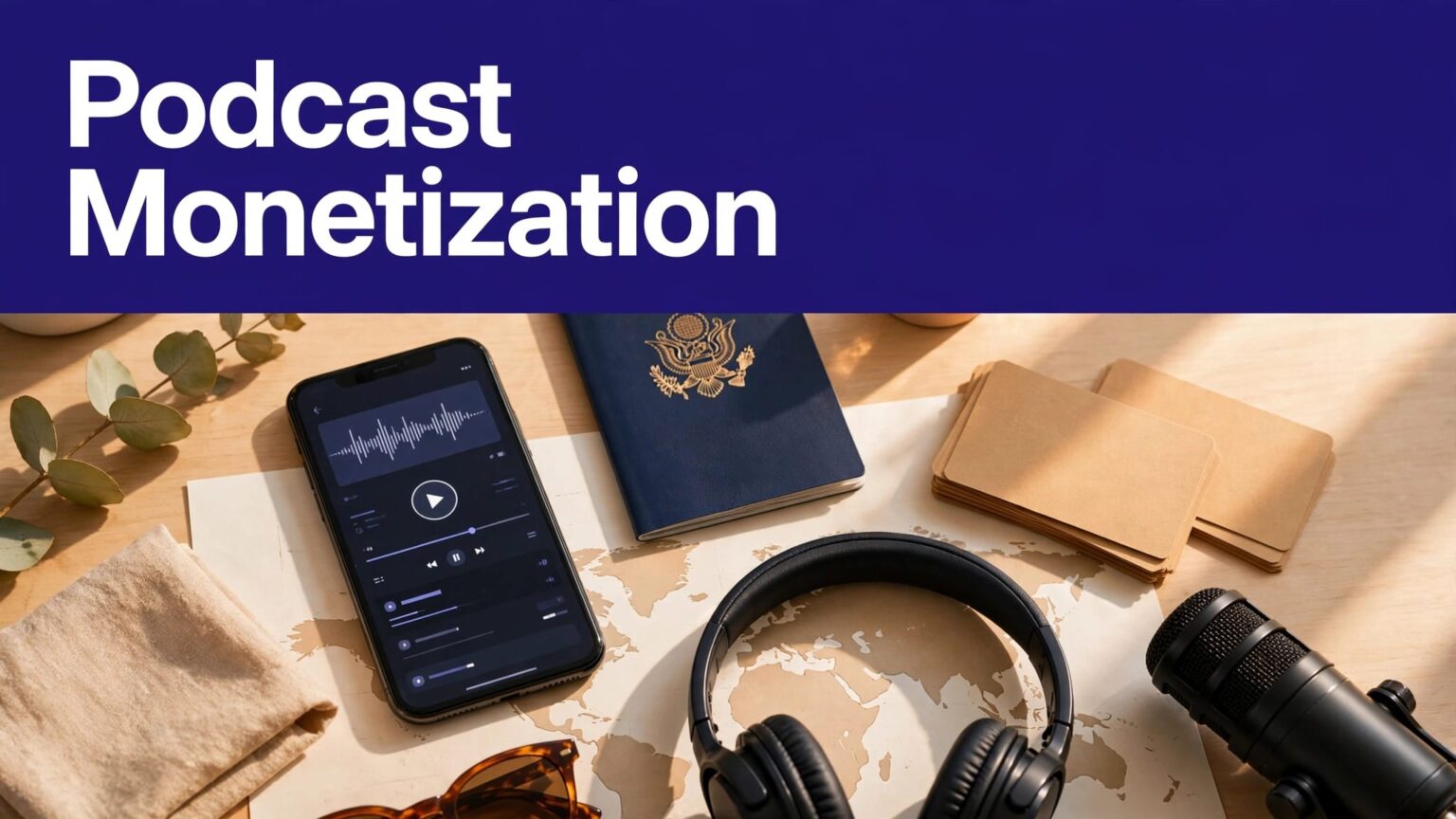
Your listeners already ask where to book, what to pack, and which tour is worth the money. Travel podcast monetization works when you give them a useful booking path at the moment they need it.
A sponsor read can pay once. A well-built affiliate system can keep producing revenue from your episode catalog. The work is not complicated, but it needs tracking, clear offers, and honest recommendations.
Start with the trips your audience is already planning.
Build travel podcast monetization around booking intent
Travelpayouts is a travel affiliate partnership platform that brings travel brands and affiliate programs into one publisher account. You can promote products across flights, accommodation, tours, car rentals, insurance, ground transport, and other travel categories through Travelpayouts.
Don’t begin by joining every available program. Start with what fits the listener’s next purchase. A podcast about backpacking Southeast Asia has a different commercial path than a show about luxury city breaks.
Match each offer to the episode
Pick one primary booking action for each episode. An episode called “Five Days in Lisbon on a Small Budget” may support a hotel search link, airport transfer option, and walking-tour booking page.
An episode about a delayed flight can support travel insurance. A road-trip series can support rental cars. A family-trip episode may fit activities and larger accommodation options.
Keep the offer close to the listener’s problem. A hotel link after a 20-minute hotel comparison makes sense. A random insurance link at the end of a food episode does not.
Check live program rules before promotion
Travelpayouts does not use one fixed commission rate across every partner. Each brand sets its own reward conditions, accepted booking rules, tracking period, supported markets, and approval terms.
Official platform guidance describes common examples of flight rewards around 1.1% to 1.5% of booking value and hotel rewards around 4% to 5%, but those are not promises. Some offers use fixed rewards instead. Review the current details in the program dashboard before you create a public recommendation.
A high commission rate does not fix a weak audience match. Approved bookings matter more than a headline percentage.
Partner availability, cookie windows, payouts, program terms, and platform features can change. Recheck active offers before updating old episode pages or sending a new campaign.
Set up the tracking before you publish
Create your Travelpayouts account, add your publishing channels, and apply to programs that match your content. The platform supports creators, bloggers, influencers, travel agents, and other publishers. Its overview of how the platform works explains the basic relationship between brands, links, and partner rewards.
Your podcast feed is not the tracking destination. Your episode page, show notes, email, and landing pages are.
Create links for real destinations
Use a direct affiliate link when you can send a listener to a relevant destination page. Link to a specific hotel search, tour category, airport transfer route, or insurance page. Don’t drop everyone onto a generic home page.
A listener who hears about Kyoto should land on Kyoto options. A listener planning a rail trip through Italy should land on rail products or an itinerary page that makes the next step obvious.
Use the platform’s affiliate link creation process instead of copying a normal brand URL. A normal URL can send traffic without recording your referral.
Add a SubID to every placement
SubIDs separate one link placement from another. Use them to identify the episode, channel, and call to action that produced the click.
A consistent naming pattern keeps reporting usable:
pod_ep42_notes_hotelfor a hotel link in episode 42 show notes.pod_ep42_email_hotelfor the same offer in your weekly email.lisbon_guide_tourfor a tour link inside a Lisbon landing page.
Travelpayouts provides SubID tracking guidance for affiliate links and QR codes. Keep the names short, readable, and consistent.
Don’t reuse one generic link across every episode. That makes your reporting almost useless.
Put booking paths in every owned channel
A spoken recommendation creates interest. The listener still needs a working link when they are ready to book. Build the path across channels you control.
Your goal is simple: the episode creates intent, the show notes provide the link, and a focused page gives the listener enough detail to act.
Build show notes that work on mobile
Put the main booking link near the top of the episode notes. Most listeners will open the notes on a phone. They should not need to scroll past your transcript, guest bio, and social links.
Use short labels that state the action:
- “Compare hotels in Kyoto”
- “Check guided food tours in Lisbon”
- “See current travel insurance options”
- “Find rental cars for the Amalfi Coast”
Add one sentence that explains why the resource relates to the episode. “These are the hotel options we used when comparing walkable neighborhoods near Alfama” gives context without making a claim you cannot prove.
Include links in your podcast host’s episode page and on your own website. If your host allows only limited link formatting, make your website page the primary resource hub.
Use a landing page for evergreen episodes
Build one landing page for episodes that keep getting downloads. A page such as /japan-first-trip/ can collect hotels, rail options, airport transfers, activities, eSIMs, and travel insurance in one place.
Keep the page organized by the trip stage:
| Trip stage | Useful resource |
|---|---|
| Before booking | Flight and accommodation search |
| After choosing dates | Transfers, rail, car rental |
| Before departure | Insurance, eSIM, packing resources |
| During the trip | Tours, tickets, local activities |
The landing page should support the episode. It should not become a crowded directory of every brand you can promote.
Email is the second conversion path. Send a short follow-up to subscribers after the episode publishes. Link to the resource page, not a pile of unrelated booking links. Email readers often have stronger intent because they chose to receive updates from you.
Use episode calls to action that sound useful
A podcast CTA should be direct. It should tell the listener what they get when they open the notes.
Avoid vague lines like “Check out our partners.” Listeners don’t know what that means, and it makes the promotion sound detached from the episode.
Use one primary CTA per episode
Place the main CTA after the relevant discussion. Repeat it near the close only if it still fits the episode.
Here are practical examples:
- “I’ve added the Kyoto hotel search we used in the show notes, so you can compare areas and current prices before you book.”
- “If you’re planning the same route, open the Italy rail guide in the notes. It has the booking options discussed in this episode.”
- “The travel insurance resource is linked below. Read the policy details and exclusions before you buy.”
- “For the Lisbon food tours mentioned today, use the episode page. You can check dates and availability there.”
Do not say a provider is the cheapest, best, or right for every traveler unless you can support that claim. Prices, inventory, and policy terms change fast.
Build a simple content funnel
One destination can produce several episodes and one booking page. That gives listeners multiple entry points without forcing every episode to sell the same thing.
For example, a Japan series could include an arrival-planning episode, a Tokyo hotel episode, a rail-pass discussion, and a food-tour interview. Each episode points to the same Japan resource hub, with links that match its topic.
The hub can also collect email signups. Send subscribers a trip-planning email sequence that links back to the relevant pages. Keep each email narrow. One email about choosing Tokyo neighborhoods will outperform a generic message full of flights, hotels, tours, and insurance links.
Measure approved earnings, not clicks
Clicks are useful, but they are not revenue. A listener may click, browse, leave, cancel a booking, or click another affiliate link before purchasing.
Travelpayouts generally uses cookie-based attribution, and its platform materials state that most travel-brand cookies run for 30 days. The actual period varies by program. Last-click attribution can also replace your referral if a visitor clicks another partner’s link before booking.
Keep a fixed earnings record
Use a spreadsheet or database with one row for each content source and offer. Record the original data and keep corrections as separate entries.
| Field | What to record |
|---|---|
| Content source | Episode URL, landing page, email, or social post |
| Offer details | Program name, reward rule, and date checked |
| Tracking | SubID, clicks, pending rewards, and approved rewards |
| Adjustments | Cancellations, reversals, refunds, and reason |
| Payment | Payout period, amount received, and payment method |
Use a simple calculation:
Net affiliate earnings = approved percentage rewards + approved fixed rewards – reversals
Don’t overwrite an original commission value when a booking changes. Add an adjustment entry with the date and reason. This creates a clean record when you review results months later.
Find the weak point before adding more traffic
Review results by episode, resource page, channel, and SubID each month. Look for the point where intent breaks.
High clicks with low approved earnings may mean the offer does not match the episode. It may also mean the landing page is slow, the destination link is too broad, or your listeners cannot use that brand in their market.
High pending rewards with frequent reversals may point to cancellations or low-fit traffic. Improve the recommendation before you add more links.
A small publisher with a clear reporting system can make better decisions than a larger show that only watches download numbers.
Protect audience trust with clear disclosures
Affiliate marketing is not a reason to hide the commercial relationship. State it in audio and next to the links where people make the booking decision.
The FTC says disclosures must be clear and conspicuous. Read its guidance for influencers and endorsements before you standardize your wording.
Use disclosure language people understand
A short disclosure works when it is placed where the listener sees or hears it:
“Some links on this page are affiliate links. If you book through them, we may earn a commission at no extra cost to you.”
Say a version during the episode before the CTA. Put the written version near the first affiliate link in show notes, landing pages, newsletters, and social posts.
Do not bury it in a footer or a separate legal page. Do not call it a “partner link” without explaining that you may earn a commission.
Trust also depends on your recommendations. Mention meaningful limits, including fees, cancellation conditions, location restrictions, and policy exclusions when they affect the listener’s decision. If you have not used a product, don’t suggest that you did.
Final Thoughts
Travel podcast monetization becomes more reliable when each episode answers a booking question and sends the listener to a trackable next step. Start with a narrow set of relevant offers, then connect show notes, landing pages, and email around the same trip intent.
Track approved rewards and reversals, not only clicks. Useful recommendations and clear disclosures give you a revenue system your audience can trust.

