Hunter.io Vs Snov.io for Small Sales Teams
A small sales team doesn’t lose deals because it lacks ambition. It loses time because its tools ask for too many clicks. When I compare Hunter.io vs Snov.io, I’m not asking which one has the longest feature list. I’m aski...
A small sales team doesn’t lose deals because it lacks ambition. It loses time because its tools ask for too many clicks.
When I compare Hunter.io vs Snov.io, I’m not asking which one has the longest feature list. I’m asking which one helps a lean team find the right people, verify them, and start outreach without dragging the process out. I’ve written before about my 2026 take on Hunter.io as an email finder, and that same clean-data mindset matters here.
The short version is simple. I’d pick Hunter.io if I want fast prospecting and strong verification. I’d pick Snov.io if I want a wider outreach toolkit in one place.
The choice comes down to workflow, not feature count
For a two-person or three-person team, the real question is this: do I want a sharp finder, or a broader sales workspace?
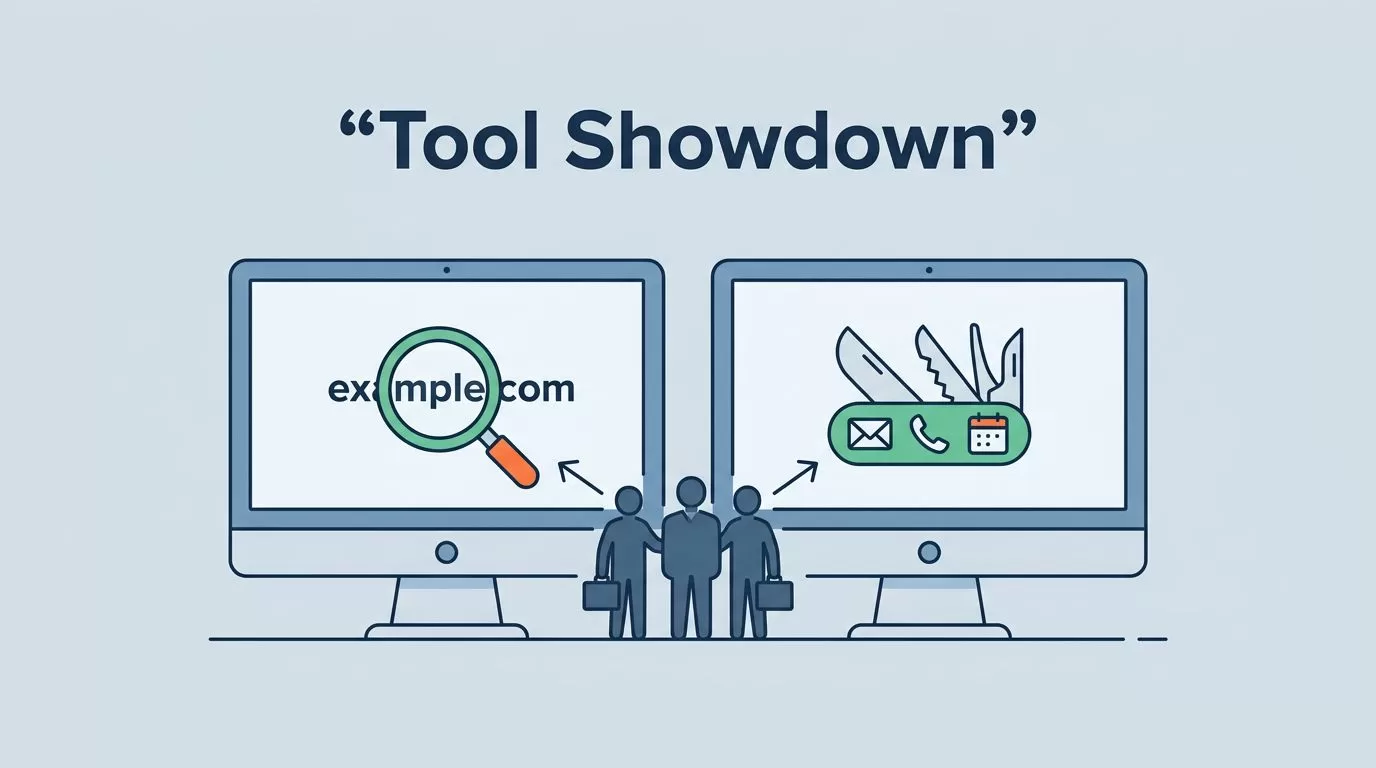
Hunter.io feels like a clean bench with the right tools laid out. I start with a domain, find likely contacts, verify them, and move on. That works well when I already know my target accounts and want to keep list quality high.
Snov.io is more like a packed toolbox. It aims to keep lead finding, campaigns, and light CRM work under one roof. That can save money if I’m replacing other apps, but it also adds more setup.
Here’s the comparison I care about most.
| Buying factor | Hunter.io | Snov.io |
|---|---|---|
| Price to start | Free plan, then Starter at $49/month or $34 monthly on annual billing, with 2,000 credits | I check the live plan page before I buy, since bundles and pricing can change |
| Learning curve | Easier and faster to learn | Broader suite, so setup takes longer |
| Prospecting flow | Best when I already know the company list | Better when I want lead capture, outreach, and tracking together |
| Verification | Clear, focused, and easy to use | Good, but wrapped inside a larger platform |
| Campaigns | Available, but lighter | Stronger fit for drip campaigns and warm-up |
| Integrations | Solid, but narrower | Broader automation coverage |
| Scalability | Great for lean teams, though credits can disappear fast | Better when I want one platform to carry more of the stack |
For a third-party view of the integration gap, I checked a Stackreaction comparison of Snov.io and Hunter. It lines up with what I see in practice, Hunter stays tighter, while Snov.io reaches farther into outreach workflows.

The table says what I’ve found in real use. Hunter is the calmer choice when I want fewer moving parts. Snov.io makes more sense when I need outreach features close at hand.
Why Hunter.io feels stronger for clean prospecting
Hunter.io wins when I care most about speed and clean data. I can move from company domain to verified email without feeling boxed in by a heavy interface.
That matters for small teams because time is the hidden cost. If I’m the founder, the SDR, and half the ops function, I don’t want a tool that takes a week to learn. I want one that gets out of the way. Hunter’s paid plans also allow unlimited team members, which helps when a founder and rep need the same account.
I also like Hunter’s focus on verification. It fits the way I work when I’m cleaning a list before outreach. If that’s your pain point too, my cold email bounce reduction workflow shows why I treat verification as a first step, not a final polish.
I’d rather send fewer emails to better addresses than spray a bigger list and chase bounces later.
Hunter’s tradeoff is easy to spot. Credits can burn quickly when searches don’t turn into usable contacts. The free plan is useful for testing, but a real team usually outgrows it fast. If your process depends on high-volume prospecting, you need to watch usage closely.

That’s why I think Hunter is strongest for teams that already know their market. It works like a tight filter, not a giant net.
Where Snov.io pulls ahead
Snov.io makes more sense when I want one place to run more of the outbound process. I get the appeal immediately. Instead of stitching together separate tools, I can keep finding, outreach, and basic lead tracking under one roof.
That bundled approach can be a real advantage for small teams with little admin help. It means fewer logins, fewer exports, and fewer “where did that lead go?” moments. If I’m building a repeatable sequence and I want campaigns close to my contact list, Snov.io is the more complete setup.
The tradeoff is complexity. A broader tool can feel slower on day one. It also asks me to think through more settings before I see value. That’s not a bad thing, but it does matter when two people share the work.
I also look at cost differently here. A platform like Snov.io can feel cheaper if it replaces several tools. That said, the real cost is workflow fit, not the monthly number alone. A workflow-cost comparison makes the same point, the tool that fits your process usually wins, even if the sticker price looks higher at first.
Which one I’d choose in three small-team setups
If I already know my target accounts, I choose Hunter. I want the shortest path from company name to verified email, and I don’t want extra noise.
If I need lead finding plus drip campaigns plus a light CRM in one place, I lean toward Snov.io. That setup feels better when my outbound motion is still being built.
If my budget is tight and my team is tiny, I start with Hunter. It’s easier to learn, cleaner for verification, and strong enough to support a disciplined outbound routine. If I later need more native outreach depth, then I’d look at Snov.io.
The verdict I’d give a small sales team
For most small sales teams, Hunter.io is the sharper first buy. It does fewer things, but it does the important ones well, especially finding and verifying business emails.
Snov.io is the better choice when I want a more complete outreach system and I can handle the extra setup. If I had to choose today for a lean team with limited headcount, I’d start with Hunter, then add other tools only if the workflow demands it.
The real win isn’t more software. It’s a process that keeps my list clean, my team moving, and my send button worth pressing.
