How I Spot New Smart Home Devices Early With Exploding Topics
I don’t wait until a smart thermostat or robot vacuum is everywhere before I pay attention. By then, the easy upside is gone. Instead, I watch for the first rise in search interest, the first serious launch, and the first signs that s...

I don’t wait until a smart thermostat or robot vacuum is everywhere before I pay attention. By then, the easy upside is gone.
Instead, I watch for the first rise in search interest, the first serious launch, and the first signs that shoppers care. That helps me spot new smart home devices while they still feel early, not crowded. From there, I can tell which products are worth tracking and which ones will fade fast.
How I use Exploding Topics to catch the first signal
I start broad, then I narrow fast. On Exploding Topics’ home topics page, I look for topics that are moving up, not just topics that are already big.
My process is simple:
- I search broad terms like smart home, robot vacuum, smart thermostat, smart lock, and energy monitor.
- I scan for related terms that rise together, because one keyword rarely tells the full story.
- I check the chart shape. A steady climb matters more than a one-week spike.
- I save the topic, then I come back a few days later to see if it keeps moving.
- I compare it with launch news and product pages so I can separate hype from real momentum.
I also watch pages that change often. A website change tracking tool helps me catch launch pages, pricing updates, and product copy changes. When I want to pull multiple retailer listings into one place, I use AI data extraction from sites.
That mix gives me a cleaner read than a social feed alone. Social buzz is loud. Search movement is quieter, and usually more useful.

New smart home devices I keep on my radar in 2026
As of April 2026, I keep seeing the same cluster of products rise again and again. AI robot vacuums are one of them. So are smart thermostats, home energy monitors, security cams, hidden sensors, and home hubs that tie everything together.
The reason is easy to see. People want homes that feel calmer and cost less to run. They also want devices that work across brands, which is why Matter keeps showing up in launch news. When I read The Verge’s coverage of Aqara’s Thermostat Hub W200, I see the shape of the market. Thermostats are no longer sold as simple temperature boxes. They’re being sold as part of a larger control system.
I see the same pattern in cleaning. Narwal’s Flow 2 launch announcement shows how robot vacuums are moving toward vision models, better mopping, and more home awareness. SwitchBot’s CES 2026 smart home robotics demo points to the same shift. Devices are becoming more physical, more adaptive, and a lot less basic.
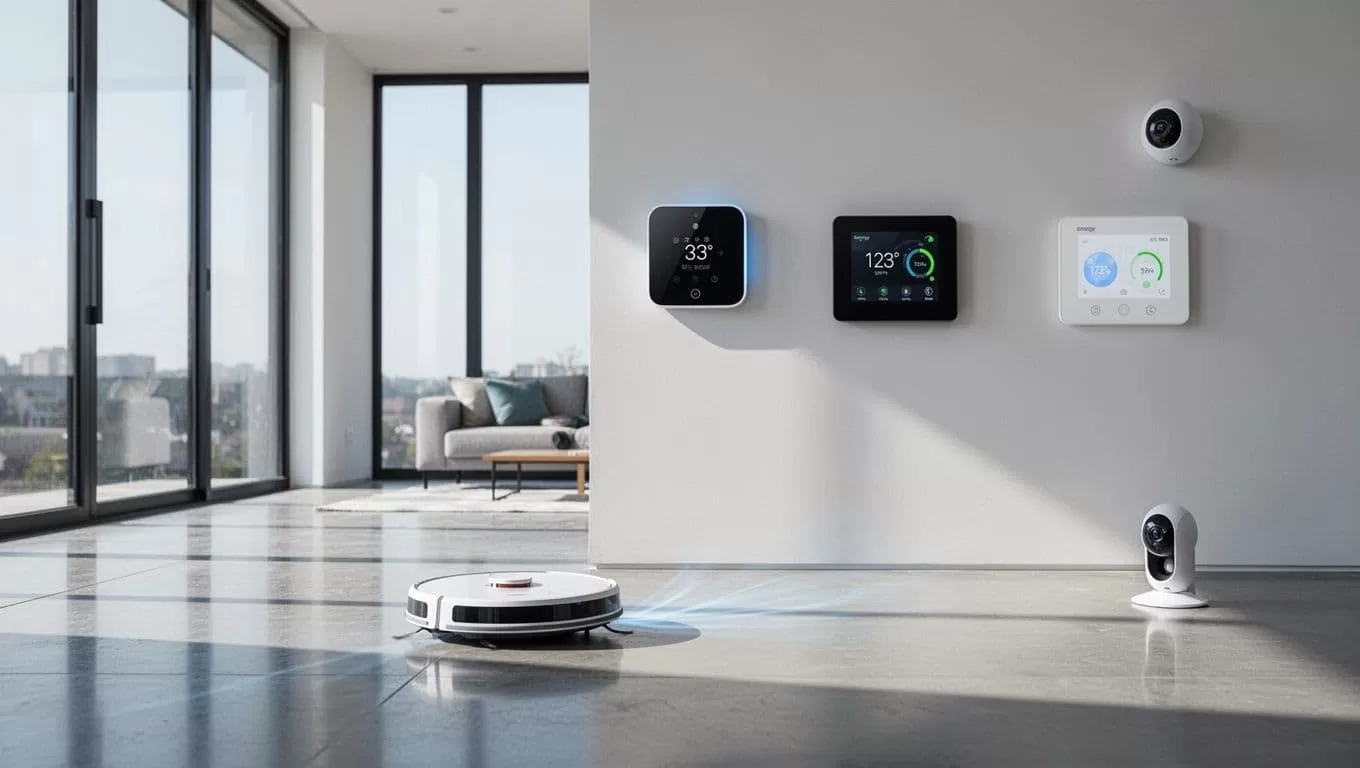
The categories I watch most closely are:
- AI robot vacuums, because vision and mapping upgrades often appear before a wider category shift.
- Smart thermostats, because utility savings and platform support can push adoption fast.
- Energy monitors, because homeowners care more about power use than they did two years ago.
- Smart locks and sensors, because quieter, hidden hardware is becoming more common.
- Home hubs, because people want one app, or at least fewer apps.
If a product category keeps showing up across launches, retailer pages, and trend charts, I know I’m looking at more than a passing fad.
How I tell whether a trend is real
Once I spot a rising topic, I test it against six signals. I want at least a few of them to line up before I call it worth watching.
| Signal | What I check | What I want to see |
|---|---|---|
| Search demand | Exploding Topics, Google Trends, repeat keyword growth | A steady climb over weeks |
| Product launches | CES coverage, press releases, brand stores | More than one company moving in the same direction |
| Retailer activity | Amazon, Best Buy, and direct-to-store listings | Early pages, waitlists, or pricing changes |
| Crowdfunding | Kickstarter and Indiegogo campaigns | Fast funding and real backer comments |
| Reviews | YouTube, Reddit, and first-owner posts | Hands-on details, not copy-paste praise |
| Social discussion | Reddit threads, TikTok clips, niche forums | People asking when it ships or if it works with Matter |
If only social chatter moves, I stay cautious. If search demand, launches, and retailer activity rise together, I pay attention.
A trend gets real when interest moves off the screen and into stores, shipping updates, and buyer questions.
I also like to watch pages for change over time. A launch page that quietly adds a price, a ship date, or a new compatibility line can say a lot. That is where I use website change tracking tool again. When I need broader monitoring across many listings, AI data extraction from sites saves me from checking each page by hand.
The filter I use before I care too much
A clever device can still be a weak product. So I ask three things before I keep watching it.
First, does it solve a repeat job? Cleaning, heating, security, and energy use all pass that test. A gadget that only looks smart rarely holds my attention for long.
Second, does it fit the way people already build homes? Matter support matters here. So does a clean setup and a clear price.
Third, does the market keep talking about it after the launch buzz fades? If yes, I keep the topic on my list. If no, I move on.
That filter saves me time, and it keeps me from chasing every shiny demo. It also helps me focus on products that have a real path into homes, not just into headlines.
Why I keep the list small
I don’t need to track every new gadget. I only need to spot the ones that move from novelty to habit.
That’s why I start with Exploding Topics, then I check the rest of the market. Search demand tells me where attention is going. Launch news, retailer activity, crowdfunding, reviews, and social discussion tell me whether the interest has weight.
When those signals line up, I know I’ve found a smart home trend worth watching before most people notice it.
