How I Find Trending Organic Food Brands with Exploding Topics
Organic food trends can shift fast, but the real winners usually leave clues early. In 2026, I’m seeing buyers care less about a simple organic label and more about what sits behind it, like non-UPF status, nutrient density, and clean...
Organic food trends can shift fast, but the real winners usually leave clues early. In 2026, I’m seeing buyers care less about a simple organic label and more about what sits behind it, like non-UPF status, nutrient density, and cleaner ingredient lists.
That matters if you’re researching products, spotting a new category, or watching which brands might grow beyond a short burst of attention. I use Exploding Topics as my first filter, then I verify the signal before I trust it.
I start with the food feed, not the brand name
I begin on Exploding Topics’ Trending Food Topics page, because broad movement tells me more than a single hot product. I’m looking for shifts like non-UPF interest, functional snacks, and food that feels simple, fresh, and easy to trust.
I use the same method I wrote about in using Exploding Topics for trend spotting, because I don’t want a pretty graph. I want a clue that points to a real buying habit.
Organic Insider says nearly three-quarters of U.S. consumers are trying to avoid ultra-processed foods, and that helps explain why Non-UPF Verified products are getting so much attention in 2026. Their Top 5 Organic Food Trends for 2026 roundup is a useful second check when I want current context.
My 4-step filter for real growth
Once a topic catches my eye, I run it through a short filter. This keeps me from mixing up noise with demand.
- I look for the driver.
I ask what’s pushing the trend. In 2026, that driver is often anti-UPF demand, school food programs, or a desire for simple foods with fewer surprises on the label. If I can’t name the reason, I slow down. - I check the slope, not the spike.
A sharp jump can come from a post, a mention, or a passing story. I want a steadier climb over months. That’s where Exploding Topics data for real demand helps, because it keeps me focused on movement that lasts. - I read the buyer language.
I look at reviews, search phrases, and what people say in comments. If shoppers keep asking about ingredients, repeat orders, or kid-friendly options, I pay attention. I also cross-check examples with 12 organic food companies for healthy groceries in 2026, because real brands usually tell a clearer story than trend charts alone. - I ask who buys again.
Repeat purchase matters more than first-click curiosity. Organic dairy, snacks, fruit and vegetable blends, and school-ready foods usually have a better shot at repeat volume than a one-time novelty.
That process keeps me honest. If I can’t see repeat demand, I move on.
Organic brands and categories I would watch in April 2026
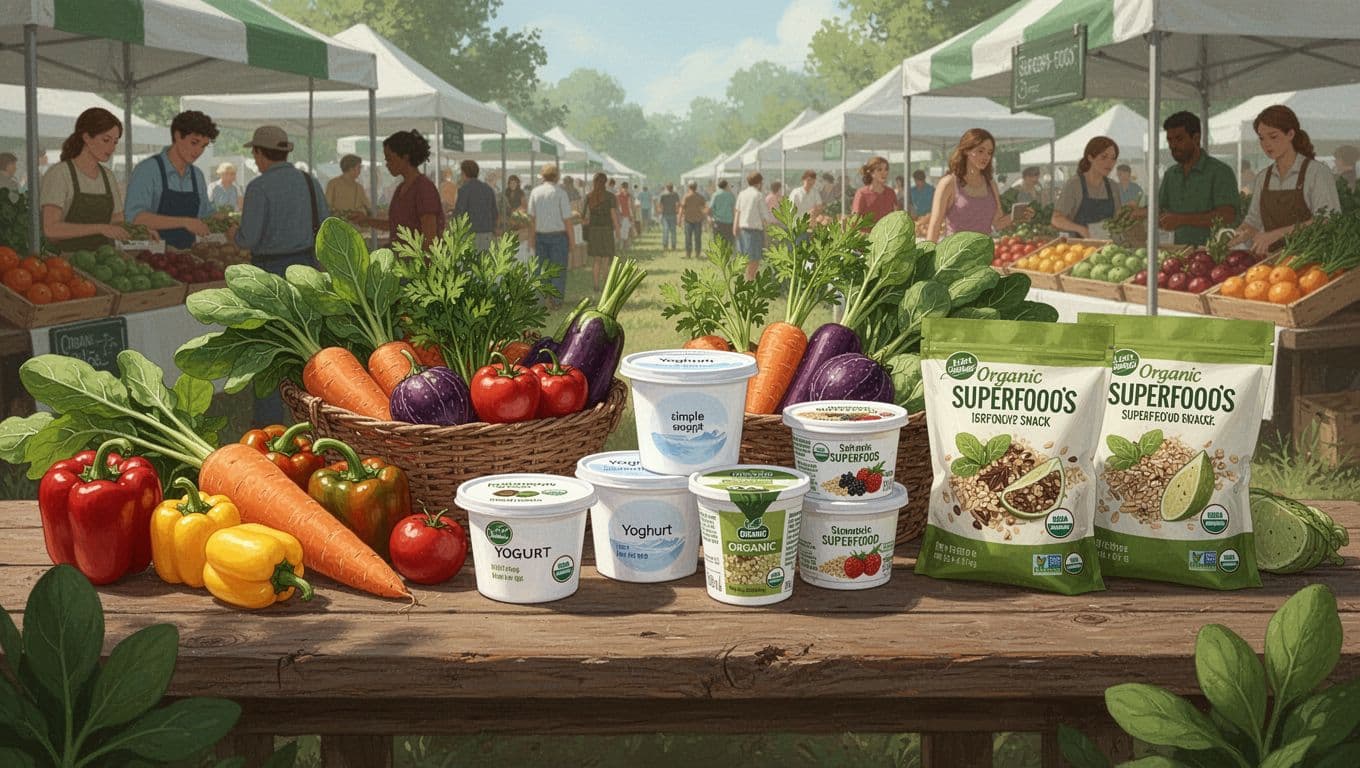
A few names keep showing up in organic conversations: Nature’s Path, Stonyfield, Straus, Organic Valley, Rhythm Superfoods, and kencko. I don’t treat them as automatic buys. I treat them as signals of where the market is already leaning.
Nature’s Path, Stonyfield, and Straus have expanded into schools, which matters more than it sounds. School distribution creates routine buying, not one-off buzz. That kind of shelf life is a stronger clue than a viral post.
I also keep one eye on tracking new ecommerce niches with Exploding Topics, because food brands often follow the same pattern as other fast-moving product niches. A category grows, then the winning brands add better packaging, cleaner messaging, and easier repeat buying.
That’s why I pay attention to the mix of dairy, snacks, and shelf-stable fruit and veg products. Those categories fit daily routines, and routines are hard to break.
How I tell hype from durable demand
A noisy brand can look exciting for a week. A durable brand keeps pulling people back.
| Signal | Short-lived hype | Durable growth |
|---|---|---|
| Main trigger | Viral clip or novelty | Ingredient shift, school demand, or repeat use |
| Search pattern | Sharp spike, fast drop | Slow climb over months |
| Buyer behavior | Curiosity clicks | Repeat purchases and reviews |
| Brand shelf life | One product, one moment | Line extensions and subscriptions |
I watch for a pattern like this because it usually points to a real market, not a moment. Exploding Topics’ food startups feed helps me see which younger companies are building around that kind of demand.
A spike is a signal, not a sale.
That line saves me from chasing products that only look busy. If the buzz fades when the feed moves on, I don’t treat it as a serious opportunity.
The pattern I trust most
The best organic food brands in 2026 are not just “organic.” They answer a deeper shift in how people eat, shop, and refill their carts. That shift shows up in non-UPF demand, nutrient-focused products, and brands that earn repeat use.
When I use Exploding Topics this way, I stop guessing and start seeing structure. The brands worth watching are the ones that match the trend and can still hold up after the first wave of attention passes.
