Predictable LinkedIn Audience Growth With Someli
LinkedIn audience growth gets messy when I post without a system. One week looks strong, the next week falls flat, and the reason is usually simple, I changed too many variables at once. In 2026, I get better results when I treat LinkedIn l...
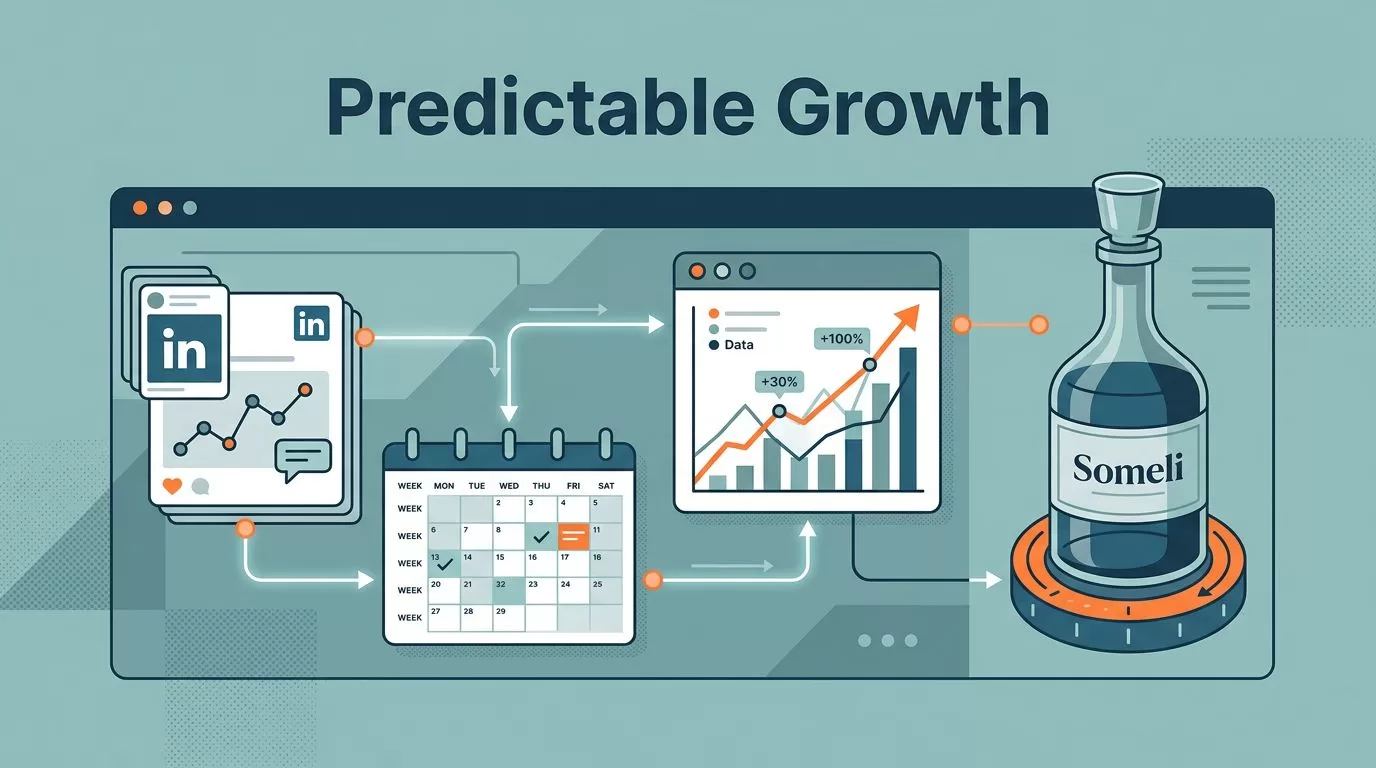
LinkedIn audience growth gets messy when I post without a system. One week looks strong, the next week falls flat, and the reason is usually simple, I changed too many variables at once.
In 2026, I get better results when I treat LinkedIn like a repeatable publishing machine, not a lucky streak. Someli helps me keep the parts together, planning, publishing, and review, so I can grow with more control and less guesswork.
Start with one audience and one promise
I do not start with content ideas. I start with a single audience and a single outcome.
If I try to speak to founders, marketers, recruiters, and operators in the same week, the message gets fuzzy. The posts may still get impressions, but they will not build momentum. Instead, I choose one person I want to reach and one problem I want them to trust me with.
That is where current LinkedIn best practices line up with what I see in the feed. A recent LinkedIn 2026 growth strategy post pushed the same idea I keep seeing in practice, narrow the niche, open with proof, and write for relevance instead of volume. That matches my own experience. A tight point of view beats a broad one almost every time.
I also keep my hooks simple. A short lesson, a sharp observation, or a concrete result works better than a polished slogan. People scroll past polish. They pause for proof.
Turn employee reach into a reliable channel
I get more stable growth when I stop treating LinkedIn like one account and start treating it like a group of voices. Someli is useful here because it centers employee advocacy instead of leaning only on a brand page.
That matters to me for a simple reason, people trust people more than they trust logos. A post shared by a founder, a client service lead, or a specialist usually feels more immediate than the same point reposted from a company profile. Someli helps me turn that pattern into a routine instead of a one-off win.

I like that Someli can map content to different roles. A client service teammate can speak about what customers ask most. A recruiter can share what makes a candidate stand out. A specialist can explain a lesson from recent work without sounding like a marketing script. The voice stays human, but the message still supports the same brand story.
I get better results when the same clear idea appears through real people, not just through one company page.
That is the difference between a posting habit and a growth system. One creates noise. The other builds familiarity.
Use Someli to plan posts that sound like people
I do not trust any tool just because it says AI. I compare the workflow, the guardrails, and the output the same way I approach About Gist Junction, which is to test claims against how the tool behaves in practice.
With Someli, I want three things to be true. First, I want the content plan to fit the actual audience I care about. Second, I want the draft to sound like the person posting it. Third, I want an approval step before anything goes live.
That sequence keeps me from publishing generic content that looks active but adds nothing. Someli works best when I treat it as a draft engine and coordination layer, not as a replacement for judgment. I still decide what stays, what gets cut, and what needs a stronger example.
I also keep a few rules in place. I avoid vague claims. I make sure each post has one clear point. I keep the language close to how the employee already speaks in real conversations. When the copy sounds too polished, I rewrite it until it feels like something a person would actually say in a call or meeting.
That discipline pays off because LinkedIn rewards clarity. A post with a clean angle, a real opinion, and a useful detail gets more meaningful attention than a long post filled with safe phrasing. Someli helps me move faster, but my standards still decide what gets published.
Read the metrics that tell me growth is real
Follower count looks nice, but I do not use it as my main signal. I want to know whether LinkedIn is sending me the right people, not just more people.
Here is the small set of metrics I watch most closely.
| Signal | What I watch | What it tells me |
|---|---|---|
| Profile views | Views from the right job titles or industries | Whether the post reached the audience I wanted |
| Connection requests | Requests that mention the post or topic | Whether the content created interest |
| Comments | Replies from prospects, partners, or peers | Whether the topic started a conversation |
| Website clicks | Clicks that lead to a useful page or form | Whether the post moved people closer to action |
The pattern matters more than any single spike. A post can get likes from nowhere and still do nothing for growth. Another can get fewer reactions and bring in the right conversations.
I also pay attention to timing and engagement. A LinkedIn growth workflow I reviewed in this analytics-focused post put a lot of weight on engaging before and after posting, then exporting data for a closer look. That matches what I do. I spend time in the comments where my audience already hangs out, then I review the results after the post has had time to breathe.
When a post wins, I want to know why. When it misses, I want the reason to be visible. Someli helps because I can keep the content, the publishing date, and the performance review in one place instead of scattering them across memory and half-finished notes.
My weekly Someli workflow
My process stays simple because complicated routines break fast.
- I pick one audience theme for the week. I look for a topic I can prove with a real example, not a broad opinion.
- I draft the post set inside Someli. I ask for variations by role, then I trim anything that sounds stiff or too generic.
- I approve and publish with a consistent cadence. I do not pile everything into one day, because spacing gives each post room to work.
- I review the numbers at the end of the week. I keep the posts that brought real conversations, and I cut the ones that only collected passive engagement.
When I connect that routine to the rest of my stack, I use the same kind of practical planning I use in this marketing automation guide. Content only helps when it fits the follow-up process behind it.
That is where predictability starts to show up. I am not hoping a random post hits. I am repeating a small system that I can tune.
Conclusion
Predictable LinkedIn growth does not come from posting more often and hoping for the best. It comes from picking one audience, keeping one message tight, and repeating it through people who already have real credibility.
Someli helps me keep that loop moving. I can plan the content, keep the voice human, publish on schedule, and review what happened without losing the thread.
That is the part I trust most. When the system is clear, the growth stops feeling accidental.
