Affiliate Fraud Prevention With Rewardful: A SaaS Control Plan
Affiliate fraud can turn a good partner program into an untracked discount system. Affiliate fraud prevention protects margin, keeps payouts accurate, and stops honest partners from competing with bad traffic. Rewardful can flag potential s...
Affiliate fraud can turn a good partner program into an untracked discount system. Affiliate fraud prevention protects margin, keeps payouts accurate, and stops honest partners from competing with bad traffic.
Rewardful can flag potential self-referrals and keep suspicious commissions out of payouts. It still needs clear rules, billing checks, and a person who reviews exceptions. Start with the fraud patterns that cost SaaS teams the most.
FIND THE FRAUD PATTERNS BEFORE THEY REACH PAYOUT
Fraud rarely looks dramatic at first. It often appears as a few new accounts, a coupon shared in the wrong place, or referral traffic that never becomes retained revenue.
The goal is not to treat every unusual signup as fraud. The goal is to identify activity that doesn’t match how a real affiliate should earn.
SELF-REFERRALS TURN COMMISSIONS INTO DISCOUNTS
A self-referral happens when someone joins your affiliate program, then buys through their own link. Instead of paying full price, they receive a commission back.
This is common with free trials, low-friction subscriptions, and products with recurring commissions. A customer may use another email address, a different payment card, or a company account to hide the overlap.
Rewardful’s self-referral fraud detection flags potential matches for review. It can alert you by email, then lets you mark a referral as “Looks Good” or “Looks Suspicious.”
COUPON ABUSE AND LOW-QUALITY CLICKS CREATE LEAKAGE
Coupon abuse happens when a partner publishes a private code on a coupon site or presents an expired offer as active. The affiliate may claim commission from customers who already intended to buy.
Click fraud has a different shape. You may see high clicks, weak trials, repeated signups, or traffic from locations your partner doesn’t normally reach. A click is interest. It is not proof of a qualified customer.
Watch for these warning signs:
- Several referred customers use the same payment method, billing address, device, or company domain.
- A new affiliate produces a sudden spike in trials with no public content, email list, or campaign evidence.
- Coupon redemptions rise while trial-to-paid conversion falls.
- Referred accounts cancel, refund, or reverse payments at a higher rate than other customers.
- An affiliate bids on your brand name or a close misspelling of it.
BUILD RULES BEFORE YOU APPROVE AFFILIATES
A fraud control system starts before the first referral. Your terms should tell affiliates how they can promote your product, what creates a valid commission, and what activity gets rejected.
Don’t hide these rules in legal text. Put them in the application flow, partner guide, and onboarding email.
APPROVE PEOPLE, NOT EMPTY APPLICATIONS
Review each application before access. Ask for the applicant’s website, audience, main promotion channel, and examples of relevant content or campaigns.
A SaaS consultant, newsletter operator, review site, community owner, or integration partner may be a strong fit. An application with no business identity and no promotion plan needs more review.
Start with a small approved group. Check whether their audience matches your buyer, whether tracking works, and whether their content creates support work. Opening the program too early creates a larger cleanup job later.
WRITE THE COMMISSION RULES IN PLAIN LANGUAGE
Your affiliate program terms and conditions should state what counts as valid activity. Include rules for self-referrals, misleading claims, unsolicited email, paid search, trademark use, coupon sharing, and account duplication.
State whether commission applies to collected revenue or list price. State when a commission becomes payable. Explain what happens after a refund, failed payment, cancellation, or chargeback.
A referral cookie records attribution. A successful payment and a completed review create the payout obligation.
Give affiliates a support path for disputes. A partner who can ask a question before publishing is less likely to guess at the rules.
SET UP AFFILIATE FRAUD PREVENTION IN REWARDFUL
Rewardful gives SaaS teams a practical first layer of affiliate fraud prevention. It identifies potential self-referrals, sends an alert, and gives your team a clear review decision.
That workflow is useful because it separates a signal from a verdict. A matching detail can require review without proving bad intent.
REVIEW EVERY SELF-REFERRAL ALERT
Assign one program owner to review fraud alerts. Check the affiliate profile, referred customer, payment record, signup date, coupon used, and customer history.
Mark the referral “Looks Good” when the explanation is supported by the records. Mark it suspicious when the evidence points to self-dealing, duplicate accounts, or a prohibited promotion method.
Rewardful can deactivate suspicious referrals so they don’t move into the payout list. Keep a short internal reason for every decision. “Same customer and affiliate payment details” is useful. “Looks wrong” is not.
CONFIGURE COMMISSIONS AROUND REAL REVENUE
Set commission terms that match your billing model. If a customer receives a discount, credit, refund, or partial payment, the commission should reflect the amount you actually collected.
Use a limited commission period for recurring plans when it fits your unit economics. A lifetime promise can create long-term payout exposure that is hard to audit.
Rewardful supports affiliate tracking, coupon code tracking, and attribution options for SaaS programs. Its affiliate marketing guide for businesses is a useful reference when you are setting the program structure and partner rules.
USE BILLING EVENTS AS THE PROOF OF REVENUE
A browser referral records intent. It does not confirm revenue. The billing system is the proof point.
Your checkout path should preserve the referral data through signup, payment, upgrades, and renewals. Then compare Rewardful records against the amount your payment processor actually collected.
CHECK ATTRIBUTION AT THE RIGHT MOMENT
Test the complete path before you recruit at scale. Open an affiliate link. Start a trial. Apply a coupon. Upgrade the account. Process a payment. Then confirm that the right affiliate and commission appear.
Test more than one path. Include direct signup, coupon redemption, annual billing, monthly billing, upgrades, refunds, and canceled trials.
A backend change can remove referral data without producing a visible checkout error. Run this test after payment-page updates, subscription changes, new checkout tools, or new product plans.
KEEP A FIXED COMMISSION RECORD
Create a spreadsheet or database that joins billing data with Rewardful commission data. Don’t estimate commissions from dashboard totals or a strong month.
Use one row for each commission event:
| Field | What to record |
|---|---|
| Customer and affiliate | The account IDs, source link, and attribution date |
| Revenue record | Invoice date, amount collected, discount, and currency |
| Commission status | Pending, due, paid, voided, refunded, or reversed |
| Review evidence | Alert status, reviewer, reason, and decision date |
This record makes disputes easier to resolve. It also shows whether leakage comes from fraud, broken tracking, refunds, or unclear program terms.
MAKE PAYOUTS A CONTROLLED PROCESS
The payout batch is your last control point. Once money leaves your account, recovery takes more time and creates more conflict.
Don’t pay every commission the moment it appears. Review the due list on a fixed schedule after your refund and chargeback exposure has passed.
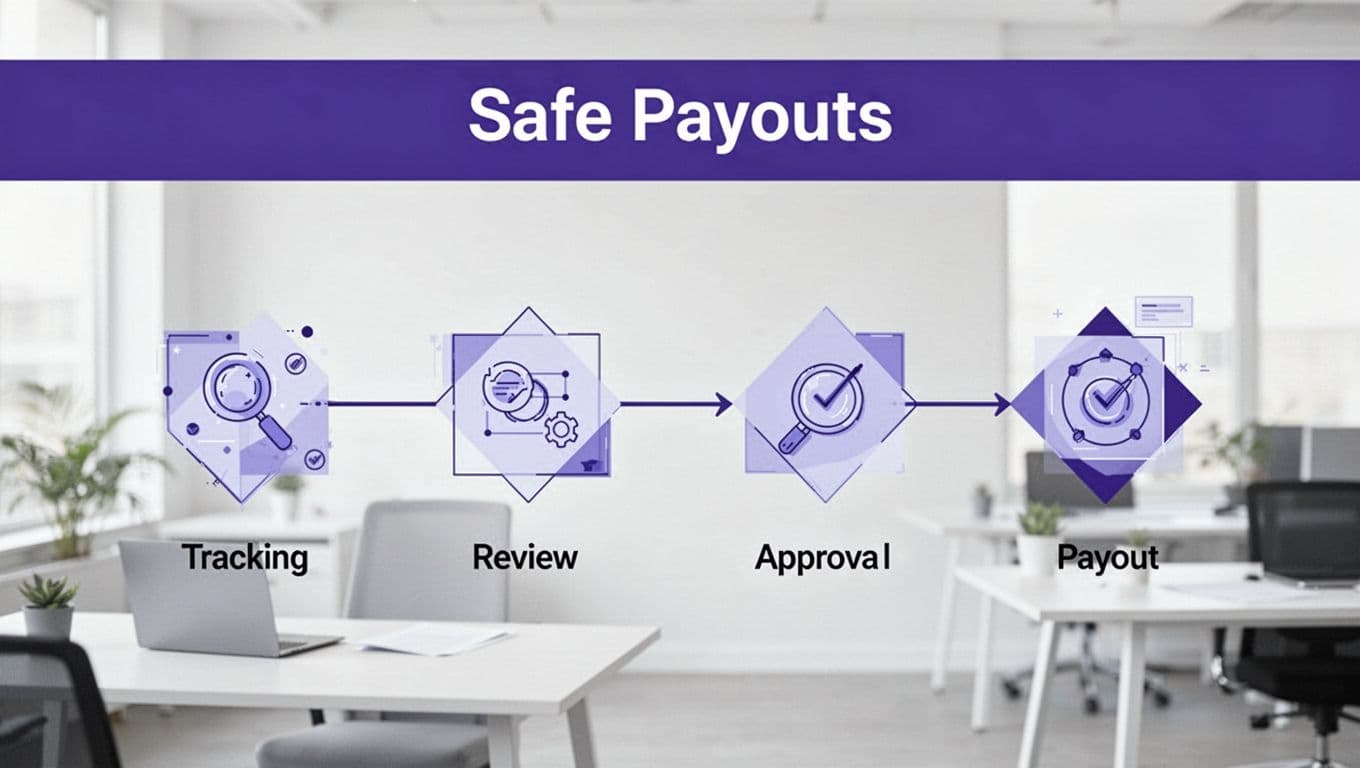
USE A SIMPLE REVIEW SEQUENCE
Run the same process before every batch:
- Export or review commissions that are due for payment.
- Remove referrals marked suspicious or still under review.
- Compare large or unusual commissions against paid invoices and refund status.
- Approve the batch, save the payment result, and store any exceptions.
Keep the original commission record intact. If you void a commission, add the reason and date. Don’t overwrite the original data with a corrected total.
This creates an audit trail when an affiliate asks about a missing payment months later. You need the source commission, adjustment reason, reviewer decision, and payout result.
DON’T MEASURE CLICKS AS PROGRAM HEALTH
High click volume can hide weak buying intent. The better program metrics are approved customers, collected referred revenue, cleared commissions, refunds, reversals, and paid commissions.
Track review time too. A process that creates 50 commissions but takes three hours to correct is not efficient.
If reversals or attribution errors rise, pause new affiliate approvals. Fix the checkout path and commission rules before you expand the program.
PROTECT LEGITIMATE AFFILIATES WHILE YOU ENFORCE RULES
Aggressive controls can damage good partner relationships when your team treats every alert as proof of fraud. Your review process needs consistency.
Legitimate affiliates may share a company domain with a customer. They may refer a colleague. They may use a coupon in a way that looks unusual but follows your published terms.
GIVE PARTNERS A FAIR REVIEW PATH
Contact the affiliate when an issue is unclear. Ask for the page, campaign, or audience source that produced the referral. Set a response deadline and document the final decision.
Don’t accuse a partner based on one signal. Compare the full record, including payment information, signup timing, campaign method, and customer behavior.
Use the same policy for every partner. Consistent reviews protect your margin and make commission decisions easier to defend.
BLOCK BRAND ABUSE WITHOUT BLOCKING VALID PROMOTION
Typosquatting can send brand-intent traffic through a partner’s link. The visitor thinks they are finding your company, but the affiliate collects credit for a customer you may have acquired anyway.
Set rules for branded paid search, domain names, browser extensions, and misspelled versions of your trademark. Rewardful’s guide to preventing affiliate typosquatting outlines the risk and the controls to include.
Review these violations separately from self-referral alerts. They need different evidence and different enforcement.
KEEP FRAUD CONTROLS TIED TO REAL PAYOUTS
Affiliate fraud prevention works when it connects partner approval, tracking, billing data, referral review, and payout controls. Rewardful gives you useful detection and review tools, but your operating process makes those tools reliable.
Start with clear terms. Review alerts before payout. Measure approved revenue and reversals instead of clicks.
If your program has disputed commissions, weak attribution, or growing coupon abuse, Book A Call to map a practical review and payout process.
