Pitch Your Agency Experimentation Platform With Mida.so
Agencies managing multiple client websites face a constant operational bottleneck. Traditional A/B testing tools demand heavy developer resources, slow down page rendering, and make cross-client reporting a messy chore. You need a reliable...

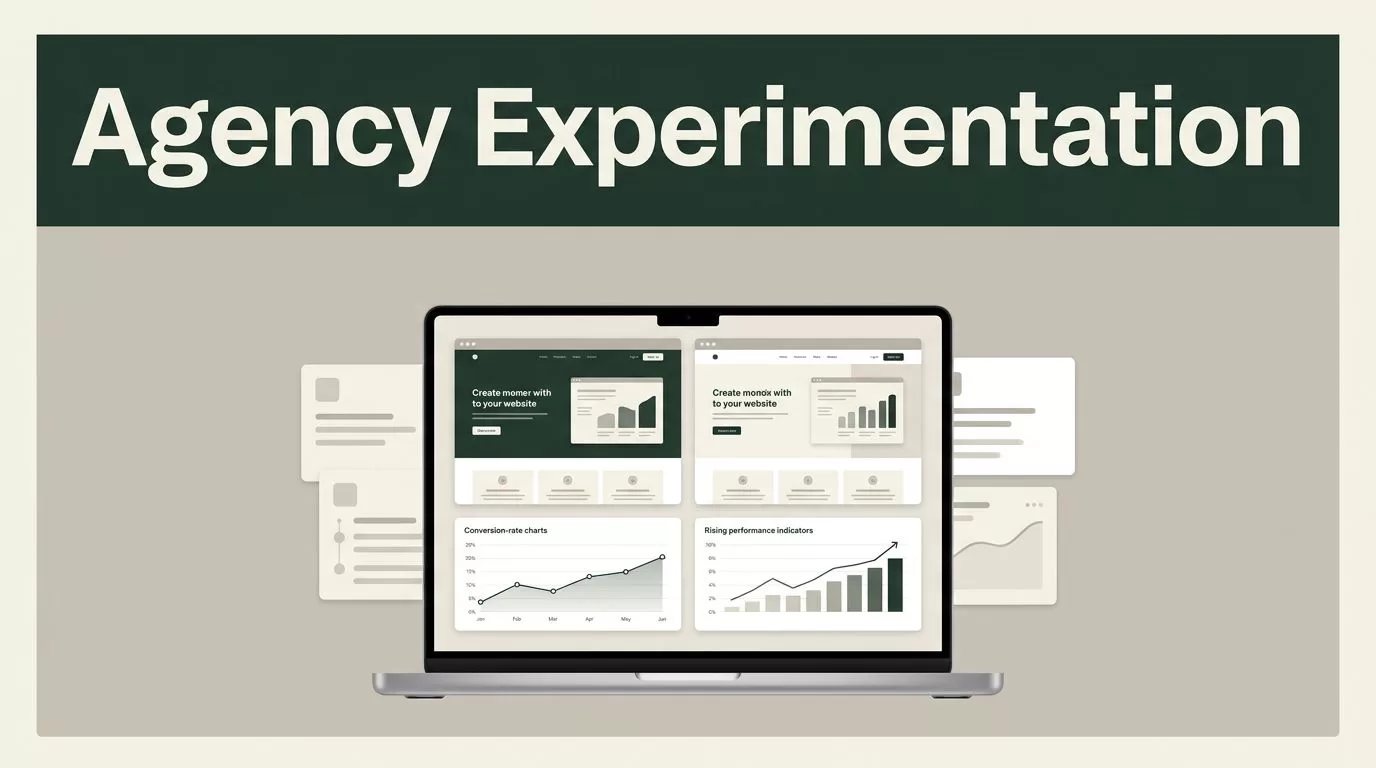
Agencies managing multiple client websites face a constant operational bottleneck. Traditional A/B testing tools demand heavy developer resources, slow down page rendering, and make cross-client reporting a messy chore. You need a reliable way to run tests quickly, prove value to stakeholders, and scale your conversion rate optimization services without bloating your tech stack. That is where an agency experimentation platform changes your client delivery model.
Mida.so gives growth teams and client services departments a lightweight alternative for running website experiments, deploying winning variations, and tracking results. Instead of waiting weeks for engineering sign-off, your team can launch tests, segment audiences, and connect performance data directly to business outcomes.
Key Takeaways
- Deploy visual and code-based tests quickly without relying on heavy client-side developer scripts.
- Evaluate test results using strict business metrics, absolute visitor counts, and crucial audience segments.
- Monitor guardrail metrics like page load speed and layout shifts to protect the underlying user experience.
- Document wins and losses clearly to keep client stakeholders aligned and inform future testing cycles.
Configuring Your Agency Experimentation Setup
Before launching any client campaign, you need to establish a clean baseline. Record current conversion rates, bounce rates, and traffic distributions across mobile and desktop devices. If your baseline data is noisy or incomplete, your experiment analysis will yield unreliable conclusions. Exclude internal company traffic, automated bots, and visitors already enrolled in conflicting experiments to keep your data clean.
Traffic allocation controls how visitors enter your test. A standard setup uses a fifty-fifty split, giving both experiences equal exposure. Keep your targeting rules precise. If your menu update or banner test targets mobile visitors or paid search traffic, configure those audience parameters before launching. Altering targeting parameters mid-stream creates a new test condition, corrupting your sample purity and forcing you to restart your measurement period.
+-----------------------------------+-----------------------------------+
| Metric Type                       | What It Measures                  |
+-----------------------------------+-----------------------------------+
| Exposures                         | Number of users entering each     |
|                                   | variation                         |
+-----------------------------------+-----------------------------------+
| Conversion Rate                   | Percentage of visitors completing |
|                                   | the primary goal                  |
+-----------------------------------+-----------------------------------+
| Guardrail Metrics                 | Page load speed, error rates, and |
|                                   | bounce rates                      |
+-----------------------------------+-----------------------------------+
Monitor your traffic distribution and visitor counts to ensure uneven routing doesn’t skew your confidence levels. For a closer look at platform capabilities and feature comparisons, explore the Mida Blog for practical deployment strategies.
Reading Test Results With Business Context
A report needs more than a winning percentage to justify a permanent product change. Start by inspecting your primary metric and comparing your control version against the variant under identical test conditions. Calculate your conversion rate accurately by dividing total conversions by total exposures, then multiplying by one hundred. Treat early results as directional rather than final. Review your sample size and experiment duration before choosing a winner.
Conversion rate = (Conversions / Visitors) x 100
Review absolute numbers alongside your percentage lift. A small percentage difference based on a handful of conversions should never drive a site-wide redesign. To see how specialized testing solutions handle these reporting parameters, review the Mida.so platform overview.
Guardrail metrics protect your bottom line from shallow wins that degrade the user experience. Suppose a new shipping calculator increases short-term cart additions while slowing down page rendering across mobile devices. Your overall conversion rate might tick upward, but your long-term bounce rate will climb as frustrated shoppers abandon slow loading screens. Monitor your core metrics closely to ensure that a conversion win doesn’t mask a technical regression.
Segmenting Performance Across Key Channels
An overall result can hide important differences that dictate whether a test actually scales. Mida lets you inspect performance by useful audience dimensions when those dimensions are available in your experiment setup and report. Start with segments that match your specific test hypothesis. For a responsive cart drawer change, compare desktop and mobile users directly. For a paid acquisition test, compare traffic sources or specific campaign groups. For a pricing experiment, review new visitors separately from returning users.
Segment analysis answers questions that the overall report completely misses. Does the variation improve mobile conversion but reduce desktop conversion? Does paid search respond differently from organic traffic? Define your audience narrow enough to explain. Visitors from enterprise ad campaigns who viewed high-tier products provide useful signal. Broad groups like all high-value visitors remain too vague until you define them with precision.
> A test can collect thousands of visits and still produce the wrong decision if you read the data too early. Real-time monitoring gives you visibility while an experiment runs, but live numbers need statistical discipline.
When evaluating your findings, you must look beyond top-line numbers. A variant that wins overall may underperform for mobile users or specific traffic sources that matter most to your bottom line. Check whether your results remain consistent across important audience segments. You should also review absolute numbers alongside rates. For a deeper look at optimizing web experiences without sacrificing speed, read the website optimization guide.
Documenting Wins and Losses for Long-Term Growth
Scaling your experimentation program requires operational discipline and guardrails. Document every test result as won, lost, inconclusive, or technically invalid based on your data guardrails. Store the result alongside your original hypothesis and recommendation. If a test wins, define the permanent implementation plan for your development team. If it loses, record what the result rules out so you don’t repeat the same mistake in future quarters.
Keep your stakeholders informed with clear reports that outline what you changed, what the experiment measured, and what the financial impact was. Use plain language. Say that the variant produced a higher or lower conversion rate during the test period. Conclude every test cycle by feeding verified learnings back into your team knowledge base so future optimization efforts build directly on past data.
Conclusion
Running a successful experimentation program across multiple client accounts requires speed, precision, and reliable reporting. Mida.so removes developer bottlenecks and gives your agency the lightweight infrastructure needed to scale conversion optimization with confidence.
Explore Mida.so today to see how your agency can streamline experiment deployment and prove measurable revenue impact for every client.

