Build a B2B Referral Program With Rewardful
Referral clicks don’t pay sales commissions. Collected subscription revenue does. A B2B referral program needs clear economics, clean attribution, and rules your finance team can apply without debate. If the partner, customer, and Str...
Referral clicks don’t pay sales commissions. Collected subscription revenue does.
A B2B referral program needs clear economics, clean attribution, and rules your finance team can apply without debate. If the partner, customer, and Stripe record do not match, the referral is not ready for a payout.
Rewardful gives Stripe-based SaaS teams a low-code route to launch, but the program design still belongs to you. Start with the commercial rules, then connect the tracking.
Build a B2B referral program sales can support
Set the payout model before you create a campaign. Sales, finance, and partners should all be able to answer one question: “What event earns a commission?”
Define commissionable revenue as money collected for an eligible subscription, after stated exclusions. Write down whether this means the first payment, every subscription payment, or a limited period of payments.
Choose a commission model that fits your contract value
A recurring offer can attract stronger partners because they see upside after the first conversion. It can also create an open-ended liability if you never set a time limit.
A one-time reward is easier to forecast. It works well when your annual contract value is high or your sales cycle includes a qualified handoff.
| Commission model | Best fit | Recommended control |
|---|---|---|
| 20% recurring revenue for 12 months | Self-serve SaaS with monthly plans | Pay only on collected subscription revenue |
| Fixed reward after first annual payment | Annual contracts with clear value | Wait until payment clears |
| Fixed reward after qualified opportunity acceptance | Sales-led SaaS with long cycles | Define qualification in writing |
Don’t pay for a trial signup, a booked demo, or a lead form without qualification rules. Those events are easy to create and hard to value.
Make low-quality referrals unprofitable
Set a minimum contract value if small plans do not cover partner administration. Exclude internal purchases, self-referrals, test accounts, fraudulent orders, and customers already active in your pipeline.
Decide how you handle an account that was already in Salesforce or HubSpot before a partner sends a link. In most B2B programs, an existing opportunity belongs to the sales process, not the affiliate cookie.
A referral link proves interest. A paid, eligible Stripe customer proves commissionable revenue.
Map attribution before you install tracking
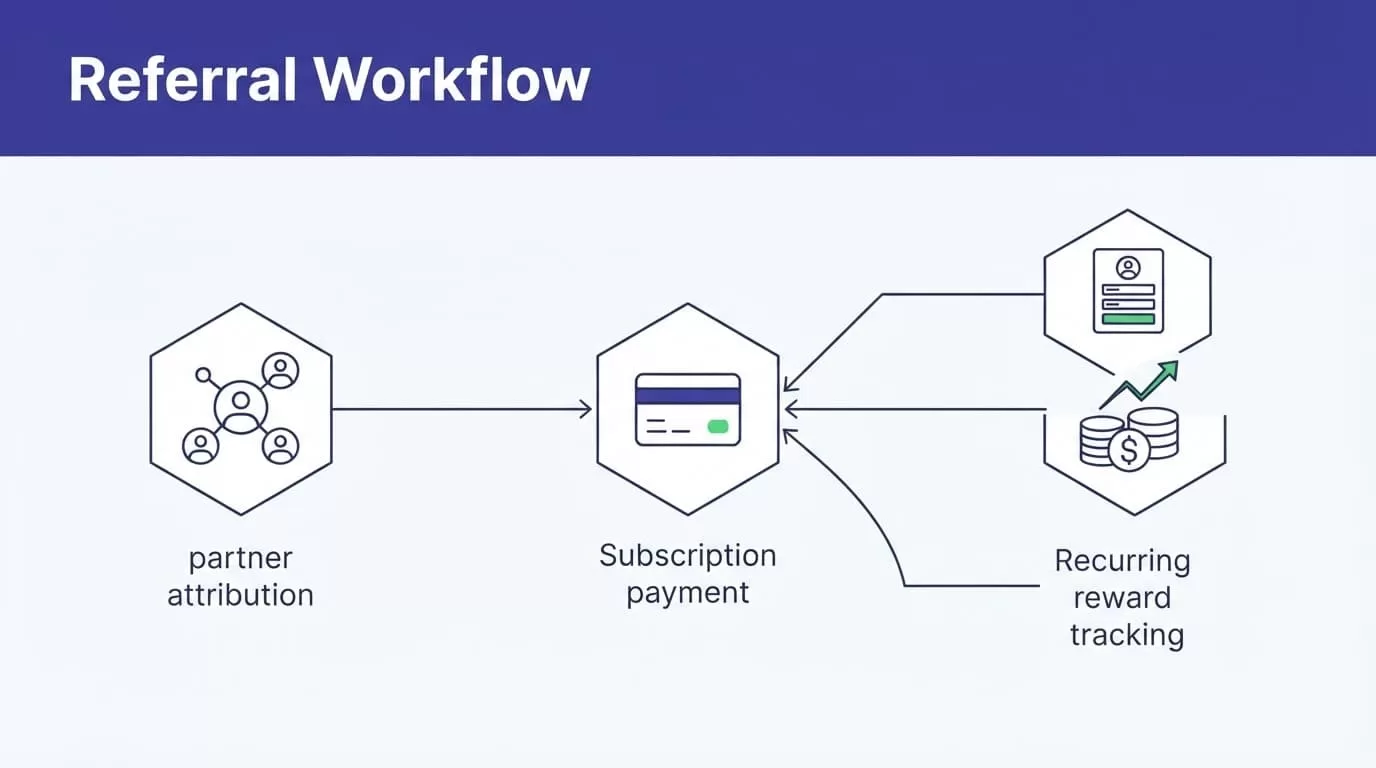
Draw the path on one page: partner link, visitor, signup, Stripe customer, first payment, renewal, payout. Name the system of record at each step.
Rewardful is built for SaaS referral and affiliate programs connected to Stripe, but your team still needs one identifier that follows the customer through billing. Review Rewardful’s Stripe-based affiliate platform before you decide where that identifier will live.
Define the conversion event
Use a conversion event that finance can verify. For most subscription products, this is the first successful payment after a trial or contract approval.
Write the exceptions beside it. Does a customer who starts on a free plan count later? Does a sales-assisted annual invoice count? What happens when a buyer uses a company email but pays through a separate Stripe customer record?
Document the expected answer before launch. Do not ask RevOps to reconstruct attribution after a partner requests payment.
Set cookie and attribution rules
Cookie length should match your buying cycle. A 14-day window may work for a simple self-serve tool. A 60- or 90-day window may be more realistic for a product with security review, procurement, and multiple stakeholders.
Rewardful describes customizable cookies, cross-domain tracking, and commission structures. Configure the duration deliberately. A longer window is not automatically fair if the partner had no meaningful role in the deal.
Set your conflict rule too. If two partners refer the same company, decide whether the first eligible referral wins, the most recent eligible referral wins, or the case goes to manual review.
Connect Rewardful and Stripe with a test plan
Rewardful’s documented setup path starts with creating an account, connecting Stripe, and creating a campaign. Keep the first campaign narrow. One audience, one offer, one commission rule, and one owner.
Do not launch separate campaigns for every partner type on day one. You will create more exceptions than useful data.
Configure the campaign around your real offer
Use a campaign name your team can recognize in reports. Add the payout terms partners will see. Match the commission structure to the subscription product or annual contract you selected.
If you use Stripe Pricing Table, follow Rewardful’s current implementation guidance. Its Stripe Pricing Table setup requires the data-rewardful attribute, and coupon-based tracking requires promotion codes to be enabled for the relevant product.
For a custom checkout, give engineering a short acceptance test. The referral identifier must connect the referred visitor to the Stripe customer record. Test that path before sending a single live partner link.
Test lifecycle events, not only signup
Run controlled test cases for a referred signup, trial conversion, first invoice, failed payment, cancellation, refund, upgrade, and downgrade. Check the partner view, Stripe data, and your internal revenue report after each case.
Rewardful’s Stripe Marketplace listing says it adjusts commissions for upgrades, downgrades, trials, cancellations, and refunds. Your job is to verify that those outcomes match your program terms and accounting rules.
Keep a record of every test result. Include the test email, Stripe customer ID, campaign, expected outcome, actual outcome, reviewer, and date.
Recruit partners who can reach buyers
Start with named partners. Existing customers, implementation consultants, agencies, specialist newsletters, and software communities are better than a public signup page with no review process.
A partner should have access to the buyer, not only a large audience. Ten people who advise your ideal customer can beat a creator with 50,000 unrelated followers.
Send a direct partner message
Lead with the audience fit and the payment rule. Avoid vague language about “earning more” or “joining a growth community.”
“We are opening a referral program for partners who work with B2B SaaS teams. We pay 20% of collected subscription revenue for the first 12 months on eligible new customers. We provide a tracked referral link, clear terms, and a named contact for deal questions.”
Replace the percentage, payment period, and customer definition with your actual terms. Never send a template that promises more than your finance team approved.
Ask each partner how they plan to refer customers. Their answer often reveals whether they have a real channel, a useful service relationship, or only a plan to post a generic link.
Put terms, refunds, and payouts in writing
Your terms need plain answers to the questions that create disputes. Do not bury them in a long document full of general marketing language.
Cover the decisions that affect payment
State the eligible product, customer geography, commission rate, attribution window, payout schedule, and minimum payout amount. Define the treatment of annual prepayments, coupons, credits, partner-created accounts, and deals already in your sales pipeline.
Add a right to review suspicious referrals and reverse commissions tied to fraud, refunds, chargebacks, or non-payment. Include the date when a partner loses claim to an unconverted prospect.
Have legal and tax advisers review the agreement before you invite partners. They should confirm your contract terms, tax reporting duties, privacy language, and rules for each partner location. Do not treat payout software as legal approval.
Match payout timing to customer risk
Set a holding period long enough to catch refunds and payment failures. A 30-day review period is common as an operating choice, but your product, contract terms, and refund policy should set the final number.
Rewardful explains its affiliate commission payment process, including a stated 3 to 5 business-day distribution period and a 3% processing fee. Verify the current payout method, fee, and availability before you promise a payment date.
Keep pending commissions separate from approved commissions. A dashboard total is not a payment obligation until your stated review conditions are met.
Pilot the program before broad promotion
Run the first launch with 10 to 20 approved partners. Give them one offer and one approved message. This gives you enough activity to find broken tracking without creating a large payout backlog.
A completed browser action or a high click count does not prove the program works. Measure records your team accepts after review.
Use a controlled launch checklist
Before you expand, complete these checks:
- Confirm every partner accepted the current terms and payout conditions.
- Test each referral link on desktop and mobile, including cross-domain checkout paths.
- Verify the referred Stripe customer appears with the expected attribution.
- Run a paid test conversion and inspect the commission result.
- Simulate a refund or cancellation and confirm the commission treatment.
- Check that sales can identify partner-sourced opportunities without duplicate ownership.
- Store the original attribution record and later corrections as separate entries.
- Assign one owner for partner approval, dispute review, and payout release.
If your team needs help defining ownership across partnerships, RevOps, and billing, Book A Call before you open enrollment.
Measure referred revenue and partner quality
Measure the revenue that survives review, not clicks, signups, or pending commissions. A high click count can hide weak fit, poor activation, or a large number of canceled trials.
Keep a fixed revenue record
Create one row for each partner and reporting period. Record the partner, campaign, referred account, Stripe customer ID, contract value, collected revenue, pending commission, approved commission, reversals, refund date, and payout date.
Use a simple calculation:
Net referred revenue = collected referred revenue – refunds – credits
Keep the original entry when a correction occurs. Add a correction record with the reason, reviewer, and date. This gives finance and partner managers an audit trail when a customer cancels months later.
Rewardful’s two-way Stripe sync information is useful context for keeping affiliate data aligned with Stripe. Still reconcile a sample against your own billing records every month.
Score partners on buyer quality
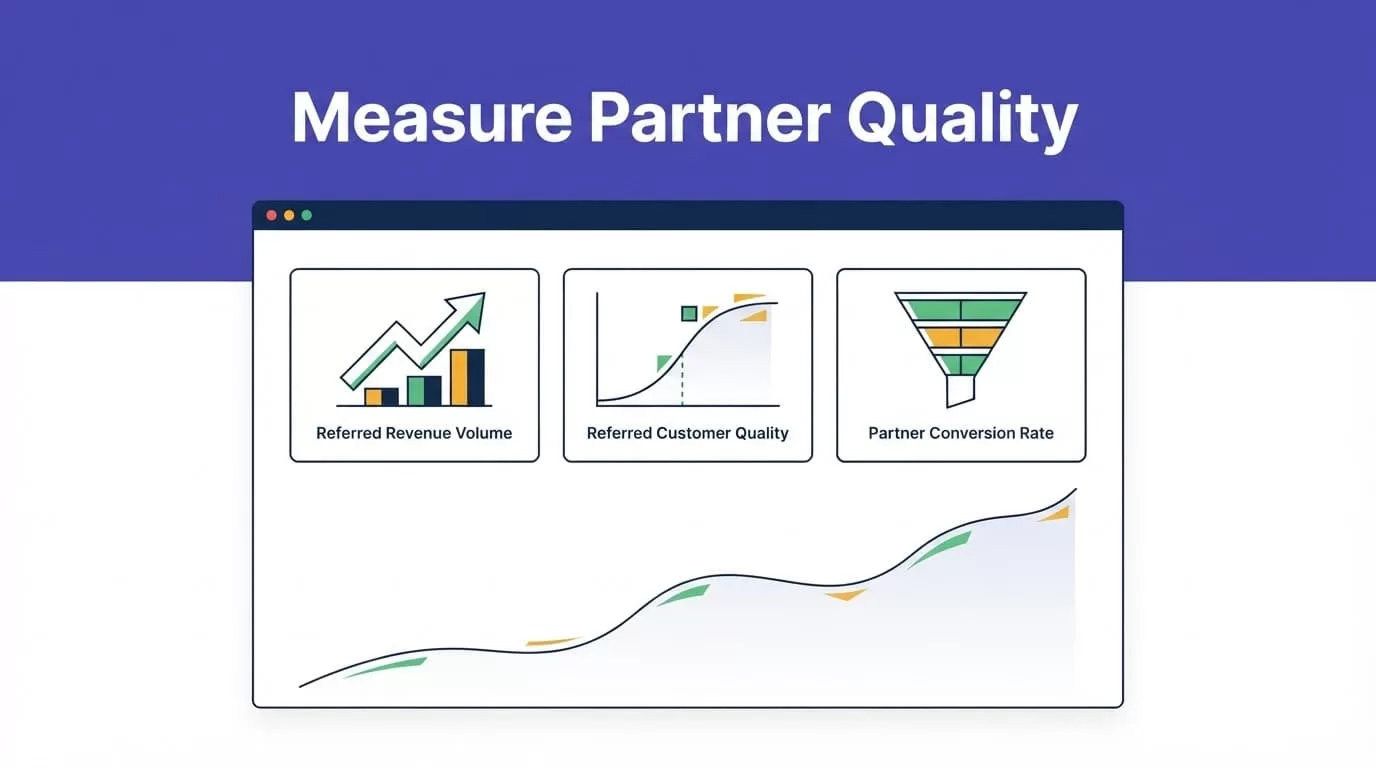
Review activation rate, paid conversion rate, average contract value, refund rate, retention, sales acceptance rate, and time to first payment. Compare those numbers by partner, not only by campaign total.
Pause partners who send duplicate accounts, low-fit leads, or customers who cancel before the commission clears. Give stronger partners better materials, product updates, and a direct route to ask deal questions.
The B2B referral program is working when partner-sourced customers produce durable revenue with limited manual correction work.
Final check before you scale
A working program has one definition of an eligible customer, one documented attribution rule, and one revenue record finance can verify. Rewardful can handle the tracking layer, but it cannot decide which commercial exceptions your business should accept.
Launch small. Review every early conversion. Then scale the parts of the B2B referral program that produce collected revenue, qualified customers, and partner relationships worth keeping.
