A beauty trend can explode on social media and still fail as a business idea. I care about the first spike, but I care more about what happens after it.
That is where beauty niches get useful. I use Exploding Topics to spot movement early, then I check whether the topic has real buyer intent, repeat demand, and room for content or products.
I Start With the Signal, Not the Product
When I open Exploding Topics, I do not look for a cute product first. I look for a pattern. If skincare, haircare, makeup, or fragrance keeps climbing across related terms, I pay attention.
I like this first pass because it keeps me from chasing noise. I use the same approach I describe in my niche market research process. A trend line is a door. It is not the house.
I also compare what I see with Exploding Topics’ beauty trends roundup and current industry chatter. In April 2026, that means lighter skincare, glowy makeup, clean formulas, and beauty tech. If serum sunscreen and glass-skin care rise together, I treat that as a real cluster, not a random blip.

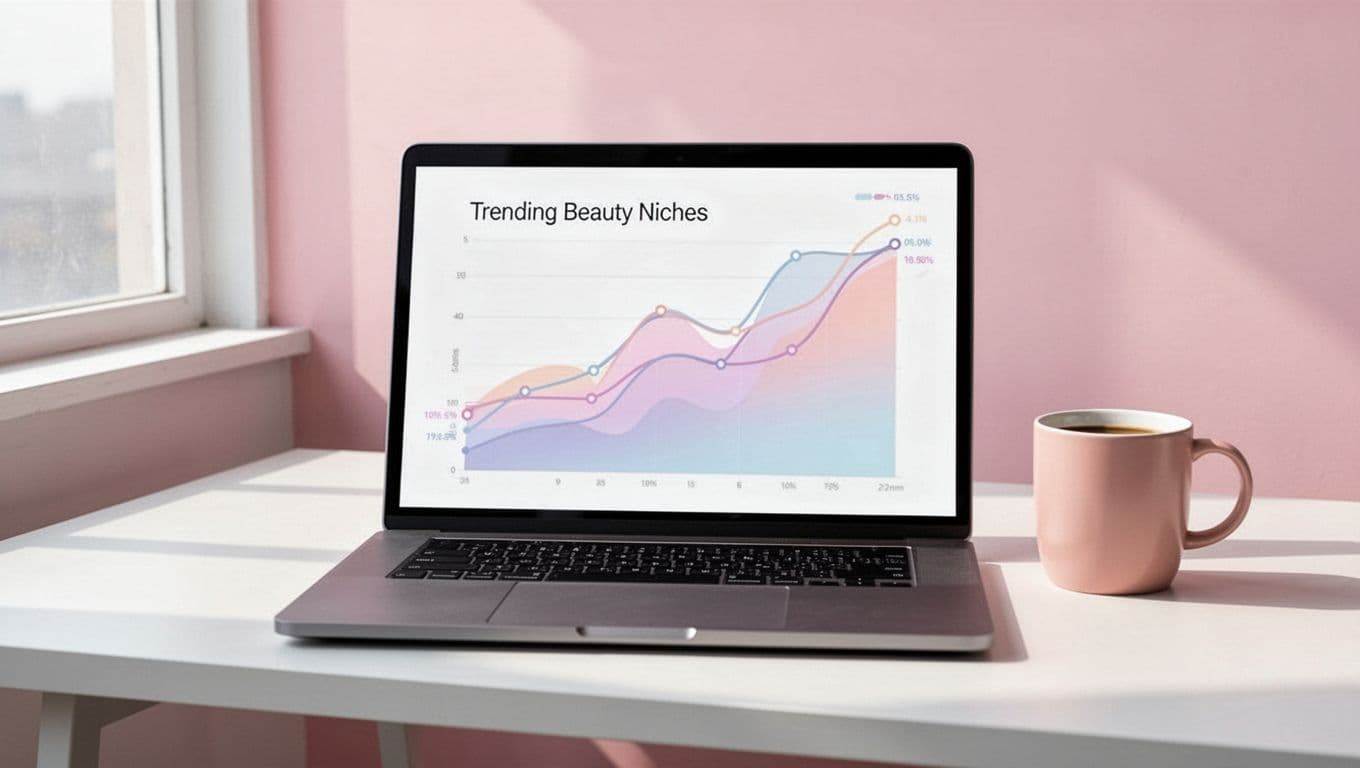
How I Turn a Trend Into a Beauty Niche
Once a topic catches my eye, I turn it into a niche with a simple filter.
- I name the buyer. A trend means more when I know who wants it, a shopper, a creator, a salon owner, or an ecommerce founder.
- I read the search intent. Words like best, review, kit, routine, and before and after tell me people are moving closer to a purchase.
- I scan comments and creator posts. If the same pain shows up again and again, I know the topic has a real audience.
- I map the money path. I want products, affiliate offers, subscriptions, or services that fit the problem.
- I test fit. If I cannot picture a clear page, offer, or product line, I keep moving.
Beauty creators help me here. When the same routine keeps showing up in reels, shorts, and tutorials, the niche usually has visible demand. The audience is already telling me what it wants.


Photo by RDNE Stock project
The Filters I Use Before I Commit
A rising chart is a clue. The real test is whether buyers keep showing up.
This is the quick scorecard I use.
| Filter | What I want to see | Why it matters |
|---|---|---|
| Search growth | A steady climb over months | It points to lasting demand |
| Search intent | Words like best, review, kit, or routine | It shows buying behavior |
| Competition | Weak pages or thin product coverage | There is room to stand out |
| Seasonality | Peaks I can predict | I can plan content and stock |
| Monetization | Products, affiliates, or services | The niche can make money |
| Product-market fit | A clear problem and a clear buyer | The offer can repeat |
I like this step because it slows me down in a good way. I do not need a perfect trend. I need a trend with a path to revenue.
I do not trust excitement on its own. I trust interest that keeps coming back.
Once a topic passes this filter, I turn it into keyword plans and map a few pages around it. For product-led ideas, I also compare it with tracking new ecommerce niches with Exploding Topics data. That keeps the idea tied to something I can actually publish or sell.
Beauty Niches I’d Watch in April 2026
April is a sweet spot for lighter textures and visible glow. That lines up with what Vogue’s 2026 beauty trend report and NewBeauty’s top 2026 trends are seeing.
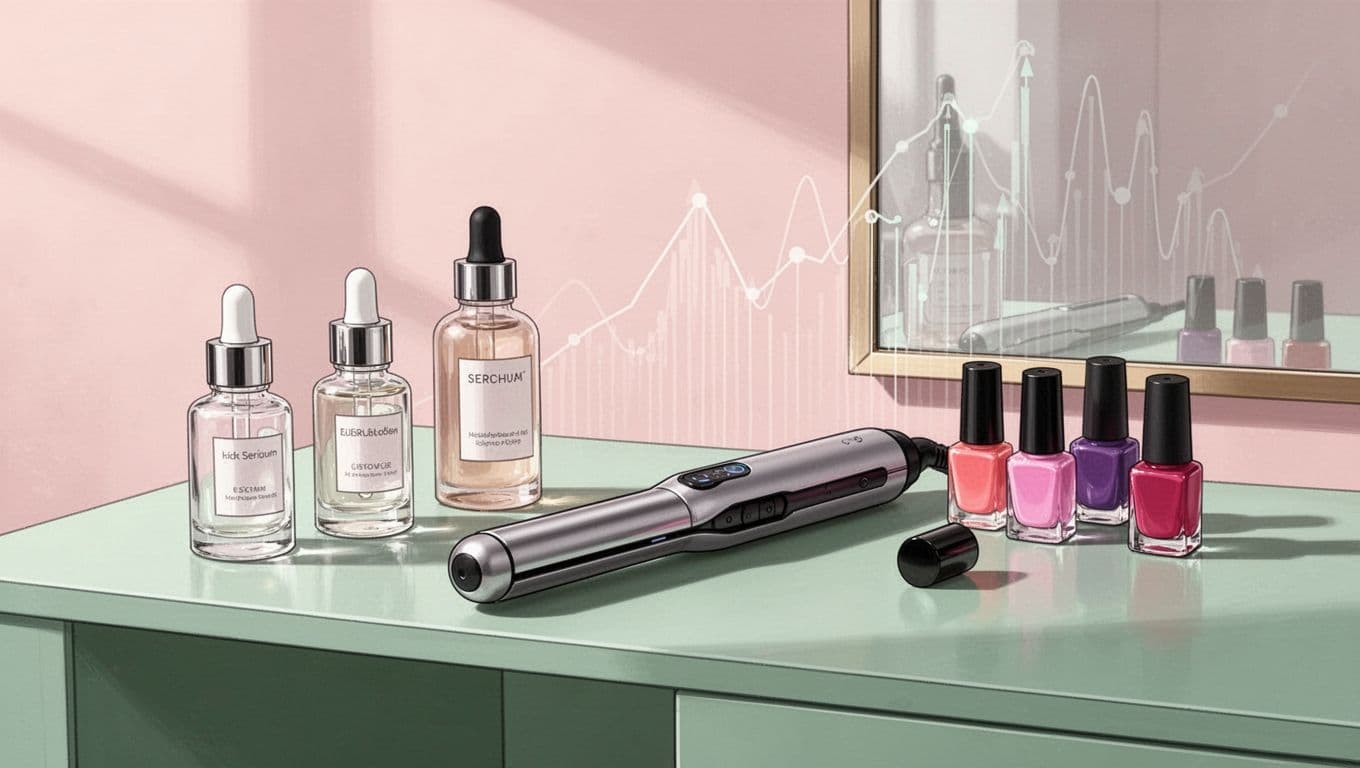
Here are the beauty niches I’d watch first:
- Skincare, especially gel moisturizers, serum sunscreens, PDRN, and barrier repair.
- Haircare, especially bond repair, scalp care, and smoothing masks.
- Makeup, especially bronzers, peach blush, and easy no-makeup looks.
- K-beauty, especially glass-skin routines, BB creams, and vegan formulas.
- Clean beauty, especially waterless, refillable, and upcycled products.
- Beauty tech, especially AI skin analysis and at-home light devices.
- Nails and fragrance, especially cat-eye nails, butter-yellow shades, and fresh body mists.
I like these niches because they already have language, products, and repeat use. That makes validation much faster.
Where the Money Usually Shows Up First
I care about monetization before I spend a week writing around a trend. If a niche has affiliate products, starter kits, subscriptions, or service offers, I know it can support more than one page.
That matters for beauty niches because the same trend can work in several ways. A skincare topic can become a review page, a routine guide, a bundle, or a creator-friendly affiliate post. Haircare can do the same. So can fragrance and nail care.
For product-based ideas, I keep one eye on tracking new ecommerce niches with Exploding Topics data. For content-led ideas, I check whether the niche can support search intent, product comparisons, and practical how-to pages. That mix tells me if the trend can earn now and later.
A niche gets stronger when it solves a small, repeated problem. Dry skin. Frizzy hair. Patchy makeup. Weak nails. Poor scent fade. Those problems look simple, but they sell well when the fix feels easy.
What I Look For Before I Publish or Buy
I do not try to predict the next giant beauty category. I try to catch a narrow wave while it still has room.
Exploding Topics helps me find the movement. Then I validate it with search intent, audience demand, competition, seasonality, monetization potential, and product-market fit. That step is what turns a trend into something useful.
If I can answer those checks with confidence, I know I have found a beauty niche worth my time. If I cannot, I keep watching. The best signals are the ones that still feel small before everyone else notices them.