In April 2026, the best consulting niches rarely show up with a loud launch. They usually start as a slow climb in search, a new pain point in a forum, or a cluster of hiring posts.
I use Exploding Topics to catch that motion early. But I don’t treat a rising chart like a business plan. I treat it like smoke, then I check whether there’s a fire worth building around.
That matters more now because consulting is splitting into sharper specialties. A recent look at the specialist surge in consulting matches what I’m seeing in trend data, especially around AI agents, automation, cybersecurity, and data work. I also keep a close eye on my guide to future tech trends in 2026, because service opportunities often hide inside the tools buyers are adopting first.
Why I start with trend signals, not ideas
Most consulting ideas sound good in a vacuum. Trend data gives me a second opinion.
When a topic rises on Exploding Topics, I ask what kind of buyer might care. In 2026, I keep seeing movement around AI workflow setup, cybersecurity reviews, market research automation, and data cleanup for busy teams. Those aren’t abstract themes. They point to clear jobs that businesses want done.

I like that because consulting niches work best when they sit near urgent work. A business owner who wants more leads, fewer security gaps, or cleaner reporting will pay faster than someone who is only curious.
I also sanity-check rising niches against broader context, like high-growth consulting niches, but I don’t copy the list. I use it to see whether the trend I found is part of a real market shift.
A rising chart is useful only when it points to a buyer with a painful problem.
What makes a consulting niche worth my time
I sort every niche through five filters. If one of these fails, I slow down or move on.
| Signal | What I want to see | What makes me stop |
|---|---|---|
| Demand | Steady growth, not one spike | A short burst with no follow-through |
| Urgency | Pain tied to deadlines, risk, or lost money | A nice-to-have problem |
| Budget | Clear signs of spending power | Tiny teams with no room to buy |
| Competition | Enough proof the market exists | So many voices that I’d blend in |
| Serviceability | I can deliver it fast and well | A service I can’t package cleanly |
The strongest niches usually have a clear buyer and a clear result. For example, AI automation for appointment-heavy businesses can save time right away. Cybersecurity audits can reduce risk before something breaks. Data analysis cleanup can help teams make decisions without waiting on a report backlog.
I also look for positioning. Trend growth alone does not pay invoices. If I can’t explain why I’m the right fit, the niche stays vague.
That’s why I compare trend ideas with spotting trending business opportunities. It keeps me honest. A niche needs a buyer, a budget, and a reason to act now.
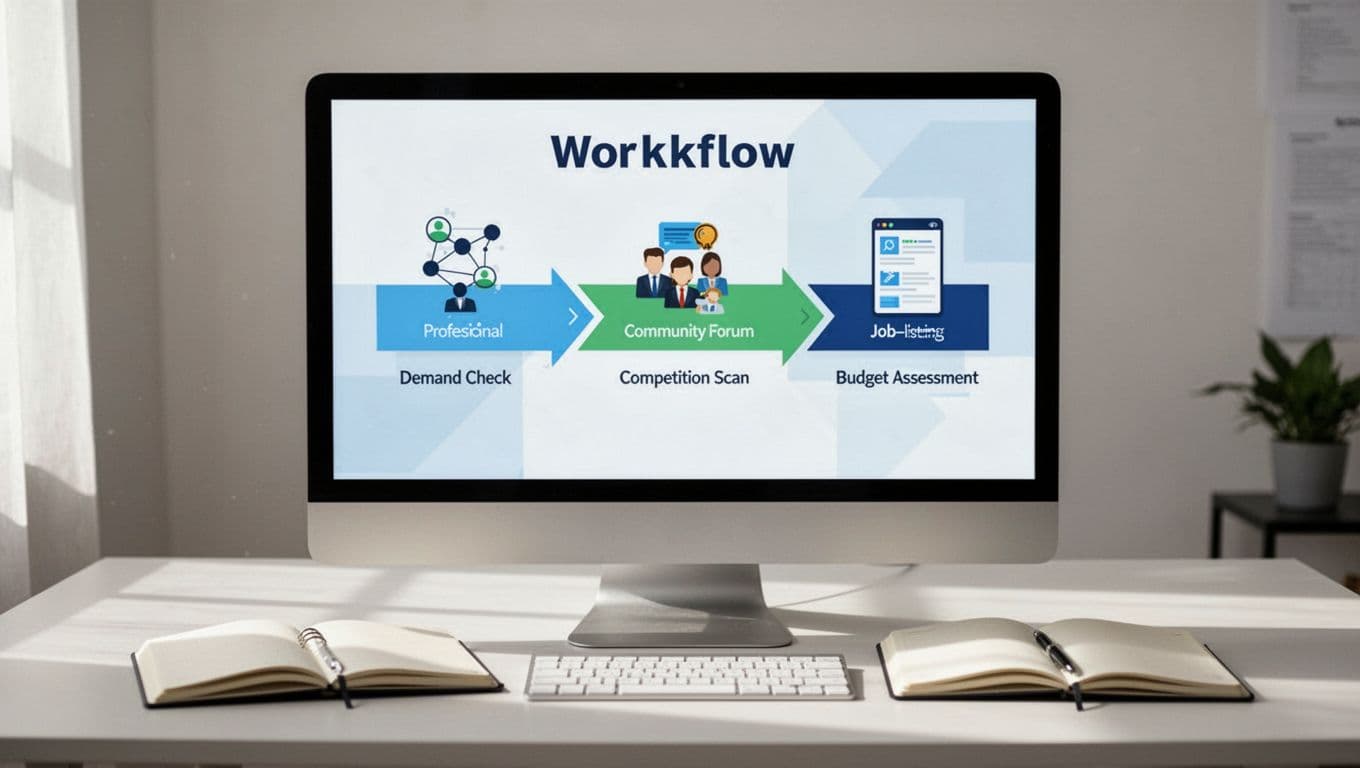
My validation workflow before I build an offer
Once a topic passes the first filter, I test it outside trend tools. This is where I separate interest from intent.
- I check search intent first.
If people search for pricing, setup, audit, implementation, or consultant terms, I pay attention. Those words usually mean money is close to the surface. - I scan LinkedIn activity next.
I look for repeated posts from founders, ops leaders, and marketers. If they keep talking about the same bottleneck, that’s a strong sign. - I read job postings.
When companies hire for a task I could solve, I take that seriously. If they need an AI ops lead, a data analyst, or a security coordinator, the need is real. - I read Reddit and niche forums.
People are blunt there. They complain, compare tools, and share workarounds. That gives me raw language for pain, not polished marketing talk. - I track industry news.
New rules, vendor launches, layoffs, and security incidents all create urgency. In cybersecurity and automation, urgency often matters more than size.
This workflow helps me decide what to sell. I might package a 30-day automation audit, a cybersecurity gap review, or a reporting cleanup sprint. Each one is narrow. Each one has a clear outcome.
How I turn a signal into a service clients will buy
After validation, I ask three final questions. Who pays? Why now? Why me?
If I can’t answer those cleanly, I keep working. A niche can look exciting and still fail to monetize. That happens when the offer is too broad, the promise is too soft, or the buyer can’t see the cost of doing nothing.
I prefer service shapes that are easy to explain. A client should understand the result in one sentence. For example, “I help small agencies automate lead handoff in two weeks” lands better than “I offer operations consulting.”
That’s the part many consultants miss. They spot the trend, then stop too early. The real edge comes from pairing trend data with a clear offer and a buyer who feels the pain today.
If I’m right, the niche feels almost obvious in hindsight. If I’m wrong, I’ve at least avoided building on noise.
Exploding Topics helps me see where attention is moving. My process turns that signal into something usable, something I can sell, scope, and deliver without guessing.