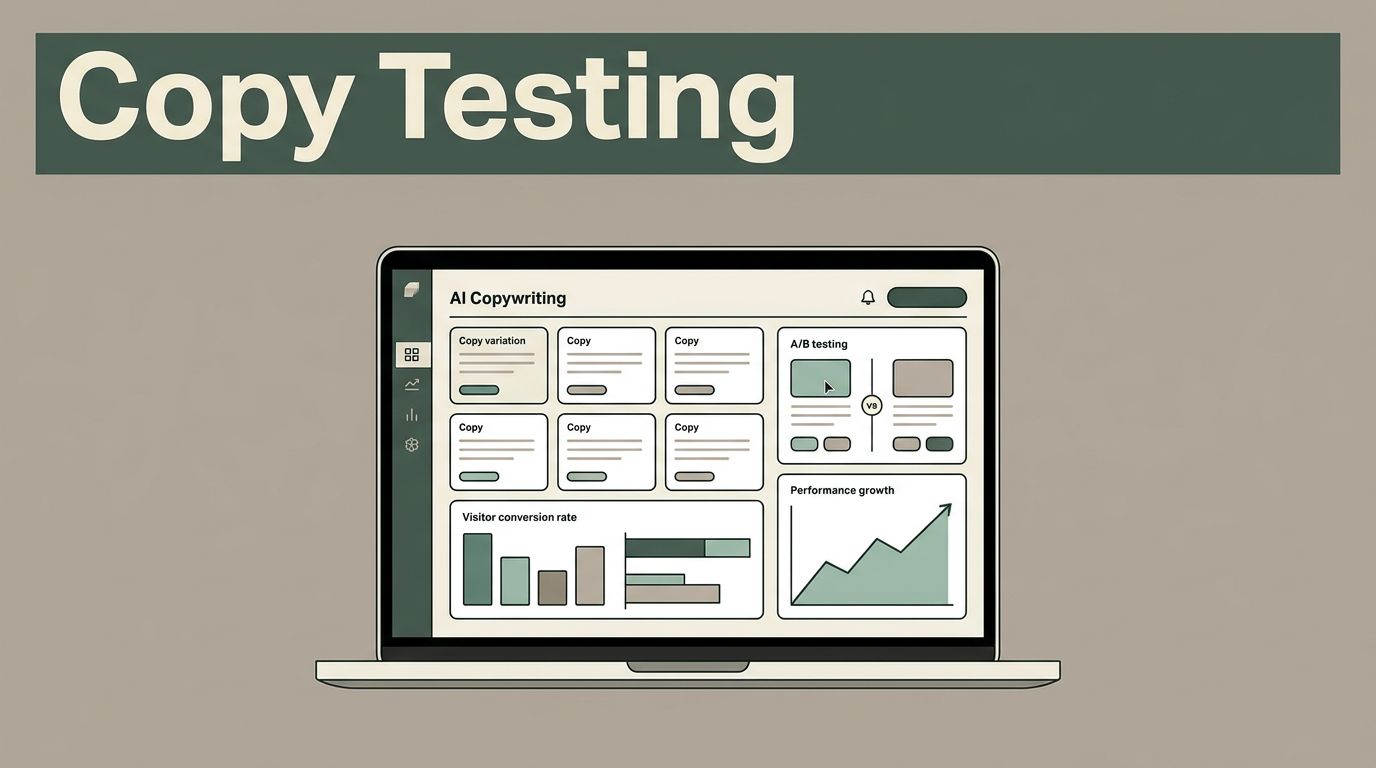
AI copywriting testing only works when generated copy becomes a testable hypothesis, not a shortcut around experimentation. Mida.so gives you a practical place to compare copy variations against real visitor behavior, but the result still depends on clean setup, enough traffic, and disciplined analysis.
The process is direct. Start with a measurable user problem, create focused copy options, test one meaningful change, and judge the outcome against business metrics. Build the test correctly before you ask AI to write another variation.
Key Takeaways
- Use AI-generated copy to create hypotheses from real customer evidence.
- Set one primary conversion goal and several guardrail metrics before launch.
- Keep traffic allocation, targeting rules, and experiment conditions stable.
- Review raw counts, confidence, sample size, segments, and downstream value.
- Record every result so future tests build on evidence instead of repeated guesses.
Start With a Copy Problem, Not an AI Prompt
Your first task is to find the point where buyer intent drops. Review high-intent pages such as the homepage, product pages, pricing page, comparison pages, and demo form.
Look for qualified traffic that fails to complete the next action. A weak headline may create confusion. A pricing subhead may fail to explain who each plan suits. A demo form may ask for information before the visitor understands the value.
Use available behavior data to locate the problem. Check CTA interactions, scroll depth, form abandonment, repeated visits, and the path users take before conversion. Pair that data with sales call notes, support tickets, customer interviews, and search terms.
AI should process that evidence into possible copy directions. It shouldn’t decide which direction is true.
Write the hypothesis before generating variations:
Because visitors reach the pricing page but don’t request a demo, adding plan-specific use cases above the form should increase completed demo requests from returning visitors without reducing lead quality.
This format gives your test a clear structure. It identifies the audience, the copy change, the primary outcome, and the risk to monitor.
Avoid asking AI for “better website copy.” That request produces broad rewrites with no clear cause. Give the model the page context, audience, objection, product facts, voice rules, and banned claims. Ask for several options that solve one defined problem.
Then review every option yourself. Remove unsupported promises, vague benefits, legal risks, and claims that sales cannot defend. AI-generated copy can create useful variation quickly. It can also introduce inaccurate product details just as quickly.
Keep the test focused. If you change the headline, subhead, CTA, proof section, and form labels together, you won’t know which change influenced the result. A larger rewrite can be tested later, but the first test should isolate a clear learning.
How AI Copywriting Testing Works in Mida.so
Mida.so is a lightweight website A/B testing platform. Its A/B testing feature supports no-code page changes, traffic experiments, and conversion measurement. That makes it suitable for testing AI-assisted copy without sending every variation through a development sprint.
Open your Mida.so workspace and select the target URL. Create the control from the current page. Treat that version as fixed during the experiment. Then create one variant containing the approved AI-assisted copy.
The exact labels can depend on your workspace configuration. The operating decisions stay the same:
- Choose the page and audience.
- Define the control and variant.
- Select the primary conversion event.
- Add secondary metrics and guardrails.
- Set traffic allocation.
- QA the experience before launch.
- Record the test hypothesis and start date.
A standard split gives both experiences similar exposure. A fifty-fifty allocation is usually easier to interpret than an uneven split, unless your risk plan requires a smaller treatment group.
Use audience rules that match the hypothesis. A mobile layout change should target mobile visitors. A paid search message test should use the relevant campaign traffic. A pricing page test may need separate reporting for new and returning visitors.
Exclude internal employees, automated traffic, existing customers, and users already enrolled in another experiment when those exclusions are available. Conflicting exposure makes the result harder to interpret.

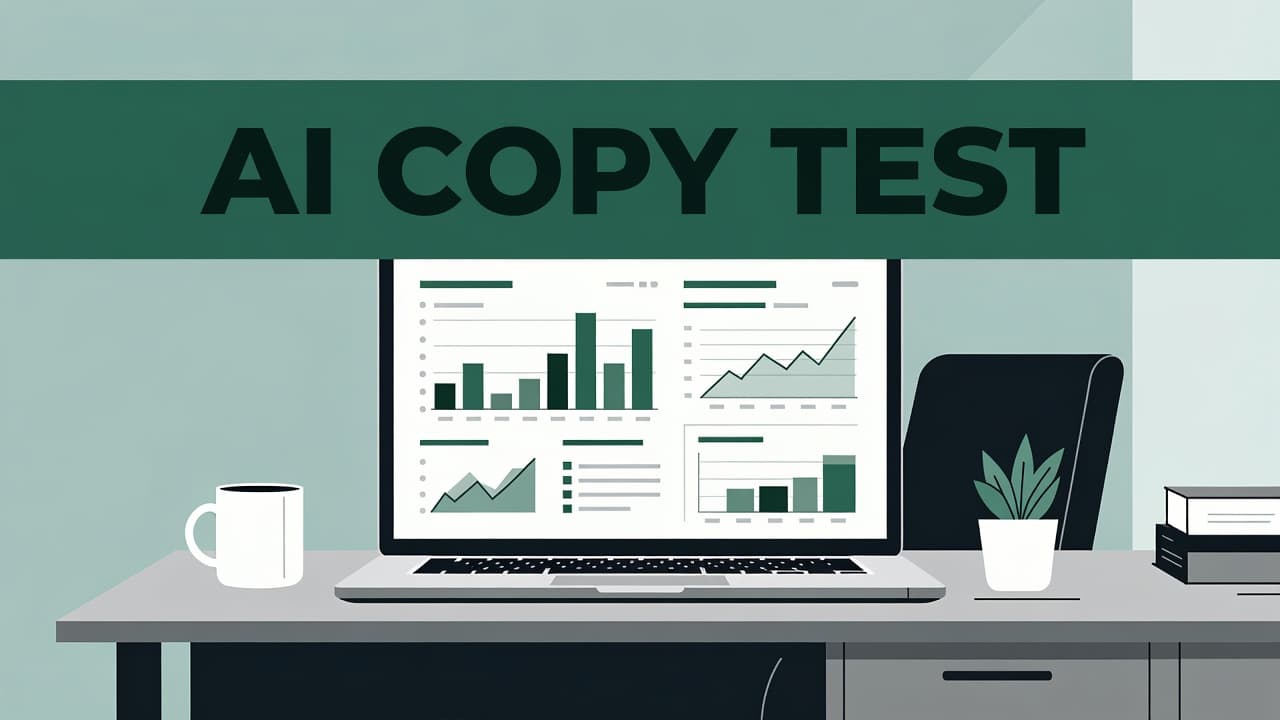
Test the page on desktop and mobile before sending traffic. Confirm that the control displays correctly. Confirm that the variant displays the approved copy. Check links, forms, analytics events, and conversion actions.
Mida.so also supports a lightweight script and GA4 integration according to its official platform overview. Your implementation still needs review. A tool can report clean numbers from a broken event if nobody tests the event path.
Set Metrics Before You Launch
Choose one primary metric. Use secondary metrics to explain the result, not to search for a winning number after the test ends.
For a B2B SaaS landing page, completed demo requests may be the primary metric. CTA clicks and form starts can explain movement. Qualified opportunities and trial activation can show whether the extra submissions have business value.
| Test area | Primary metric | Guardrail metric |
|---|---|---|
| Homepage copy | Completed demo requests | Qualified lead rate |
| Pricing copy | Trial starts or revenue per visitor | Activation and checkout completion |
| Signup page | Completed accounts | Email verification and setup progress |
| CTA copy | Completed target action | Form abandonment and bounce rate |
| Product page | Purchase or signup | Refunds, revenue, and support contacts |
The correct metric depends on the page and business model. Don’t use CTA clicks as the main goal when the actual business outcome is a qualified demo. Don’t use trial starts alone when many trial users never reach activation.
Pricing tests need extra care. A variant can reduce conversion rate while increasing revenue per visitor. A lower-priced plan can increase signups while reducing customer value. Connect Mida.so results with your CRM, billing system, or product analytics when the experiment affects downstream outcomes.
Set guardrails before launch. Useful guardrails include:
- Lead quality and sales-qualified opportunity rate
- Product activation within a defined period
- Revenue per visitor or average order value
- Form completion and error rate
- Bounce rate and returning-user engagement
- Largest Contentful Paint and Cumulative Layout Shift
A copy variant that produces more form submissions but slows the page or lowers lead quality isn’t a clear win.
A higher conversion rate with lower lead quality is not a winning copy test.
Record your baseline before changing the page. Include the current conversion rate, traffic sources, device mix, new versus returning visitors, and recent campaign activity. Calculate conversion rate consistently:
Conversion rate = conversions / visitors x 100
Keep the raw visitor and conversion counts. A percentage without those counts can make a tiny result look important.
Launch Clean Tests and Protect the Sample
Don’t change targeting, traffic allocation, copy, conversion goals, or the control while the test is running. Each change creates a new test condition. If the change is necessary, document it and restart the measurement period.
Avoid overlapping experiments on the same page. One test may change the headline while another changes the CTA. Visitors can receive mixed experiences, and the final result may not belong to either test.
Schedule related tests one after another. Use a planned multivariate design only when traffic volume supports it and your team can interpret the interaction between changes.
Check traffic distribution after launch. Small differences between variations are normal. A large gap can point to targeting restrictions, device rules, implementation errors, or an event that fires only for one experience.
Run a tracking QA process before meaningful traffic arrives:
- Open the page on desktop and mobile.
- Enter the control and variant.
- Complete the target action.
- Confirm the conversion event fires once.
- Check the result in Mida.so and the connected analytics system.
- Repeat the test with a second browser or clean session.
A duplicate event can inflate conversions. A missing event can make a strong variation look weak. Cross-check Mida.so with GA4, your CRM, billing data, or product analytics when the goal continues beyond the website.
Keep the test live for a complete business cycle when possible. Weekday and weekend behavior can differ. Paid campaigns, product releases, seasonality, and returning visitors can also move the numbers.
Read Mida Results With Statistical Discipline
Open the report in a fixed order. Start with traffic allocation. Then check visitors, conversions, and conversion rate for each variation. Review the primary metric before looking at secondary results.
A test with twelve visitors and three conversions has a 25 percent conversion rate. That number has little decision value. A small percentage difference based on a few conversions shouldn’t trigger a permanent page change.
Define the decision rule before launch. It should include:
- A minimum sample size for each variation
- A complete business cycle
- A confidence threshold or confidence interval rule
- A minimum practical uplift
- No serious decline in guardrail metrics
Treat early results as directional. Live reporting helps you find broken tracking and unusual delivery problems. It doesn’t justify stopping the test as soon as the variant moves ahead.
Repeatedly checking the dashboard and stopping after a temporary spike raises the risk of a false positive. Wait until the planned sample and decision conditions are met.
Check segment performance after reviewing the overall result. Compare mobile and desktop visitors for responsive pages. Compare paid search and organic visitors for acquisition copy. Compare new and returning users for pricing or onboarding messaging.
Don’t select only the segment that supports your preferred answer. Use segments to find where the result holds, where it fails, and whether a follow-up test is needed. A variant that wins overall but loses for enterprise search traffic may need a narrower rollout.
Statistical confidence doesn’t settle the business decision by itself. A tiny lift can be statistically reliable but too small to justify implementation and maintenance. A large lift can remain uncertain because traffic is limited. Classify that outcome as inconclusive rather than pretending the copy had no effect.
Document the Learning and Deploy Carefully
When the test ends, store the result with the original hypothesis, page, audience, dates, primary metric, sample size, and guardrail results. Classify it as won, lost, inconclusive, or technically invalid.
A winning test needs a deployment plan. Define which copy becomes permanent, where it will be implemented, who owns the change, and how the event will be monitored after rollout. Don’t assume the test result will remain identical after all visitors receive the variant.
A losing test still creates useful evidence. Record what the result rules out. Note whether the copy failed for the whole audience or only for a key segment. This prevents the team from testing the same assumption again without new evidence.
Store AI prompts and approved outputs with the experiment record when your workflow allows it. The prompt context matters. Future teams need to know which customer evidence, objections, product facts, and constraints produced the variation.
Use Mida.so as the experiment record, then connect the learning to your broader growth system. Link the result to CRM quality, product activation, revenue, or retention where relevant.
AI can help you produce more hypotheses. It can’t tell you which message creates durable customer value. That answer comes from controlled exposure, clean data, and a decision process your team can repeat.
Conclusion
AI copywriting testing inside Mida.so works when AI supplies focused variations and the experiment supplies evidence. Start with a real friction point, define one primary metric, protect the sample, and review the result across important segments.
Don’t ship a copy change because a dashboard shows a temporary uplift. Ship it when the evidence meets your statistical rule, business threshold, and guardrail requirements. The strongest output from an AI copy test isn’t always a winning headline. Sometimes it’s a clear answer about what your audience doesn’t need.