Continuous esports data scraping with Twin.so
If your analysts still copy match results into spreadsheets, your feed is already behind. esports data scraping gives you a repeatable way to collect schedules, results, rosters, standings, player statistics, and esports news. Twin.so can h...
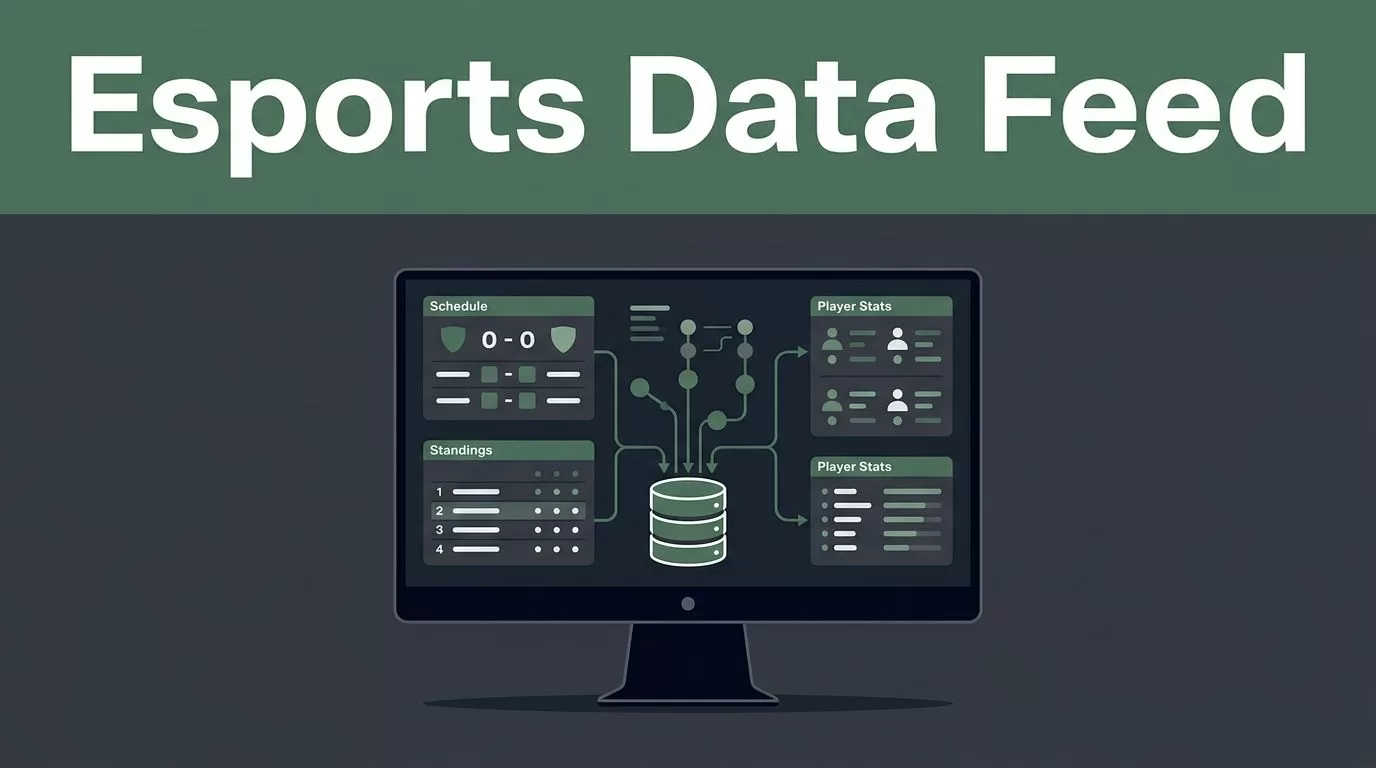
If your analysts still copy match results into spreadsheets, your feed is already behind. esports data scraping gives you a repeatable way to collect schedules, results, rosters, standings, player statistics, and esports news.
Twin.so can handle the collection layer when a source lacks a usable API. The reliable setup isn’t “let an agent scrape everything.” It is a controlled pipeline that separates collection, validation, and downstream analysis. Start with the source contract, then configure Twin.so around it.
What a continuous esports data feed needs to deliver
Continuous collection doesn’t mean scraping every page as often as possible. It means checking the right source at a defined interval, detecting changes, and storing each result with enough context to audit it later.
Start with a source inventory. Record the page or endpoint, access method, expected update frequency, data owner, usage restrictions, and fields you need. Separate live match data from tournament schedules, player profiles, rankings, and news. Each source has a different refresh pattern.
Your data contract should define stable fields before you create the Twin workflow. A useful match record may include:
| Field | Purpose |
|---|---|
match_id | Prevents duplicate records across runs |
event_id | Connects matches to tournaments and stages |
game | Separates League of Legends, VALORANT, CS2, and other titles |
start_time_utc | Supports consistent scheduling and analysis |
teams | Identifies participants |
status | Tracks scheduled, live, completed, postponed, or cancelled matches |
source_url | Provides traceability |
fetched_at | Shows when Twin retrieved the record |
Keep raw responses or page snapshots alongside normalized data. When a parser changes or a source revises a result, you need the original evidence. A professional League of Legends ETL project shows the value of treating esports collection as an extract, transform, and load process instead of a one-off scrape.
Good esports data scraping also handles change detection. Use stable IDs and upserts instead of appending every result as a new row. Store a run ID, parser version, and retrieval timestamp. This gives analysts a clear history without filling the warehouse with repeated copies.
How esports data scraping works with Twin.so
Twin.so provides two practical collection paths. Use the simplest path that can access the required data.
Use an API when one exists. Official publisher, tournament, or data-provider APIs usually provide clearer schemas and more stable access than page automation. Twin’s documentation recommends giving agents the APIs and tools they need instead of forcing browser activity into every workflow. Use an API for structured match data when your organization has permission and the provider’s terms allow your use case.
Use web scrapers for public pages. This fits schedules, standings, public rosters, tournament pages, and news pages that expose the required information in the page content. The workflow should identify the target fields, extract them into a defined structure, and write the result to your selected destination.
Use the Browser Agent or Web Agent for difficult flows. Twin describes this mode for login-protected pages, JavaScript-heavy applications, multi-step navigation, clicks, and form interactions. It can log in, navigate, and extract information from pages that don’t expose a useful API.

Write the workflow as an operational specification, not a vague request. State the source, target fields, schedule, output format, duplicate rule, and failure behavior. For example, tell the agent to retrieve completed match records, preserve the source URL, return UTC timestamps, skip records without a stable match identifier, and send failures for review.
Twin lets users describe workflows in plain English, but plain language still needs boundaries. Add field names, allowed values, and explicit stop conditions. “Extract the match data” is too broad. “Return one row per match with these nine fields and quarantine incomplete rows” is testable.
Twin also describes retry and exception handling for changing websites. Treat that as a recovery aid, not a data-quality guarantee. Its documentation warns that the Web Agent is the most expensive and least reliable execution mode, so use it for pages that actually require browser interaction. A practical gaming scraping pipeline example also shows why collection should connect to defined storage and delivery systems rather than end in an unstructured export.
Separate collection, validation, and analysis
A reliable esports pipeline has three different jobs. Keep them separate.
1. Collection retrieves evidence
The Twin workflow should fetch the page or call the permitted endpoint. It should capture the response, extract candidate fields, and attach run metadata.
Avoid asking the collection agent to calculate betting probabilities, rank players, or write analyst commentary. Those tasks depend on business rules and belong after validation.
Store the raw response, normalized candidate record, source URL, fetch time, workflow version, and run status. If a page changes layout, you can compare the new response with the previous snapshot and repair the extractor without losing the source record.
2. Validation rejects bad records
Validation checks whether the collected data is usable. Run it before loading records into dashboards, models, or betting systems.
Check required fields first. A completed match without a match ID, teams, or result should not enter the trusted table. Then check data types, allowed status values, timestamp formats, and score ranges.
Add cross-field checks. A completed match shouldn’t have a future completion time. A best-of-three series shouldn’t contain an impossible map count. A team referenced in a match should exist in the team dimension or enter a review queue.
Compare each run with the previous run. Alert when the row count falls sharply, every record suddenly changes, or a normally populated field becomes empty. These checks catch blocked pages, login failures, layout changes, and partial responses.
Quarantine failures instead of deleting them. Store the failed record, error reason, source URL, and run ID. Analysts can then distinguish “no match scheduled” from “the scraper returned no page content.”

3. Downstream analysis consumes trusted data
Only validated records should reach your warehouse, dashboard, feature store, or reporting system. Keep transformation logic outside the browser agent when it involves important business rules.
Store scores, map counts, odds, timestamps, player IDs, and team IDs as separate fields. Don’t hide calculations inside a generated paragraph. Separate fields make corrections easier and let reviewers compare the source value with the derived result.
This structure supports different users without changing the collection workflow. Analysts can calculate performance trends. Fantasy teams can build player projections. Betting teams can create models from approved inputs. Market researchers can track tournament schedules, roster changes, and audience-facing announcements.
For scouting systems, use licensed and authorized data wherever possible. A developer walkthrough on a GRID API scouting workflow illustrates why structured game data is often a better foundation for analysis than repeatedly parsing presentation pages.
Schedule and operate the feed safely
Set the schedule according to how often the source changes. Tournament schedules may need periodic checks. Live match states may require shorter intervals. Historical results rarely need constant retrieval. A high-frequency schedule adds load and cost without improving the dataset when the source changes slowly.
Use separate workflows for separate source groups. One workflow can collect schedules. Another can collect completed results. A third can process public news. This keeps failures contained and makes it easier to change one source without interrupting the rest.
Twin advertises time triggers and webhooks for workflow automation. Use those controls when they fit the selected workflow, but keep scheduling logic visible in your own operational documentation. Record the expected interval, last successful run, last changed record, and next planned run.
Apply backoff after failures. Don’t make repeated requests when the source is returning errors, a login has expired, or the page structure has changed. Retry a limited number of times, then stop and send an alert for review.
Respect the source before you deploy the scraper:
- Read the website terms, API agreement, and data-use restrictions.
- Check robots directives where they apply and treat disallowed paths as unavailable unless you have clear permission.
- Follow published rate limits and use the lowest request frequency that meets the business need.
- Don’t bypass CAPTCHA, access controls, paywalls, or technical restrictions.
- Use credentials only for accounts and data your organization is authorized to access.
- Review personal-data, licensing, betting, and regional compliance requirements before redistribution.
A robots file doesn’t grant permission to use data. It is also not a replacement for the site’s terms or a data license. Keep a record of the access decision for every source.
Monitor more than workflow success. A run can complete while returning an empty page. Track freshness, record count, required-field coverage, duplicate rate, validation failures, login failures, and source response changes. Trigger a manual review when those measures move outside their normal range.
Turn validated feeds into useful esports systems
A continuous feed is valuable only when another system can use it. Send validated records to a warehouse, database, spreadsheet, webhook, or reporting system supported by your stack. Keep raw data, clean data, and rejected data in separate locations.
Add lineage to every downstream record. Analysts should be able to answer four questions quickly:
- Which source produced this value?
- When was it collected?
- Which validation rules accepted it?
- Which transformation created the final metric?
For news collection, keep article URL, publication time, publisher, title, game, tournament, and extracted entities separate from sentiment or topic labels. An esports news intelligence scraper shows how collection and interpretation can be separate stages. The same design works with Twin.so, provided the source and data use are authorized.
If your feed is dedicated to local reporting rather than esports, our guide to building a reliable local news scraper with Twin.so applies the same collection, validation, and review pattern to news content.
Version your schemas and transformation rules. When a tournament changes its page structure, you should be able to identify which records used the old parser. When an analyst changes a calculation, you should be able to reproduce the earlier report.
Conclusion
Continuous esports data scraping with Twin.so works best as a controlled ingestion system. Use APIs when available, web scrapers for permitted public pages, and browser automation only when the page requires it.
Keep collection, validation, and analysis separate. Store raw evidence, reject incomplete records, monitor freshness, and respect source restrictions. That structure gives your analysts a feed they can trace, correct, and use without rebuilding the pipeline every time a tournament page changes.
