How I Spot New Lifestyle Trends With Exploding Topics Data
Some of the best lifestyle trends start as tiny habits. A reusable food bag, a pet toy, or a cozy home style can move from niche to mainstream faster than I expect. That’s why I use exploding topics lifestyle trends data as my first f...
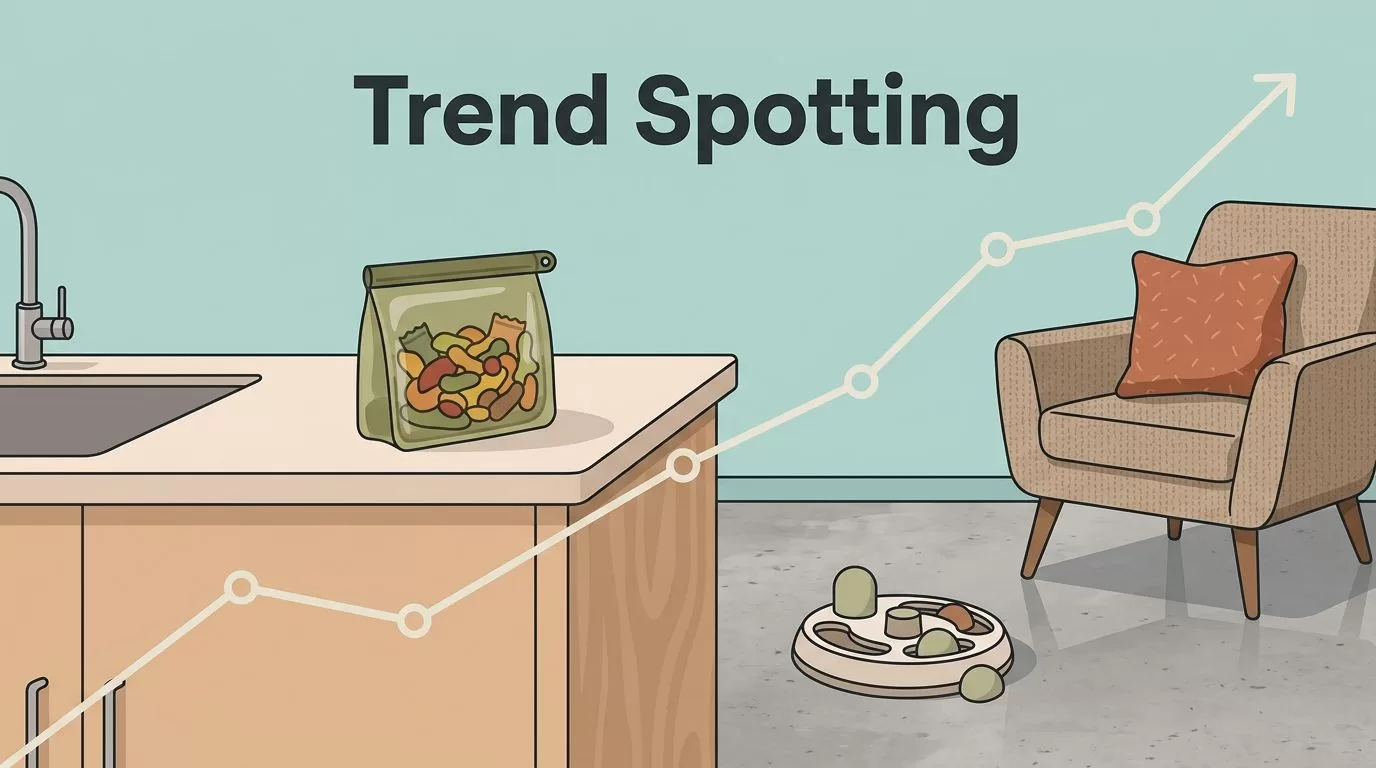
Some of the best lifestyle trends start as tiny habits. A reusable food bag, a pet toy, or a cozy home style can move from niche to mainstream faster than I expect. That’s why I use exploding topics lifestyle trends data as my first filter when I plan content, study a market, or test a product idea.
In April 2026, that approach matters more, because the fastest signals keep showing up in comfort, convenience, and health. I want to catch them before they become common knowledge, then decide whether they deserve budget or attention. I start with the signal, then I check the proof.
I begin with routine, not hype
I always start with daily habits, because daily habits leave the clearest trail. On Exploding Topics’ lifestyle topics page, I scan for items that sit inside routines people repeat, such as kitchen storage, sleep, pets, and easy fitness. In April 2026, silicone kitchen bags, interactive dog toys, and soft living stand out because they connect to real use, not passing curiosity.

That matters to me because routine categories usually give cleaner trend reads. A kitchen product tied to waste reduction can spread through eco-minded buyers. A pet toy can spread through owners who want more enrichment. A home trend can spread because it changes how a room feels every day, not just on weekends.
I pay close attention to the problem each trend solves. If I can name the use case in one sentence, I know I’m looking at something real enough to study further.
I read the shape of the signal, not one spike
I never judge a trend from a single burst. I want a curve that climbs, holds, and shows up in more than one place. Top Trending Topics (April 2026) helps me see what is moving right now, while Trend Hunter’s 2026 lifestyle trends gives me a wider read on the mood behind it. One source shows speed. The other gives context.
I keep a small scorecard for each topic.
| Signal I check | What I want to see | My read |
|---|---|---|
| Search growth | Steady rise, not one burst | Early demand |
| Repeated mentions | The same idea in several places | Real interest |
| Product spread | More than one brand or format | Wider adoption |
I also compare close cousins of the same idea. If interactive dog toy is rising, I test it against puzzle feeder, smart feeder, and enrichment toy. That tells me whether I’m seeing a whole category move or just one product with a lucky week.
If a topic only flashes once, I wait. If it keeps showing up in search, social posts, and retail shelves, I move it to my shortlist.
I validate before I spend time on it
Validation keeps me from chasing shiny noise. I compare each trend against Google Trends, social posts, recent articles, and live product pages. When I need fresh page data fast, I use AI web scraping for trends to monitor websites without copying everything by hand.

My check is simple:
- I look for repeat language. If people keep using the same benefit words, the trend has a hook.
- I check adjacent topics. If silicone kitchen bags move with reusable food storage and zero-waste kitchen tools, I’m seeing a cluster, not a fluke.
- I look for products or creators already building around it. That tells me whether the market has room.
- I pause when the story feels too clean. Hype often sounds neat before the data proves it.
If a trend only lives in one feed, I treat it as noise until I find proof elsewhere.
This step saves me from acting too fast. A loud post can grab attention, but repeated evidence earns it.
I turn one trend into a useful angle
Once I trust a trend, I turn it into a clear angle. I don’t write about the trend itself first. I ask what job it does for a buyer or reader. A comfort trend can become a home routine article. A wellness trend can become a product comparison. A pet trend can become a buying guide. That framing helps me move from curiosity to useful work.
For example, silicone kitchen bags can lead to sustainability content, kitchen storage reviews, or product roundups. Interactive dog toys can point to pet enrichment, retention, and gift ideas. Soft living can shape content around texture, comfort, and calm home design. In April 2026, I also see adjacent themes like pickleball outfits and cognitive wellness drinks, which tells me comfort and function are still pulling hard.
For marketers, that often means a fast newsletter note or a search piece. For founders, it can point to a small feature, bundle, or offer before the market gets crowded. The trend itself is only the start. The useful part is the angle I build around it.
I keep the process tight and repeatable
The best trend work is patient. I start with exploding topics lifestyle trends data, then I test each signal against search behavior, social proof, and live products. That keeps me from chasing noise and helps me spot the ideas worth a closer look.
If I stay consistent, the chart becomes a map. The smallest line can still point to the next useful idea.
