Find Fast Growing SaaS Tools With Exploding Topics
The fastest SaaS winners often look small before they look obvious. One week, they’re a line on a chart. A few months later, they’re in every Slack room and budget review. When I want to spot fast growing SaaS tools early, I sta...
The fastest SaaS winners often look small before they look obvious. One week, they’re a line on a chart. A few months later, they’re in every Slack room and budget review.
When I want to spot fast growing SaaS tools early, I start with trend data, then I test the story behind it. I care about real buyers, real use cases, and real business pain. Otherwise, I’m only watching noise with better graphics.
I start with the tools page, not the hype
I open the Exploding Topics software topics page and scan for clusters, not heroes. AI coding, data automation, no-code, sales tooling, and workflow software tend to move first because they save time or unlock revenue. When a tool like Cursor, Lovable, or Firecrawl starts rising fast, I ask what job it does and who feels the pain.
I also pair that view with my Exploding Topics trend process. That helps me separate a useful signal from a curiosity spike. Search growth is the starting point, not the finish line.

If a tool looks hot but the use case is fuzzy, I slow down. A good chart can hide a weak product. I want the trend to point toward a budget, not just a burst of attention.
The signals I stack before I trust a tool
I score each tool against the same filters. That keeps me from falling for sleek branding.
| Signal | What I want to see | Why I care |
|---|---|---|
| Search growth | Steady rise over months | Demand is building |
| Funding or news | New rounds, launches, or major updates | Attention and money are entering the space |
| Product-led growth | Free trial, self-serve onboarding, shareable output | Adoption can spread faster |
| Pricing | Clear entry tier and room to expand | Buyers can say yes quickly |
| Target audience | One clear user group | Messaging gets sharper |
| Integrations | CRM, Slack, browser, data, or API links | The tool fits real workflows |
| Competitive saturation | Few strong rivals or a clear wedge | There’s room to stand out |
I use that table as a screen, not a verdict. A tool can grow fast and still be a bad fit if the audience is too broad or the onboarding feels heavy.
A tool can be hot in search and still stall if the use case is vague or the setup feels clumsy.
For market context, I compare the category with the SaaS Trends 2026 roundup. Recent trackers keep putting AI tools near the top, but I still want proof that users stay after the first click. I also watch whether the category fits a real budget line, like revenue ops, security, or developer tooling.
My three-pass filter for fast growing SaaS tools
I use a simple process when a product keeps showing up in trend data. It works for marketers, founders, investors, and operators because it balances curiosity with proof.
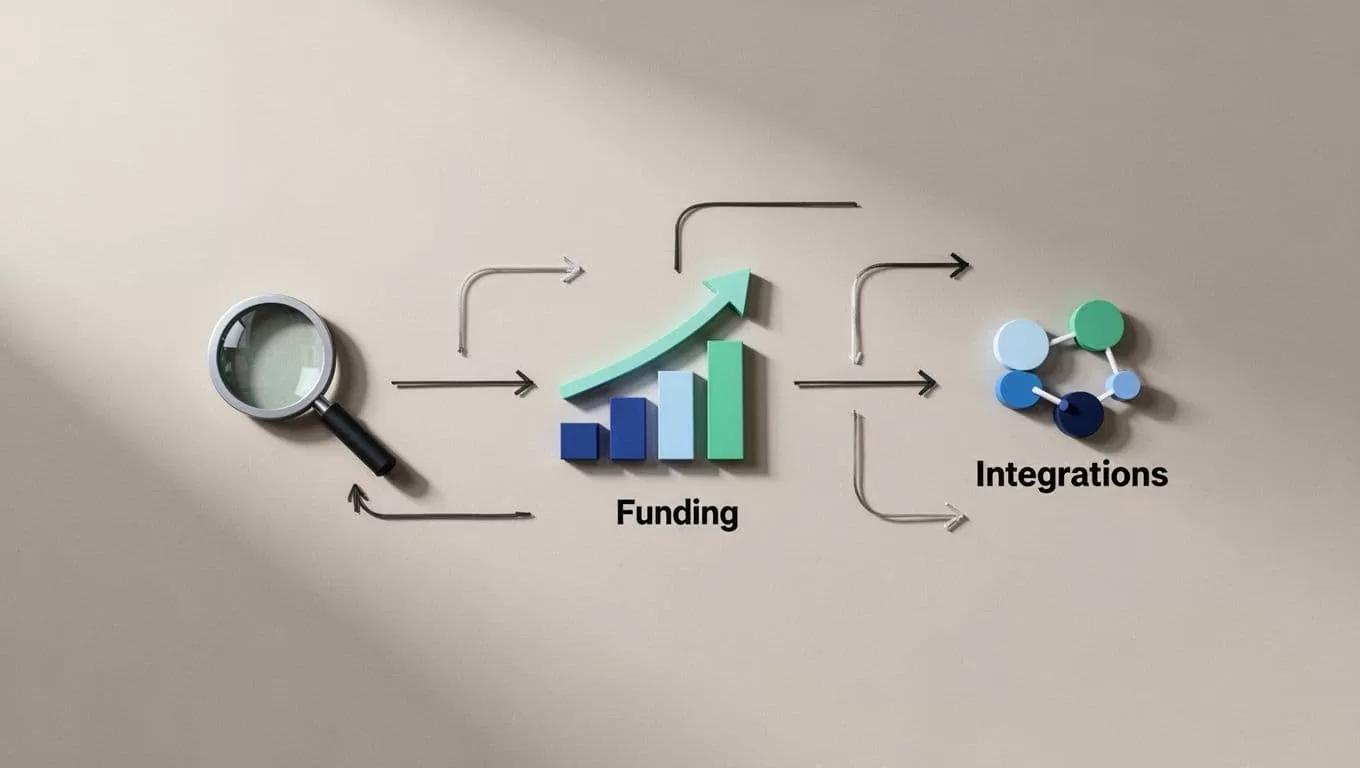
- I confirm the growth signal. I want rising search volume, repeated mentions, or a clear jump in category attention. If the curve is flat, I move on.
- I check why people care. I read landing pages, reviews, founder posts, and buyer comments. If the product solves a painful task, the signal gets stronger.
- I inspect the business model. I prefer tools with a clean self-serve path, simple pricing, and room to expand. That’s usually where product-led growth shows up first.
- I look for proof beyond attention. Funding, hiring, integrations, and customer stories all matter. Cursor is a good example. Public reporting tied its growth to a huge valuation jump and fast revenue growth, which tells me the demand is not just talk. Cursor’s valuation spike is a useful case study.
- I check saturation. If every competitor sounds the same, I need a sharper angle. If the market is crowded but the wedge is narrow, I may still have room.
When I want to turn that research into content or lead gen, I also use low competition keywords using Exploding Topics. That helps me find the terms buyers use before a category gets packed. I also compare tool-level trends with fast-growing industries I’m watching with Exploding Topics in 2026, because SaaS tools often ride a bigger market wave.
The best tools fit a real buyer, not a broad crowd
A fast growing SaaS tool is strongest when the target audience is narrow enough to understand, but large enough to pay. I like tools that solve one job clearly, then expand with integrations and workflow depth. That’s why AI coding, sales enrichment, automation, and data tools keep showing up in my watchlist.
For marketers, I care about search intent and content gaps. For founders, I care about pricing and onboarding. For investors, I care about retention and repeat use. For operators, I care about whether the tool plugs into the stack without a long setup.
I keep coming back to the same question. Does this tool earn attention because it saves time, saves money, or creates revenue? If the answer is yes, I keep digging. If the answer feels vague, I wait.
The real edge is timing plus restraint
Exploding Topics gives me the first flash of movement, but I never stop there. I pair search growth with funding news, pricing, integrations, product-led growth, and competition, because those signals tell me whether a tool has real momentum.
That’s how I separate a passing spike from a SaaS product that can keep growing. The chart may catch my eye, but the buyer behavior tells the real story.
