Deploy ROAS Optimization Tools Inside Mida.so
Getting paid media to pay off means tightening every click that reaches your store. You spend budget on Meta, Google, and TikTok, but traditional dashboards leave blind spots between ad spend and actual site behavior. ROAS optimization tool...
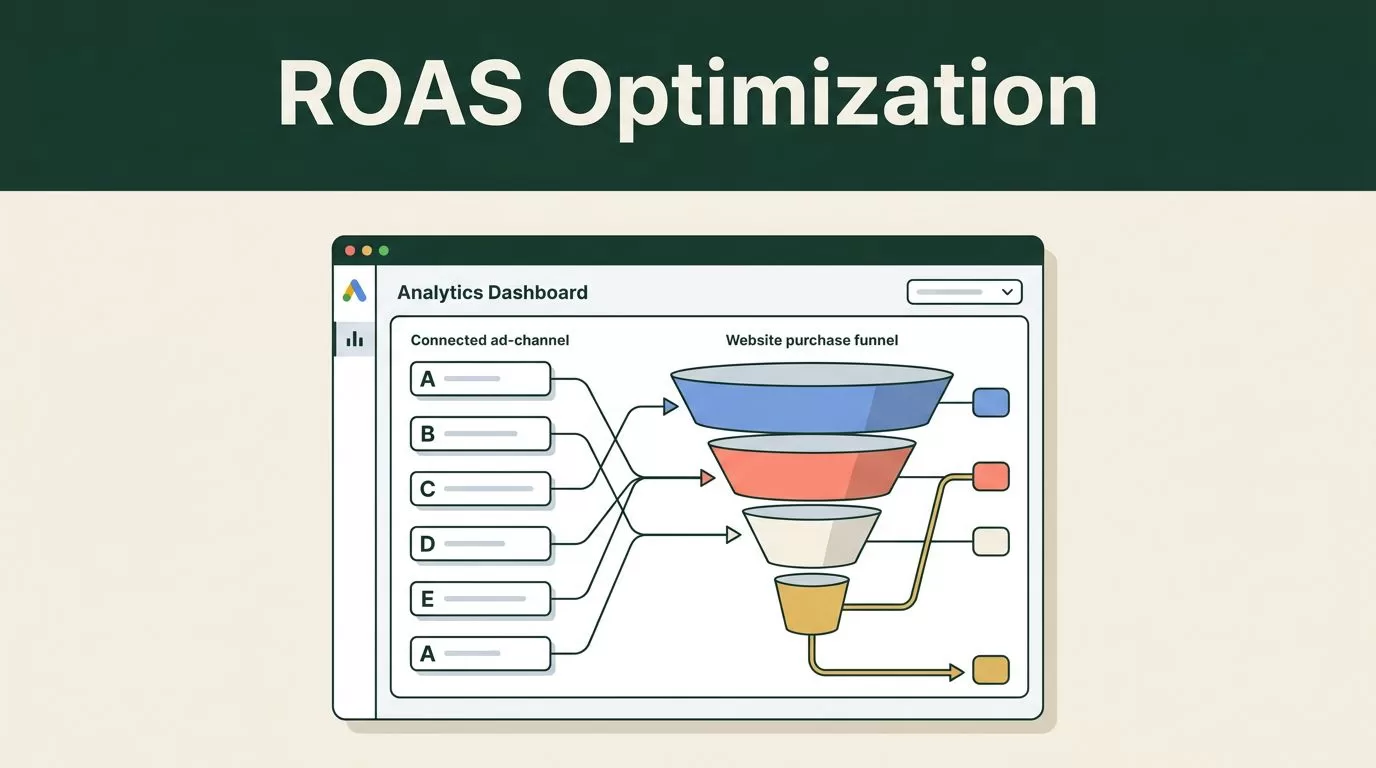
Getting paid media to pay off means tightening every click that reaches your store. You spend budget on Meta, Google, and TikTok, but traditional dashboards leave blind spots between ad spend and actual site behavior. ROAS optimization tools bridge that gap by connecting traffic sources directly to on-site actions. When you run your experiments inside Mida.so, you gain precise control over visitor paths without writing custom code.
Key Takeaways
- Connect campaign data: Map UTM parameters and ad groups directly to visitor sessions in Mida.so to see which traffic sources drive actual revenue.
- Set clear goals: Define a single primary metric like a completed purchase or demo booking before launching any optimization test.
- Segment your results: Check performance across mobile devices, paid channels, and returning visitors to avoid relying on misleading aggregate averages.
- Enforce decision rules: Wait for adequate sample sizes and complete business cycles before declaring a winning variation.
Configuring Campaign Attribution and UTM Parameters

Accurate tracking starts before a visitor lands on your page. You need reliable UTM parameters attached to every ad link so your analytics environment captures the exact source, medium, and campaign. Mida.so reads these parameters at the session level to help you isolate high-value traffic. If your ads use inconsistent naming conventions, your optimization efforts stall out in a mess of unassigned data.
Clean attribution requires strict naming rules across your media buying accounts. Standardize your parameters so every campaign uses lowercase letters and predictable tags. When your traffic enters the site with clean identifiers, Mida.so groups those visitors correctly in your reporting views. You can then filter sessions by ad group or keyword to see where your best buyers originate.
Attributed revenue only tells half the story if your underlying traffic data contains gaps. Always verify that your UTM tags pass through redirect links without getting stripped by tracking blockers or URL shorteners.
Establishing Precise Conversion Goals
A successful optimization cycle focuses on one primary metric at a time. If you try to track twenty different actions simultaneously, your optimization data loses clarity. Set your primary goal around a high-intent event that moves revenue. This might be a completed purchase, a signed software agreement, or a confirmed demo booking.
Avoid setting vague goals like general page views or short scroll depths. Tie your primary objective directly to a business outcome that impacts your bottom line. You can add secondary metrics later to catch unintended trade-offs. For example, if a checkout layout variant increases add-to-cart clicks but lowers final purchase completions, your secondary tracking exposes the friction point before you roll out the change site-wide.
Test your conversion setup thoroughly before pointing paid traffic toward your experiments. Complete test orders and submit forms yourself while monitoring your browser inspection tools. Confirm that the tracking pixel fires once and only once per successful action.
Reading Test Results With Practical Business Context
A winning percentage on a dashboard doesn’t guarantee a profitable campaign rollout. You must evaluate raw conversion counts alongside percentage lifts to understand the real financial impact. A variant that increases conversion rate by a fraction of a percent on very low traffic won’t cover the cost of implementation.
Look beyond the top-level aggregate numbers. Segment your performance data by device type and traffic channel. A variation that wins overall among organic visitors might fail completely for paid traffic arriving from mobile ad placements. For a deeper look at how leading platforms connect attribution data to forecasting, review top marketing attribution software solutions.
Establish strict decision rules before you inspect your active dashboards. Require a minimum sample size and at least one complete business cycle before calling a winner. Avoid the trap of checking results every hour and stopping the test the moment a variation crosses your confidence threshold.
Automating Optimization Workflows and Guardrails
Performance marketing teams waste hours manually shifting budgets between underperforming ad sets and winning variations. You can streamline this workflow by connecting your experimentation engine with your core analytics stack. When Mida.so records a statistically sound winner for a specific audience segment, use that data to adjust your bidding strategies.
Monitor performance guardrails continuously while your experiments run. Keep a close eye on page load speeds, interaction metrics, and error rates. If an optimization variant slows down checkout responsiveness, any minor conversion lift vanishes behind a spike in mobile cart abandonment.
For broader insights into how advertisers send conversion values and customer signals to ad networks, read this guide on performance marketing attribution software. Matching your on-site experimentation data with external ad platform signals gives your algorithms cleaner inputs for automated bidding.
Conclusion
Improving your return on ad spend requires more than simply increasing ad budgets or tweaking ad copy. By deploying precise tracking, setting strict conversion goals, and reading your test results with proper segmentation, you turn raw traffic data into reliable revenue growth. Keep your testing hypotheses grounded in real user friction points, and let verified data guide your final deployment decisions. Configure your Mida.so workspace today to start running disciplined experiments that protect your margins and scale your best campaigns.
