How I Calculate Gross MRR Churn in Baremetrics
You run a SaaS business. Every month, you watch revenue slip away through cancellations and downgrades. Gross MRR churn shows the full damage from those losses, before any upsells mask the problem. I track this metric in Baremetrics because...
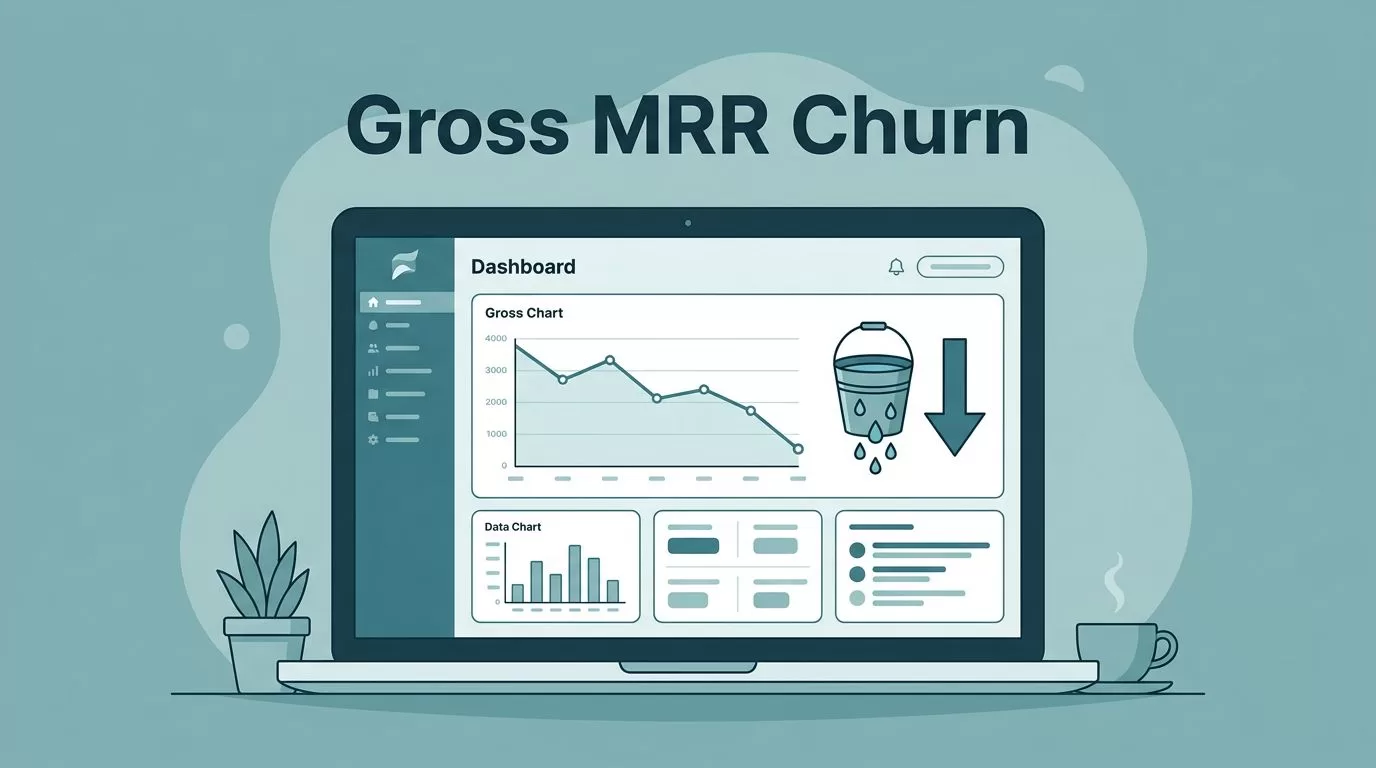
You run a SaaS business. Every month, you watch revenue slip away through cancellations and downgrades. Gross MRR churn shows the full damage from those losses, before any upsells mask the problem.
I track this metric in Baremetrics because it forces me to face raw revenue contraction. It helps me spot leaks early, so I can fix retention before small issues snowball. Let’s walk through how I pull and use this number.
What Gross MRR Churn Reveals About My Business
Gross MRR churn measures the recurring revenue I lose from customer cancellations and plan downgrades in a period. It ignores expansions or new sales. For me, that means a clear view of how much money walks out the door.
Think of it as the outflow from my revenue bucket. In May 2026, my SaaS hit 8% gross MRR churn. That $4,000 loss hurt, even with growth elsewhere. Baremetrics labels this as “churned MRR,” which includes both cancellations and contractions.
I check it monthly against benchmarks. Healthy SaaS businesses keep gross MRR churn under 5-7%. Higher rates signal product gaps or pricing mismatches. This metric guides my decisions, like targeting at-risk segments.
Gross MRR Churn Differs from Net, Customer, and Revenue Churn
People mix up churn types. Gross MRR churn focuses on lost dollars only. Net revenue churn subtracts expansions from those losses, which can hide problems if upsells offset churn.
Customer churn counts lost accounts, not their value. One big client canceling skews revenue more than many small ones. Revenue churn overlaps with gross MRR churn but sometimes bundles failed payments, which Baremetrics tracks separately.
For details on revenue churn formulas, Baremetrics explains it well. I use gross MRR churn first because it demands action on outflows. Net metrics come later for the full picture. In my Baremetrics dashboard setup, I pin gross churn next to expansions.
Where I Spot Gross MRR Churn in Baremetrics
Baremetrics pulls this from my Stripe data automatically. I log in, head to the MRR overview, and scan the breakdown. Churned MRR sits there, split into cancellations and contractions.
The dashboard shows trends over 30 days. I filter by cohort or plan to drill down. As of May 2026, it’s in the core metrics view, not a hidden tab.

This view matches my monthly routine. High churn in one segment prompts emails or calls. I cross-check with Baremetrics metrics for catching churn.
The Standard Formula for Gross MRR Churn
The math stays simple. Divide lost MRR by starting MRR, then multiply by 100 for a percentage.
(Gross MRR Churned + Contraction MRR) / Beginning MRR x 100
Baremetrics computes “churned MRR” as cancellations plus downgrades. For a 30-day window, beginning MRR is the total at day one. See their churn MRR guide for the exact pull.
I run this every first Friday. It takes seconds in Baremetrics, but I always note the components.
A Worked Example from My Last Month
Last month, my beginning MRR stood at $50,000. Customers canceled $2,000 in plans. Downgrades cut another $1,500.
Total lost: $3,500. Gross MRR churn: ($3,500 / $50,000) x 100 = 7%.
That rate pushed me to review mid-tier plans. Expansions added $1,200, dropping net churn to 4.6%. But gross told the real story first.

This breakdown keeps me honest. For more on gross vs. net churn, Baremetrics contrasts them clearly.
How I Validate Gross MRR Churn by Hand
Baremetrics shines, but I double-check. Export MRR data to Google Sheets. Sum cancellations and contractions from the events tab.
Match against beginning MRR from the prior period-end. Recalculate the ratio. Discrepancies flag sync issues.

This step caught a $200 glitch once. Now I do it quarterly. It builds trust in the dashboard.
Wrapping Up Gross MRR Churn Tracking
Gross MRR churn cuts through noise to show revenue at risk. I calculate it in Baremetrics monthly, validate by hand, and act on the insights. Keep yours below 7% to protect growth.
This metric shifted my focus from vanity wins to retention fixes. Track it your way, and watch leaks shrink.
