How I Find High Demand Low Supply Products With Exploding Topics in 2026
The best product ideas often look plain at first. I use Exploding Topics to catch them before the crowd shows up. When I’m hunting for high demand low supply products, I care less about hype and more about motion. I want signs that in...

The best product ideas often look plain at first. I use Exploding Topics to catch them before the crowd shows up.
When I’m hunting for high demand low supply products, I care less about hype and more about motion. I want signs that interest is rising faster than supply can catch up, because that’s where small sellers can still win.
I start by reading the slope, not the headline
I begin with the trend shape. A steady climb matters more to me than a sudden spike.
I open the current Exploding Topics trending products page and compare it with my Exploding Topics trend spotting guide. Then I ask a few simple questions:
- Is the trend rising over weeks or months?
If it is, I keep going. If it only jumped for a few days, I slow down. - Do related products rise together?
One product can be noise. A cluster of related items often points to a real buying habit. - Can I name the buyer and the pain?
If I can’t picture who buys it, I don’t trust the idea. - Would this still make sense without the buzz?
I want a product people would want even if nobody posted about it.
That simple read helps me spot new ecommerce niches before they feel crowded. It also keeps me from mistaking attention for demand.

I validate the market before I call it an opportunity
Once a topic looks promising, I run it through a filter. I want proof that people are searching, buying, and still unsatisfied.
Before I spend a dollar, I check these signals side by side.
| Signal | What I want | Why it matters |
|---|---|---|
| Search growth | A steady climb over months | I want durable demand |
| Competition | Few polished lookalikes | The field may still be open |
| Marketplace saturation | Thin listings or weak brands | I can stand out faster |
| Margin | Room for ads, returns, and discounts | Low margin kills good traffic |
| Seasonality | A pattern I can plan around | Timing changes the odds |
| Pain point | A problem buyers feel now | Pain sells better than curiosity |
I also compare the trend with verified 2026 product demand data and my seasonal launch process. That helps me see whether the idea is hot for a moment or useful for a real selling window.
A trend can look hot and still be a weak buy if the supply side is crowded.
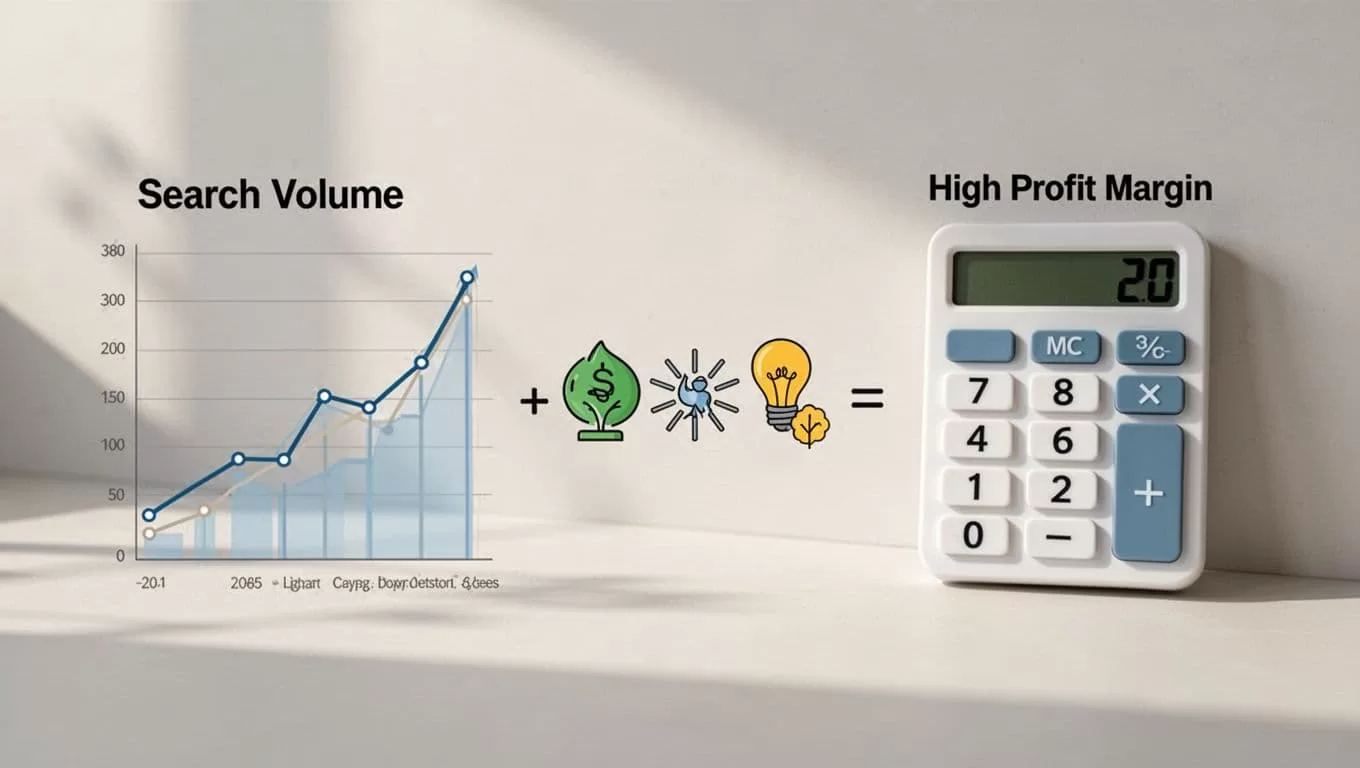
The chart alone never closes the case. I want demand, room to sell, and a clear reason people would choose my version.
The products I’d watch in April 2026
In April 2026, I keep seeing movement in practical items that solve a small problem fast. That matters, because useful products can spread without a huge ad budget.
A few examples stand out. Niacinamide toothpaste is one, but I’d handle claims carefully. Exfoliating antibacterial shower towels and reusable face cloths also catch my eye because they fit routine use and bundle well. In the home aisle, under-cabinet kitchen lights and mould remover gel point to simple fixes people can understand in seconds. Outdoors, I’m watching folding chairs, picnic tote bags, and similar carry-and-go items.
I cross-check ideas like these with my dropshipping product research process, because short-form trends can lie. A product that looks good on video still needs room for shipping, support, and margin.

What makes these promising is the fit between need and supply. They solve everyday problems, they photograph well, and they don’t need a giant catalog to test. That gives me a cleaner path to a small launch.
My final filter is cash, not excitement
I use one last pass before I move forward. This is where I cut the ideas that feel busy but don’t earn their place.
I drop a product when:
- it needs a long explanation before anyone cares
- shipping or returns wipe out the margin
- the marketplace is packed with lookalikes
- the demand only appears once a year
- the buyer’s pain is vague or easy to ignore
This is the same filter I use when I track new ecommerce niches with Exploding Topics data. I want a short path from trend to test, not a long detour through guesswork.
If a product clears those checks, I can usually move fast with a simple landing page, a small test order, and a tight offer. If it fails, I leave it alone.
The real edge is not spotting every trend. It’s knowing which ones can become high demand low supply products before the shelves fill up. When demand rises, competition stays thin, and the customer problem is obvious, I know I’ve found something worth testing.
