Automate the Best Time to Post on LinkedIn With Someli
LinkedIn timing looks simple until you try to automate it. Post too early and the post sits idle. Post too late and your audience has already moved on. Someli fixes the calendar problem, but it only works if your schedule starts from a real...

LinkedIn timing looks simple until you try to automate it. Post too early and the post sits idle. Post too late and your audience has already moved on.
Someli fixes the calendar problem, but it only works if your schedule starts from a real baseline. The goal is not to guess one magic hour. The goal is to set a repeatable posting system, then adjust it with your own data.
Key Takeaways
- Start with Tuesday through Thursday, 10 AM to 12 PM in your audience’s local time.
- Treat timing as a test. Recent studies do not agree on one perfect hour.
- Use Someli to run a baseline queue, then keep one alternate slot for comparison.
- Match posting windows to audience type, not your own routine.
- Review results every two weeks and move the winning slot into the default schedule.
What the timing data actually says
The broad pattern is stable. Most recent studies point to midweek morning posts. Sprout Social’s 2026 timing study puts the strongest window on Tuesday through Thursday. Buffer’s 4.8M-post analysis leans later, with stronger results in the afternoon. Hootsuite’s LinkedIn algorithm guide also points to weekday activity, with some earlier-day peaks.
That spread matters. It means there is no single universal hour. Your audience, time zone, and content type change the answer. A founder posting to US executives will not see the same pattern as a creator posting to a global audience.
Use that data as a starting line, not a finish line. If you need one safe baseline, pick Tuesday through Thursday, 10 AM to 12 PM in your audience’s local time. That window shows up often enough to justify a first test. It is also easy to automate in Someli.
If your audience is clearly active later, keep one afternoon slot in the queue. Do not build your whole calendar around a single study. Build it around repeatable proof.
Set a baseline schedule in Someli
Set the schedule once, then let Someli handle the repeats.

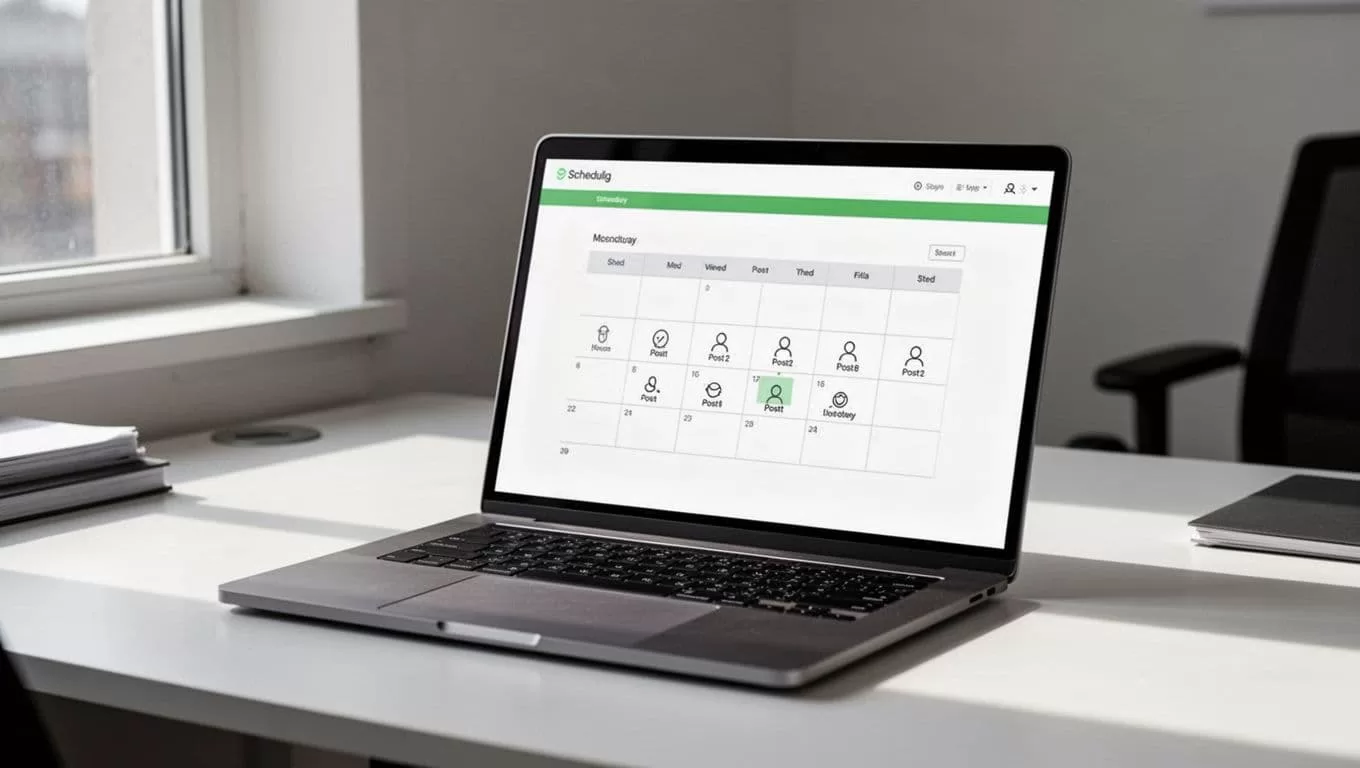
-
Pick one primary timezone.
Use the timezone that matches most of your audience, not your own workday. If you sell mostly to the US East Coast, build the schedule in Eastern time. If your readers are spread across regions, start with the largest cluster first.
-
Build a three-day baseline.
Put your strongest posts on Tuesday, Wednesday, and Thursday. Start with one morning window, then keep it consistent. A 10:30 a.m. to 11:30 a.m. slot is a clean place to begin. Consistency makes the results easier to read.
-
Add one comparison slot.
Keep a second window in play, usually around 3 p.m. or 4 p.m. That gives you a direct comparison against the morning queue. If the afternoon post wins twice, you have a real signal.
-
Group posts by intent.
Educational posts, proof posts, recruiting posts, and personal posts should not all share the same schedule. A product update may work best in the morning. A founder reflection may do better later in the day. Give each type its own lane in Someli.
-
Leave the schedule alone for two weeks.
Do not change the posting hour every time one post underperforms. You need enough volume to see a pattern. A small sample can lie. A repeated pattern usually does not.
A useful setup looks like this. A B2B SaaS founder in Chicago can queue a Tuesday thought-leadership post at 10:30 a.m. CT, a Wednesday case study at 11:15 a.m. CT, and a Thursday proof post at 3 p.m. CT. That gives one morning lane and one afternoon lane. The comparison is clean.
Once the queue is live, Someli keeps the cadence steady while you watch performance. That is the point. The tool handles the clock. You handle the strategy.
Choose time windows by audience, not habit
The same hour can produce two different results. An executive audience scans early. A creator audience may engage later. If you sell into multiple segments, give each one a different starting window.
| Audience | Starting window | Why to test it |
|---|---|---|
| General B2B | Tuesday to Thursday, 10 AM to 12 PM | Strongest broad pattern across recent studies |
| C-level and senior operators | 9 AM to 9:30 AM Eastern | They often check before meetings start |
| Video posts | 12 PM to 1 PM local time | Lunch breaks give more watch time |
| Founders and creators | 2 PM to 4 PM local time | Catch-up browsing happens later |
| Personal or leadership posts | Monday or weekend test | These posts can work outside business hours |
Use the row that matches the reader, not the one that matches your calendar. If your buyers are split across regions, schedule to the largest time zone first. Then test the second region in a separate queue.
Content type matters too. Text-only posts can hold up later in the day because they load fast. Video and carousel posts usually need more attention, so midmorning and lunch hours are safer starting points. That is one reason a single posting hour rarely works for every format.
Test the schedule with clean comparisons
Once the baseline is live, do not touch everything at once.
Change one variable at a time. If you change the hour, keep the topic and format stable.
That rule saves you from bad conclusions. If you post a new format at a new time, you do not know what caused the result. You need clean comparisons.
Track these four numbers after each queue cycle:
- Impressions, which show reach.
- Clicks, which show whether the hook worked.
- Comments, which show conversation.
- Profile visits or follows, which show buyer interest.
If a slot wins on impressions but loses on clicks, it is not the best slot. It is just the loudest one. If a slot gets fewer impressions but more comments, that may be the stronger timing choice for a thought-leadership campaign.
Use two-week review cycles. That is enough time to see repeated patterns without overreacting to one lucky post. If Wednesday at 4 p.m. beats Tuesday at 10:30 a.m. three times in a row, move it into the default queue. If the result flips when you switch the audience segment, separate the queues by audience.
For a practical rule, keep one winning slot, one test slot, and one backup slot. That structure is simple, and it keeps Someli working like a scheduler instead of a guess machine.
Keep the schedule flexible when the audience changes
There is no fixed answer for every account. A founder-led brand, a recruiting team, and a product marketer do not share the same engagement pattern. That is normal.
Use one baseline if your audience is stable. Use separate schedules if your audience splits by job title or geography. If you post to both North America and Europe, you may need two queues. A single time slot often forces one group to absorb a weak post time.
Weekends usually underperform for standard business posts. They can still work for personal stories, leadership posts, or lighter company updates. If you test weekends, treat them as experiments, not defaults.
The same goes for Monday. It is often uneven, but it can work for reflective content or internal momentum posts. Keep the test narrow. Broad guesses create broad noise.
Conclusion
LinkedIn timing is not a mystery once you give it a system. Start with the strongest baseline, usually Tuesday through Thursday in the late morning. Then let Someli run that schedule long enough for the numbers to speak.
The real win is not finding one perfect hour. It is building a posting loop that keeps improving. Set one slot, test one alternate, and move the winner into the queue. That is how you turn the best time to post on LinkedIn into a repeatable process instead of a guess.

