Marketing Testing Tools
Marketing teams often struggle to balance site performance with the need for constant experimentation. You need to run tests to lift conversion rates, but heavy scripts frequently drag down page speed, frustrate users, and hurt your search...
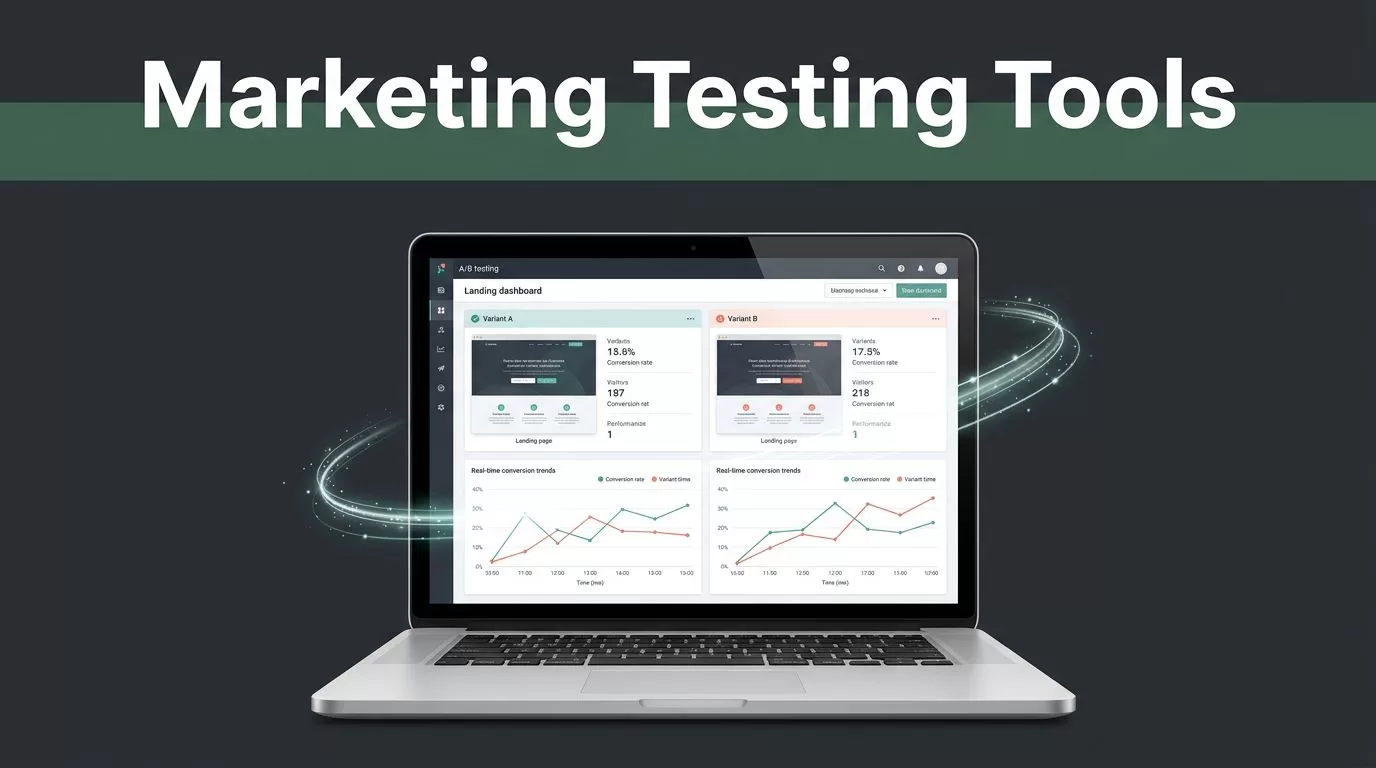
Marketing teams often struggle to balance site performance with the need for constant experimentation. You need to run tests to lift conversion rates, but heavy scripts frequently drag down page speed, frustrate users, and hurt your search rankings. Mida.so offers a solution that addresses this friction by providing a lightweight, AI-driven environment for A/B testing and personalization. It allows your team to move past the bottlenecks that typically delay product updates or marketing changes.

Key Takeaways
- Mida.so provides a lightweight script that prevents the site-speed penalties often associated with enterprise testing platforms.
- Teams can use AI-driven features to generate hypothesis variants and copy, reducing the time spent in the initial ideation phase.
- You can deploy experiments using a no-code visual editor, which removes the dependency on engineering resources for minor landing page changes.
- Data from these experiments integrates directly with tools like Google Analytics 4, allowing for consistent measurement across your entire marketing stack.
Improving Your Experimentation Workflow
Traditional conversion rate optimization requires a tight feedback loop between the marketing team and developers. When you need to change a headline or swap an image, you shouldn’t have to wait for an engineering sprint to finish. To understand why this structure matters, look at foundational concepts in Conversion Rate Optimization (CRO). By offloading testing tasks to a platform like Mida.so, your team owns the end-to-end process from hypothesis to deployment.
Start by defining your primary goals before you open the testing software. Know exactly which metric moves the needle for your business, whether that is form submissions, button clicks, or checkout completions. If your team tracks these metrics, you can use built-in integrations to feed experimental data back into your primary reporting systems. This keeps your records accurate and prevents data silos.
Leveraging AI for Rapid Test Cycles
One of the most persistent hurdles in testing is “tester’s block,” where teams struggle to articulate new hypotheses or create compelling variations. MidaGX AI acts as a partner in this process by analyzing your current page content to suggest specific changes. You can ask the platform to draft copy for a new call-to-action or generate a design variation based on your requirements.
This approach doesn’t replace human intuition, but it accelerates the heavy lifting. When you use AI to draft three versions of a headline, your job shifts from writer to editor. You pick the best option, tweak it to match your brand voice, and push it live. This workflow allows you to run multiple cycles of testing in the time it once took to launch a single, manual variation.
Maintaining Technical Performance
Site speed is a critical factor for both user retention and search engine visibility. Many legacy marketing testing tools inject heavy JavaScript libraries that execute on every page load, which forces browsers to work harder and slows down the time-to-first-paint. You need to prioritize performance to ensure your experiments don’t accidentally drive away the audience you are trying to convert.
Mida.so manages this by keeping its core script small, typically ranging between 8KB and 20KB. This footprint is significantly smaller than many industry alternatives. When the script loads in roughly 20ms, it effectively disappears from the user’s perception. This technical efficiency protects your Core Web Vitals while giving you the flexibility to swap content based on traffic sources or specific audience segments.
Personalization at Scale
Modern marketing requires more than just A/B testing; it requires context-aware content. If a visitor arrives from a specific paid ad campaign, they expect the landing page to match the messaging of that ad. You can use personalization features to trigger specific content blocks based on the URL, user geography, or device type.
This removes the need to build and host dozens of separate landing pages for every campaign variant. Instead, you keep a single core page and swap specific elements dynamically. If you want to dive deeper into how conversion rate optimization tools support these types of workflows, look for platforms that allow for granular targeting without requiring complex custom code deployments. For a deep comparison of lightweight options, read our guide on choosing a high-performance landing page alternative.
Documenting and Scaling Your Learnings
Running tests is only half the battle. If your team doesn’t document why a test succeeded or failed, you are essentially reinventing the wheel every month. You must maintain a centralized library of experiments that records the initial hypothesis, the variation deployed, and the final conversion data.
Make this documentation a required step in your team process. Before closing an experiment, summarize the outcome in a simple format that highlights the impact on your conversion funnel. You can also utilize experimentation resources to structure your data collection properly. This habit turns your testing platform into a knowledge base, making it easier for new team members to understand what has already been tried and which strategies consistently perform well for your audience.
Final Thoughts
Adopting an agile approach to testing requires tools that support speed and autonomy. When you remove the friction of engineering dependencies, you clear the path for constant improvement. Mida.so helps by combining a lightweight technical structure with AI-assisted workflows that fit well within a busy marketing schedule.
Start small by running one high-impact test on your primary landing page this week. Use the platform to identify a single bottleneck in your conversion flow and iterate based on the data. By building this habit, you ensure your marketing decisions remain grounded in observable results rather than assumptions.
