Memberful vs MemberSpace: Why I Pick MemberSpace
When I want a membership area to feel like part of my site, I usually reach for MemberSpace. When I want a more structured subscription stack, Memberful still deserves a serious look. That split matters in 2026 because most of us are not st...

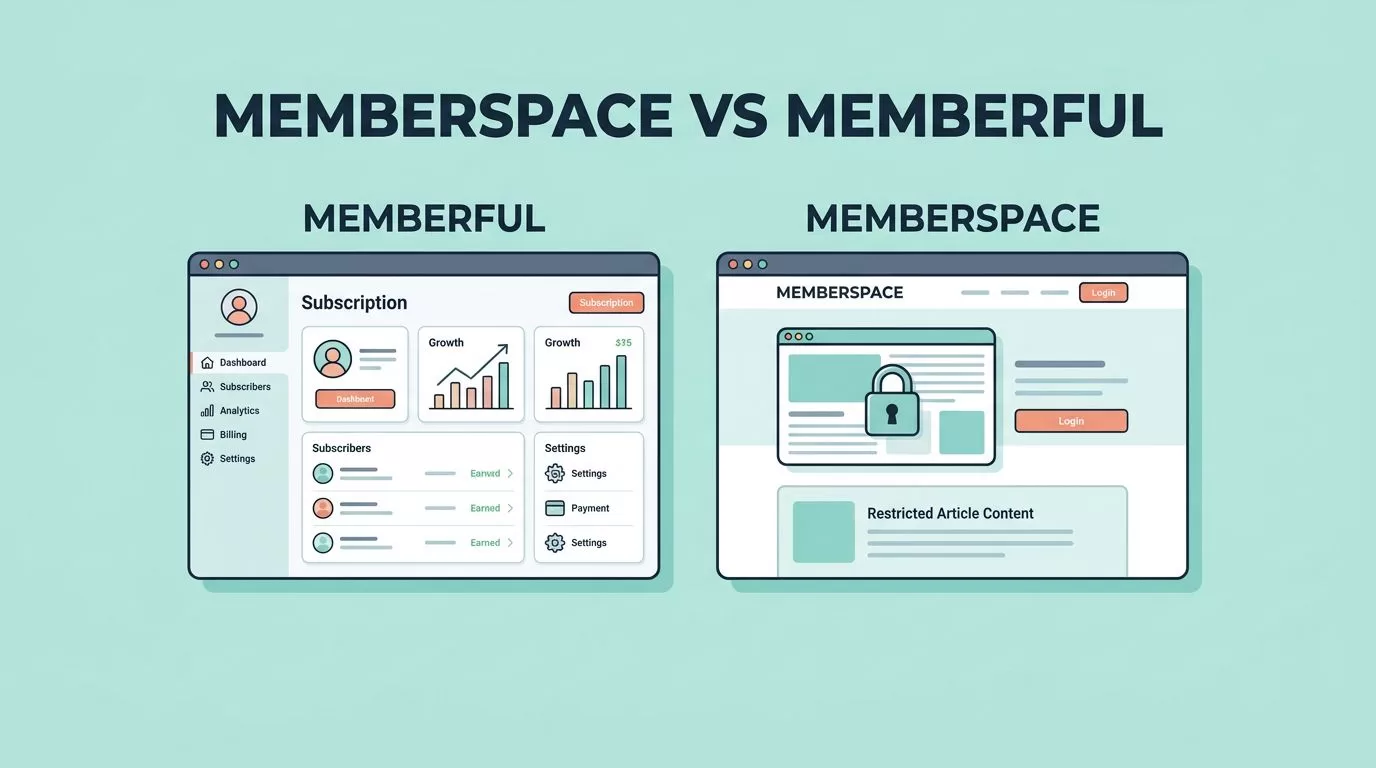
When I want a membership area to feel like part of my site, I usually reach for MemberSpace. When I want a more structured subscription stack, Memberful still deserves a serious look.
That split matters in 2026 because most of us are not starting from zero. We already have a website, a brand, and a member journey we don’t want to rebuild.
If you’re weighing Memberful vs MemberSpace, I care most about setup, design control, monetization, integrations, and how the tool feels once real members start paying.
How I size up Memberful and MemberSpace
The simplest way I compare them is by business model. Memberful feels stronger when the membership itself is the product. MemberSpace feels stronger when I already have a site and want to add paid access without tearing everything apart.
| Area | Memberful | MemberSpace |
|---|---|---|
| Best fit | Membership business with deeper subscription controls | Existing site that needs content gating |
| Setup | More structured, more moving parts | Easier to layer onto a live site |
| Monetization | Subscriptions, trials, one-time payments, coupons, referrals, Apple Pay | Membership access, drip content, abandoned sign-up help, upsells |
| Integrations | Broader member-management and workflow integrations | Solid basics, lighter stack |
| My lean | Better when the subscription engine matters most | Better when the site and design already matter most |
That table is the heart of my decision. If I want more business-side tools, Memberful gets my attention. If I want a clean membership layer on top of a site I already like, MemberSpace usually wins.
When I need the membership to feel invisible, MemberSpace usually wins. When I need the membership engine to do more work, Memberful gets the nod.
Why MemberSpace fits an existing site so well
MemberSpace makes the most sense to me when I already like my site and don’t want to redesign it around a new platform. It works well when I want to lock a page, a section, a lesson, or a resource library without changing the whole front end.


That matters more than people think. A lot of membership tools are really asking you to move your business into their shape. MemberSpace usually asks less of me. I can keep my site builder, my pages, and my visual style, then add access control where I need it.
I also like it when the member offer is simple. If I’m selling gated guides, templates, premium posts, or a small library of training, MemberSpace gives me a direct path. It doesn’t feel heavy.
For pricing, I still keep my MemberSpace pricing overview nearby because the plan choice matters once a test becomes a real offer. I don’t want to discover fee pressure after the audience starts growing.
This is also where the broader business model matters. If my offer is closer to a course-plus-community setup, I compare it against other options too, including my Skool vs Kajabi comparison. That helps me separate “membership layer” from “full learning business.”
Where Memberful still earns my attention
Memberful still has a strong case, and I wouldn’t ignore it. It feels better when I care about the membership business itself, not just the locked content.
I see that same pattern in Kourses’ 2026 Memberful alternatives comparison, which treats Memberful as the stronger subscription-first option.
Memberful gives me more of the mechanics I want when I run recurring revenue seriously. Its checkout and payment setup are polished, and it supports a wider mix of payment and promotion options. Subscriptions are the center of the product, but I also notice features like trials, one-time payments, coupons, promotions, referrals, and Apple Pay.
That matters if I’m building a publisher-style membership, a creator subscription, or a community with lots of paid tiers. I also care about integrations, and Memberful connects well with tools I already use, including WordPress, Mailchimp, Discord, Kit, and Zapier.
When I need the back end to feel more like a revenue system, Memberful has the edge. It gives me more structure for recurring plans, and it tends to fit better when I am thinking about member lifecycle, not just access gates.
Setup, design control, and the member experience
Setup is where the difference gets real fast. MemberSpace usually feels lighter because I can add it to an existing site and start controlling access with less redesign work. Memberful asks for a bit more intention, but that extra structure can help if I want a more defined subscription flow.
The user experience follows that pattern too. MemberSpace gives me more freedom to keep my current site look and feel. That means the member journey can stay close to the rest of my brand. The login, the protected pages, and the sales page all feel like they belong together.
Memberful feels more purpose-built. I notice that most when I care about checkout polish, member account flow, and the way paid plans are organized. It feels like the product expects me to run a membership business, not just hide a few pages behind a wall.
That fits the way Talkspresso’s 2026 Memberful alternatives guide describes the split too, with MemberSpace framed as the easier path for site-level gating.
For me, the question is simple. Do I want a membership layer, or do I want a membership machine? MemberSpace gives me the first answer. Memberful often gives me the second.
Monetization and integrations shape the final call
Money is where platform preferences get exposed. If I only need a few simple paid tiers, MemberSpace can do the job without a lot of drama. If I want to experiment with trials, discounts, one-time charges, referrals, and richer checkout behavior, Memberful looks more complete.
I also pay attention to the tools around the membership. Memberful gives me more confidence when I want the membership system to connect cleanly to email, community, and automation tools. That matters if I plan to manage member communication outside the platform.
MemberSpace is still useful here, but I treat it as lighter. I like it for membership access and a few growth touches like drip emails, abandoned sign-up notices, and upsells. I do not expect it to do as much heavy lifting on the subscription side.
That difference matters when I am building a business with a clear monetization path. If I want to sell a premium archive, a gated resource hub, or a few paid content tiers, MemberSpace feels efficient. If I want the membership operation to grow into a more involved product business, Memberful has more room to stretch.
I also like that MemberSpace keeps the site front and center. That matters for creators and businesses that already invested in design, SEO, and content structure. I don’t want the membership tool to flatten all that work into a generic shell.
Which one I choose for different business models
If I am running a polished existing site and want to add paid access without starting over, I pick MemberSpace first. That is the clearest win case for me.
If I am building around recurring subscriptions, multiple paid tiers, or a membership business that needs more back-end muscle, Memberful is strong. I respect it for that.
If I am a creator who wants to protect lessons, templates, or a premium newsletter archive, MemberSpace usually gives me the fastest path. If I am a publisher or community operator who needs more subscription control, Memberful starts to look more attractive.
When I compare the two for the kind of readers I work with, this is the pattern I keep seeing:
- Existing site, minimal redesign, and content gating, I lean MemberSpace.
- More complex subscriptions and richer member management, I lean Memberful.
- A brand that already looks the way I want, I lean MemberSpace.
- A membership model that needs more operational depth, I lean Memberful.
That is why I call the comparison in favor of MemberSpace so often. It handles the practical reality most teams face. They do not want a blank slate. They want a way to add membership revenue to a site that already works.
Conclusion
When I compare Memberful and MemberSpace in 2026, I do not ask which one is louder. I ask which one fits the business I already have.
Memberful is strong when the subscription system is the main product. MemberSpace is stronger when I want to add memberships to an existing site with less friction and more control over the look and feel.
That is the reason I keep coming back to MemberSpace. It solves the practical problem cleanly, and it does not make me rebuild what is already working.

