When I compare podcast hosting pricing, I don’t start with the sticker price. I start with the point where the plan gets cramped, because that is where the real bill shows up.
Transistor.fm is a good test case for that approach. It prices around monthly downloads, not around storage or episode count, so the math changes fast if I run more than one show. That makes it a useful yardstick for anyone trying to pick between low-cost hosts and growth-friendly ones.
What I get for the money with Transistor.fm
Transistor’s current pricing is simple on the surface, but the limits matter. The Starter plan is $19 per month for 20,000 monthly downloads. Professional is $49 for 100,000 downloads, and Business is $99 for 250,000. Enterprise starts at $199 plus, with custom pricing for higher volume.
I like that Transistor includes unlimited podcasts, team members, episodes, and storage on every paid plan. It also gives me a 14-day trial, so I can test the fit before I commit. The tradeoff is the cap on file size, since audio uploads top out at 1,000 MB.

The hidden upgrade triggers are clear. Starter allows 50 private subscribers, Professional raises that to 500, and Business goes to 3,000. Professional also adds dynamic ads, dynamic show notes, and auto-posting to YouTube. If I want a fuller look at how that plays out in practice, I read my Transistor podcast hosting review.
In plain terms, Transistor feels built for people who expect to grow. I pay more than the cheapest entry tier, but I avoid per-show pricing and storage anxiety.
How the main alternatives compare on price
I cross-check current numbers against StackScored’s podcast hosting pricing roundup when I want another view of the market, because plan math changes fast.
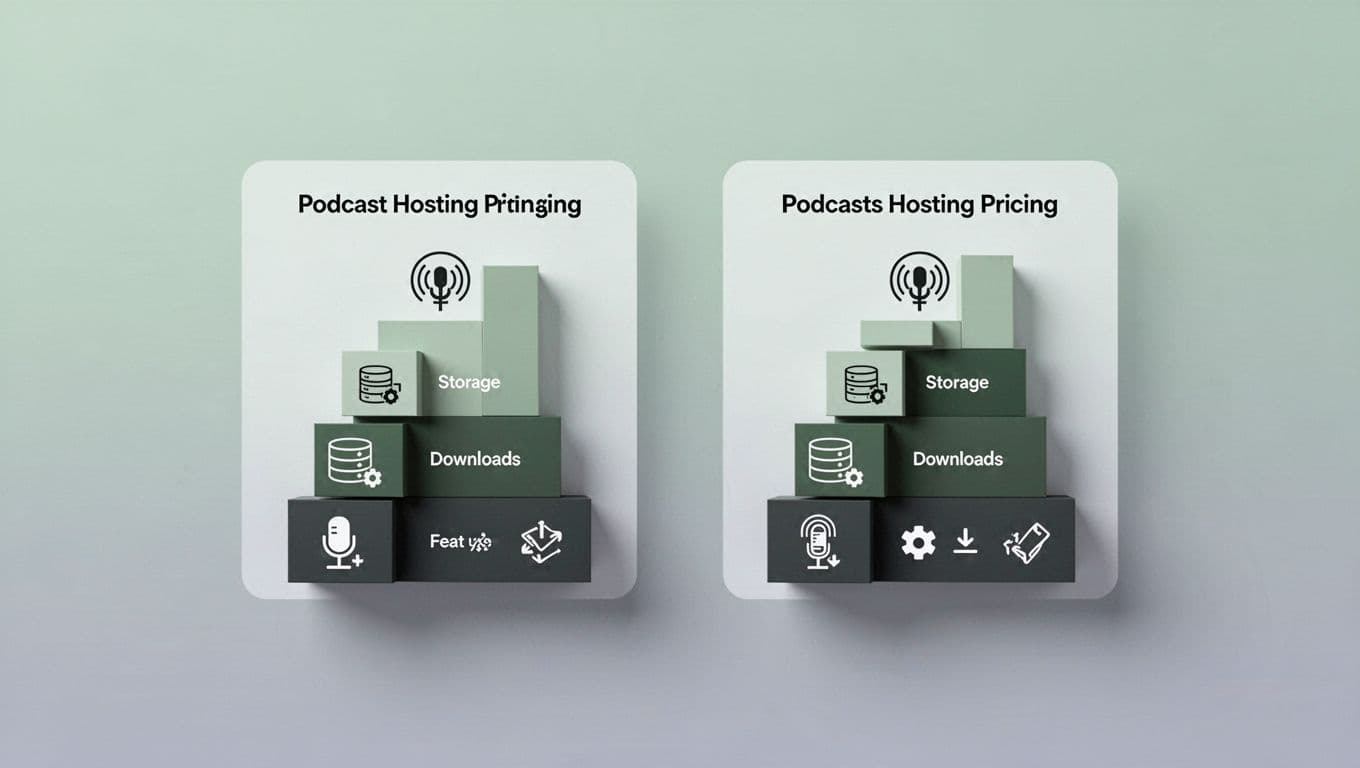
| Platform | Current entry price | Pricing model | Best fit | Main catch |
|---|---|---|---|---|
| Transistor.fm | $19/mo | Monthly downloads | Creators and small networks | Starter caps at 20,000 downloads |
| Buzzsprout | $12/mo | Upload hours per month | Solo hosts and beginners | One paid account per podcast, free episodes expire after 90 days |
| Captivate | $19/mo, about $17/mo billed yearly | Monthly downloads across all shows | Networks and teams | Costs rise fast at 30k, 150k, and 300k downloads |
| RSS.com | $11.99/mo | Flat pricing with unlimited shows | Budget-conscious creators | Less public detail on hard limits and enterprise controls |
| Podbean | Varies by tier | Storage and bandwidth style tiers | Shows with uneven traffic | Harder to forecast, private podcasting can get pricey |
| Libsyn | Not clearly published in a simple current table | Tiered hosting model | Legacy podcasters | Less transparent than newer plans |
| Megaphone | Custom only | Enterprise quote | Large publishers and ad teams | No self-serve public price |
The table shows why Transistor sits in a middle lane. It costs more than the cheapest plans, but it gives me a cleaner growth path. Buzzsprout wins on entry price, RSS.com is close behind, and Captivate lands near Transistor while pushing harder on network features.
I care more about upgrade triggers than the headline price. A low monthly rate can turn expensive when a show grows.
For a wider feature view, I also look at CreatorStackClub’s 2026 comparison. It helps me spot where a platform looks cheap, but hides a ceiling.
Where opaque pricing starts to cost me
Podbean is the one I treat with extra care. Its pricing still leans on storage and bandwidth-style tiers, which can be fine for some shows. It gets harder to predict when I publish often, split shows across clients, or expect traffic spikes.
Libsyn is more old-school in the way it presents value. I don’t see the same clean download-based math there that I get from Transistor or Captivate, so I treat it as a less transparent option. That does not make it bad, but it does make budgeting slower.
Megaphone is a different category entirely. Its pricing is custom, and that matters if I need publisher support, ad sales tools, or enterprise workflows. I would not compare it to a starter plan on pure price alone, because it is built for a different buyer.
Which platform makes sense for the kind of show I run
If I launch one show and want the lowest workable cost, I lean toward Buzzsprout or RSS.com. Buzzsprout is the clearer pick if I want a simple setup and do not mind hour-based limits. RSS.com is the one I watch if budget matters most.
If I manage more than one podcast, Transistor starts to make more sense. One account covers unlimited podcasts, episodes, team members, and storage, so I don’t keep adding new bills every time I add a new feed. If I plan to turn episodes into shorts, I also think about my Transistor.fm clip workflow, because promotion work can change what “affordable” really means.
If I run a network or a business show, Captivate and Transistor are the closest real rivals. Captivate can look a little cheaper at mid-level annual pricing, while Transistor gives me a clean path from starter to high volume. For enterprise buying, Megaphone is the right lane, but only if I am ready for a quote instead of a price page.
Conclusion
When I compare podcast hosting pricing against Transistor.fm, I see a platform that charges for growth instead of clutter. That is why it lands above the cheapest hosts, yet still feels practical for creators and teams.
Buzzsprout and RSS.com can win on entry cost. Captivate is the closest side-by-side rival. Megaphone belongs in enterprise conversations, not starter comparisons.
If I want the lowest price today, I pick the lowest workable plan. If I want room to grow without rebuilding my setup, Transistor is the one I watch most closely.