Baremetrics Recover: Failed Charge Patterns and When to Step In
A failed Stripe charge can look small on a dashboard and still cost real money. One missed renewal, one ignored email, and a customer who meant to stay slips into involuntary churn. I use Baremetrics Recover when I want that gap handled wit...
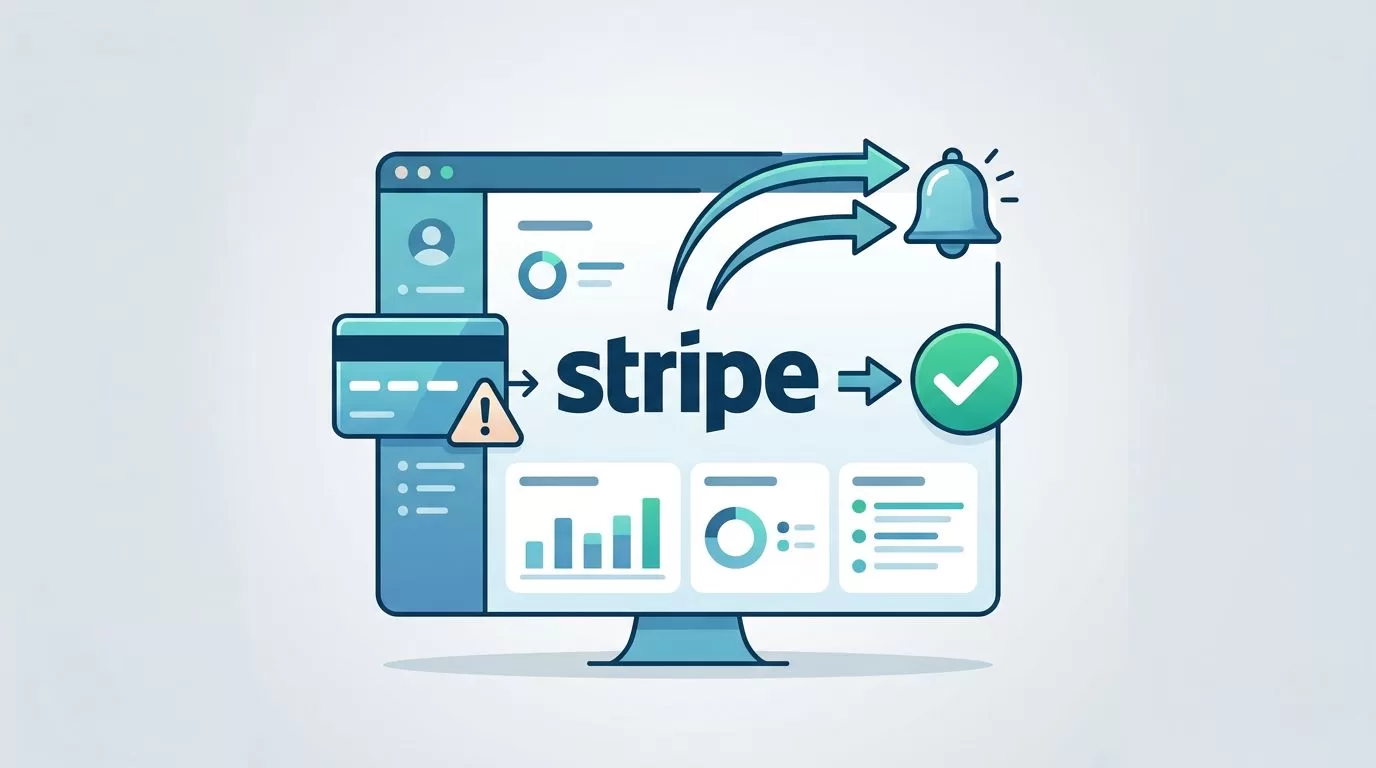
A failed Stripe charge can look small on a dashboard and still cost real money. One missed renewal, one ignored email, and a customer who meant to stay slips into involuntary churn.
I use Baremetrics Recover when I want that gap handled without a manual chase. The charge fails, the follow-up starts, and the customer gets a clean path to update payment details before the account disappears.
That matters most when the product is still useful and the failure is temporary. A broken card is not the same thing as a canceled subscription, so I treat the fix as billing recovery, not customer rescue theater.
What Baremetrics Recover does after a Stripe decline
Baremetrics Recover is a dunning layer for Stripe. I connect it when I want failed payments to trigger a follow-up sequence instead of sitting untouched.
The workflow is simple. Stripe records the failed charge, then Recover sends reminders that ask the customer to update payment details and try again. Depending on the setup, that can include email, SMS, and in-app reminders, plus a hosted payment update form. Stripe still handles the payment system itself, while Recover handles the nudge that gets the card fixed.
That split matters. Stripe’s own guide on involuntary churn describes the same basic problem, a good customer who gets blocked by a bad payment event. Recover gives me a way to respond before the subscription becomes a lost account.
If I want the configuration side of it, I start with Baremetrics dunning setup. That page matches the way I think about the process, connect the billing data, turn on the recovery flow, then test it before I trust it.
The failed charge patterns I watch for
Not every failed charge means the same thing. Some are one-off issues, while others point to a recurring billing problem.
Here are the cases I see most often:
| Failure scenario | What usually caused it | What I do next |
|---|---|---|
| Expired card | The customer forgot to replace the card | Send a clear update prompt fast |
| Insufficient funds | The card was valid, but the bank declined it | Retry and follow up with a short reminder |
| Corporate card replacement | Finance issued a new card without warning | Ask the customer to update billing details |
| Bank fraud or risk block | The issuer flagged the charge | Route the case to support after the first attempt |
A temporary decline often comes back on its own if I reach the customer quickly. A card replacement needs a clean update path. A fraud block usually needs a human eye.
That is why I don’t treat every decline as a dead end. I treat it like a branch in the road. The faster I identify the branch, the better my recovery rate stays.
My Baremetrics setup for automatic recovery
I keep the setup tight. If the process gets bloated, the message gets lost.
- I connect Baremetrics to Stripe and confirm that failed charges are syncing.
- I turn on Recover and choose the channels I want to use, usually email first, then SMS or in-app reminders when the customer base fits that style.
- I write the recovery copy in plain language. I keep it short, because the customer already knows something broke.
- I set the timing so the first message goes out quickly, then the follow-up messages spread out over the next few days.
- I test one real failed payment, then I watch the dashboard to see whether the customer clicks through and updates the card.
I keep the wording direct. “Your payment failed, update your card here” works better than a long brand story. The customer needs a fix, not a lecture.
Automation works best when the customer still wants the product and only needs a prompt to pay again.
I also keep my billing and support teams on the same page. If the sequence triggers for a larger account, I want someone to know who owns the relationship.
When automation works, and when a human should step in
Automation helps most when the failure is mechanical. Expired cards, temporary bank declines, and forgotten updates are good fits.
It also works well for recurring subscriptions where the value is already clear. A customer who uses my product every week usually does not need a long explanation. They need a reminder and a working card form.
I slow things down when the signal looks messy. If the same customer has repeated failed attempts, refund requests, or billing complaints, I don’t want to keep pushing the same sequence. A person needs to step in.
For that reason, I think of Recover as communication and card update collection, not a full collections system. It nudges people back to payment. It does not replace support judgment.
Stripe’s customer churn management guide lines up with that view. Payment recovery works best when support, finance, and product all agree on the next move.
How I measure recovery against churn
A good recovery flow should lower involuntary churn without hiding deeper problems. That is the part I watch closely.
I track recovered amount, recovered subscriptions, and the number of failed charges that return within a few days. Then I compare that with churn and retention. If recoveries rise but churn still climbs, I know the billing friction is only part of the story.
I keep a close eye on subscription health metrics because failed charges often move with the rest of the business. When failed payments spike at the same time as churn, I start looking at billing rules, renewal timing, and customer communication before I blame product usage.
Stripe’s churn reduction strategies fit here too. The best recovery programs do more than win back one invoice. They teach me where customers get stuck.
I also watch for repeat failures on the same accounts. A strong recovery rate can hide a weak billing experience if the same people keep falling back into dunning every month.
Conclusion
A failed Stripe charge is rarely the end of the customer relationship. Most of the time, it’s a billing problem with a short fuse.
Baremetrics Recover gives me a practical way to act before that problem turns into involuntary churn. I get the reminder sequence, the card update path, and the reporting I need to see what came back.
The best results come from simple setup, fast follow-up, and a clear view of when automation should stop and a person should take over. That is how I recover failed Stripe charges without turning billing into a manual chase.
