How I Recover Failed Stripe Charges Automatically With Baremetrics
A failed Stripe charge doesn’t always mean the customer is gone. More often, it means the card expired, the bank declined the renewal, or the account had too little balance at the wrong time. For subscription businesses, that gap turn...

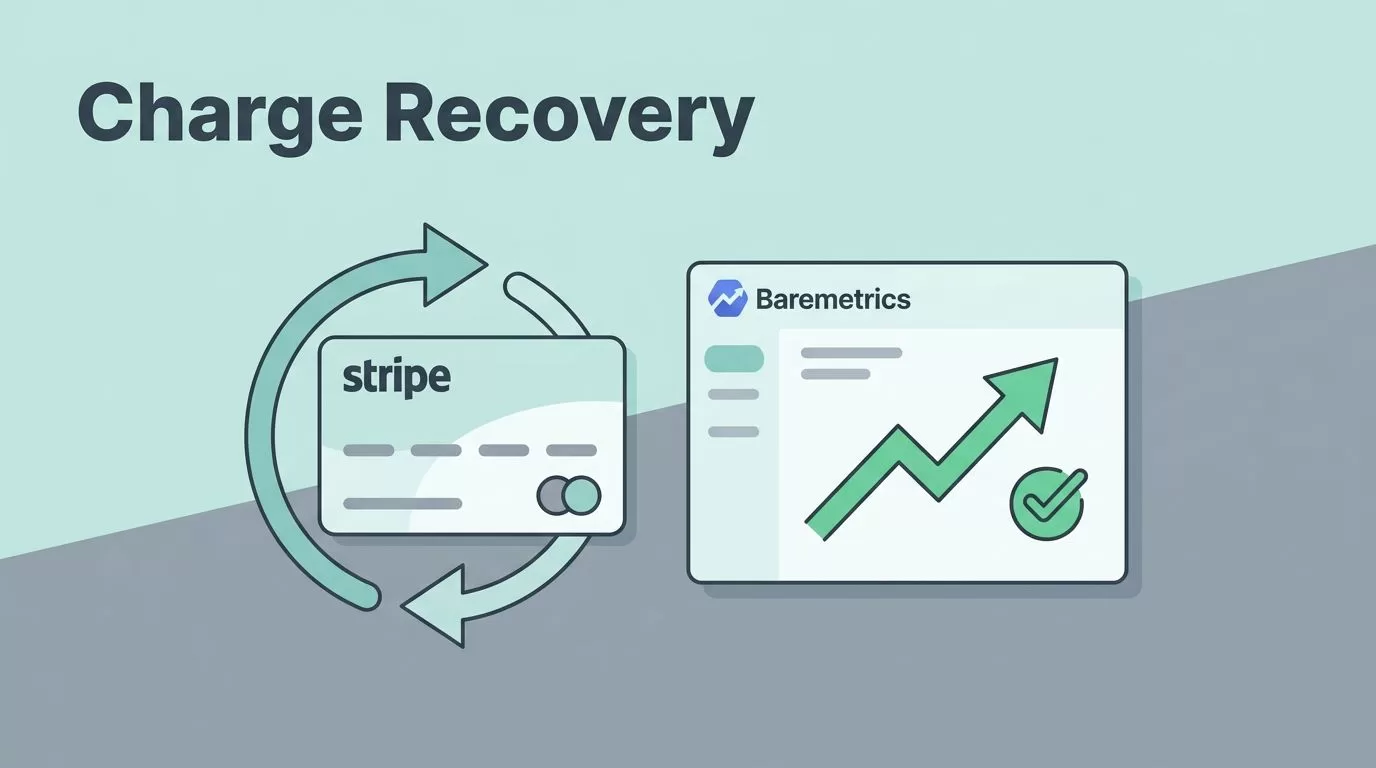
A failed Stripe charge doesn’t always mean the customer is gone. More often, it means the card expired, the bank declined the renewal, or the account had too little balance at the wrong time.
For subscription businesses, that gap turns into involuntary churn, and it can drain revenue without warning. I treat those misses as recoverable money, not lost demand, because speed and follow-up matter more than guesswork.
When I use Baremetrics Recover, I want every failed payment to follow a clear path: retry, notify, and update the card before the subscription slips away.
Why failed charges are usually involuntary churn
When I look at Stripe billing data, I separate the people who meant to cancel from the people who lost access because of a payment problem. Stripe’s involuntary churn guide makes the same point. Passive churn needs a recovery plan, not a guess.
Most failed charges fall into a small set of patterns. The customer may still want the product, but the card changed, the bank is cautious, or the timing is bad.
These are the payment failures I see most often.
| Failure scenario | What I usually see | Best first move |
|---|---|---|
| Expired card | Renewal fails on a healthy account | Ask for an updated payment method |
| Insufficient funds | A temporary cash-flow issue | Retry after a short delay |
| Replaced card | The old card is still on file | Send a card-update reminder |
| Bank decline | The bank flags the charge | Retry on a spaced-out schedule |
The fix is usually calm and direct. I keep a separate failed payment recovery playbook for these cases, because they need speed, not a long support loop.
A failed charge is a billing detour, not always a lost account.

What Baremetrics Recover does after Stripe declines a charge
Baremetrics Recover handles the repetitive work that usually falls on finance or support. It watches for failed charges, sends dunning emails, retries payments, and prompts customers to update their cards.
I like that it keeps the recovery path tied to Stripe instead of pushing me into spreadsheets or one-off reminders. The customer gets a timely nudge, and my team sees which failures are still open.
The parts I care about most are simple.
- Automatic retries when a charge fails for a temporary reason.
- Dunning emails that ask the customer to fix the payment method.
- Card update prompts that remove friction from the next renewal.
- Recovery reporting so I can see which charges came back.
A typical case looks like this. A customer renews on Friday, the card is expired, and the first charge fails. Baremetrics Recover sends the reminder, Stripe retries according to the schedule, and the customer updates the card before the account reaches cancellation.
I still review high-value accounts by hand. Automation handles the long tail, but a large annual plan or a long-time customer deserves a closer look.

How I set up the recovery flow
A good recovery flow feels respectful. It reaches out quickly, but it doesn’t sound panicked. I want the customer to see a clean path back into the account, not a wall of billing noise.
I start with the retry timing. A short retry window can work for low-balance failures, while a replaced card needs a clear customer action. If I space the retries badly, I burn time without improving the result.
Then I keep the first email short. I include the amount, the date, and one obvious next step. Long explanations slow people down, and they do not help someone who wants to keep using the product.
After that, I send reminders with a rhythm. One message is often not enough. A second or third note helps when the customer missed the first alert, deleted the message, or needed time to update the card.
I also route replies to the right place. When a reply sounds like pricing pressure or product fit, I move it into understanding customer cancellation reasons instead of leaving it in the billing queue.
The cleanest setup I know keeps finance and support aligned. Otherwise, the recovery path gets tangled, and no one knows who owns the next step.
How I know the recovery process is working
If I don’t measure recovery, I can’t tell whether the emails, retries, or timing are helping. I watch a small set of numbers in Baremetrics and Stripe, then I compare them month over month.
I start with tracking Stripe subscription metrics so I can compare failed charges, recovered charges, and overall MRR movement in the same view. That gives me a clearer picture than looking at failed invoices alone.
The metrics I care about are easy to read.
- Recovery rate: the share of failed charges that come back.
- Time to recovery: how long it takes to clear the payment.
- MRR saved: recurring revenue recovered from failed charges.
- Reply rate: how often customers need a human follow-up.
- Failure mix: expired cards, low funds, and bank declines.
Stripe’s customer churn management guide is a useful baseline. I still compare it with my own cohorts and renewal windows, because a small SaaS business often sees patterns that a broad guide can’t show.
If recovery is low, I look first at timing and message copy. If replies are high but recoveries are low, the problem is usually the ask, not the data. If one segment recovers well and another doesn’t, I know where to focus next.
Conclusion
Failed Stripe charges are usually a billing problem with a short fuse. The customer often still wants the product, so the win comes from fast retries, clear reminders, and a clean handoff between Stripe, Baremetrics Recover, and my team.
When I treat involuntary churn as recoverable revenue, I stop confusing payment friction with lost demand. That keeps more MRR in play and gives me a clearer view of what needs product or pricing work.
The best recovery system feels simple to the customer and visible to finance. That combination saves time, and it saves revenue that would otherwise slip away quietly.

