Self Referral Detection in Rewardful: A Practical Workflow
A self-referral can turn a valid commission program into a payout leak. An affiliate clicks their own link, creates a customer account, and tries to earn a reward on their own payment. Self referral detection in Rewardful gives you an autom...
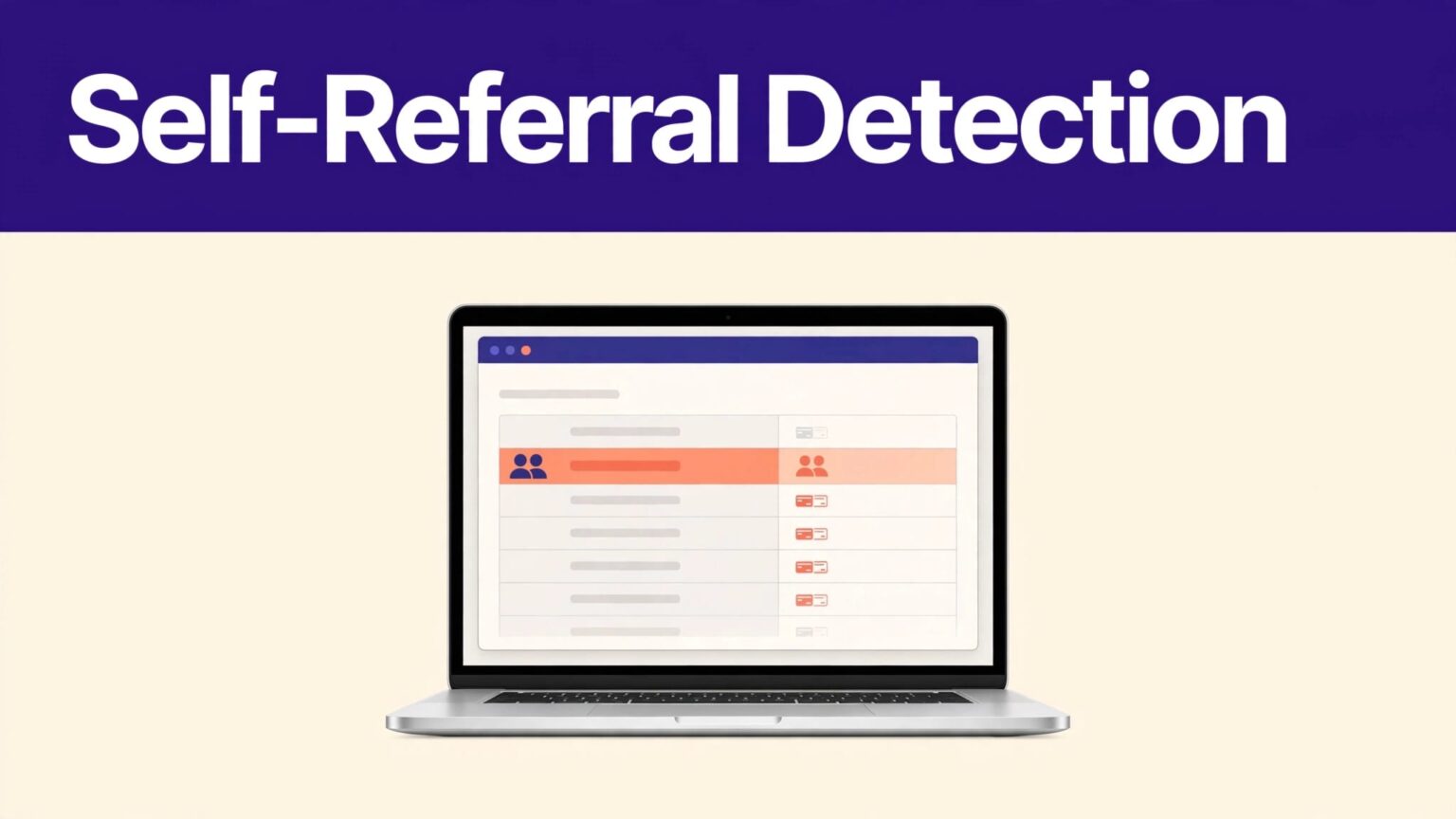
A self-referral can turn a valid commission program into a payout leak. An affiliate clicks their own link, creates a customer account, and tries to earn a reward on their own payment.
Self referral detection in Rewardful gives you an automatic first check. It flags potential cases, notifies you, and gives your team a clear review path before an improper commission reaches payout.
The system catches the obvious overlap. Your process decides what happens next.
HOW SELF REFERRAL DETECTION WORKS IN REWARDFUL
A self-referral happens when the affiliate and referred customer are effectively the same person. This can involve the same email, payment details, account information, or related customer record.
Rewardful automatically identifies potential self-referrals. Its self-referral fraud detection feature can flag the referral and send an email alert to the account owner.
Automatic detection finds cases worth checking
Automatic detection is a filter. It reduces the chance that a clear self-referral becomes a paid commission without anyone noticing.
Rewardful compares referral activity with available account and billing information. Its fraud materials describe checks that can identify overlaps between affiliate details, customer emails, and payment data.
The system can also automatically deactivate suspected self-referrals. That stops a questionable referral from generating an improper commission while your team checks the facts.
A fraud flag is not a final verdict. It is a reason to pause, inspect the record, and make a documented decision.
Manual review makes the final call
A flagged record still needs a person who understands your customer rules. Open the referral and review who referred whom, when the signup happened, and what payment activity followed.
Rewardful’s self-referral review workflow lets you classify the referral as “Looks Good” or “Looks Suspicious.” A legitimate referral stays active. A suspicious one can be deactivated or permanently deleted.
Don’t treat automation as a replacement for policy. Treat it as the first control in a controlled payout process.
SET UP THE RULES BEFORE A FLAG ARRIVES
Your team needs a decision rule before the first alert appears. Without one, two similar cases can get two different outcomes.
Start with the basic question: can an existing customer refer another person in the same household, company, or payment group? Your answer should appear in your affiliate terms.
Define what your program does not allow
Most SaaS affiliate programs should clearly prohibit affiliates from earning commission on their own subscription, trial, upgrade, or renewal. This includes creating a second account to claim an affiliate reward.
Also state your position on these related cases:
- Employees, contractors, and agency staff cannot earn affiliate rewards on company purchases unless you approve the exception in writing.
- Affiliates cannot use their own coupon or tracking link when they buy for personal use.
- Fake trials, cancelled payments, stolen cards, and duplicate accounts are grounds for reversal and account review.
- Coupon-only traffic, trademark bidding, or unauthorized incentives need their own rules.
Rewardful’s affiliate fraud prevention guide recommends putting self-referral and coupon-abuse restrictions in your program terms. Do this before a dispute starts.
State what may be legitimate
A shared company domain does not prove fraud. Neither does a shared home address.
A marketing consultant may refer a client at the same company. A spouse may use a legitimate affiliate link before the other spouse purchases. A parent company may have multiple teams that buy separate subscriptions.
The difference is commercial independence. The customer must be a real buyer, not an affiliate using a different record to collect their own commission.
Write down the evidence that supports an exception. Do not approve it because the affiliate says, “Trust me.”
USE A STEP-BY-STEP REVIEW WORKFLOW
Run every potential self-referral through the same sequence. This keeps reviews fast and gives your finance team a record when a commission is challenged.
1. Hold the commission and inspect the referral
When Rewardful flags a possible self-referral, do not rush to pay or delete it. Review the referral record first.
Confirm the affiliate name and email. Confirm the referred customer’s name, email, signup date, payment status, and subscription plan. Check the affiliate’s click activity and the timing of the conversion.
Rewardful separates activity into visitors, leads, and conversions. A visitor clicks a valid affiliate link, a lead appears when referral data reaches Stripe, and a conversion follows a successful payment. That sequence helps you distinguish a real customer journey from a rushed test account.
2. Compare the facts against your written policy
Look for direct overlap. The strongest signals are matching personal emails, identical billing details, the same person controlling both accounts, or a customer record created only to earn the commission.
Then check the commercial story. Did the customer have a separate need, a separate payment owner, and a real onboarding path? Does the account remain active after the first invoice?
A paid first invoice is not enough by itself. A subscription that cancels immediately or refunds quickly needs more review.
3. Choose the status and take the matching action
Choose “Looks Good” when the evidence supports an independent customer. Keep the referral active and add a short note to your internal record.
Choose “Looks Suspicious” when the evidence shows a prohibited self-referral or when the affiliate cannot support a reasonable explanation. Rewardful deactivates the referral after that action. Permanently delete the referral only when your internal retention rules allow it.
Don’t delete questionable records before you capture the evidence. A deleted referral can remove the trail you need for a later dispute.
4. Record the decision before the next payout run
Add the case to a shared fraud-review log. A spreadsheet is enough for a small program. Larger teams can use Airtable, Notion, HubSpot, or a ticketing system.
Record the referral ID, affiliate ID, customer ID, review date, reviewer, decision, evidence checked, and next action. Include a link to the relevant Rewardful referral record where your access controls permit it.
This turns a one-off judgment into a repeatable operating process.
REVIEW THE DATA THAT TELLS THE FULL STORY
One matching field can be a coincidence. Several matching facts create a stronger case.
Start with the referral record. Then compare it with your billing system, customer-success notes, and account history. Keep the review narrow. You are checking eligibility, not collecting unnecessary personal data.
Check timing, payments, and account behavior
Review the click date, signup date, first payment, trial length, and refund status. A customer who clicks an affiliate link and pays weeks later may be normal. A brand-new affiliate account that refers itself minutes later deserves attention.
Also inspect what happens after payment. Does the subscription remain active? Does the account use the product? Does the customer contact support, add teammates, or complete onboarding?
These facts do not prove intent alone. They give the reviewer enough context to apply your policy consistently.
Use reporting data without overbuilding a system
Rewardful’s REST API supports reporting workflows for merchants that need to fetch program data. The REST API overview is useful if you want to connect referral data to an internal fraud log or finance report.
Most early-stage SaaS teams don’t need a complex model. They need a weekly review queue and a clean record of approved, rejected, and reversed commissions.
Track these measures each month:
- The number of referrals flagged for possible self-referral.
- The number approved after manual review.
- The number deactivated, deleted, or reversed.
- Refund and cancellation rates for affiliate-sourced customers.
- Review time per accepted commission and per rejected commission.
Click volume is not program health. Approved, retained customer revenue is the number that matters.
HANDLE SAME-COMPANY AND HOUSEHOLD REFERRALS FAIRLY
A strict fraud policy should not punish valid referrals. It should set a high enough standard that fake accounts cannot hide behind a shared address or company domain.
Same-company referrals need a separate buyer
Approve a same-company referral only when the customer is a separate buying entity or has clear independence from the affiliate.
For example, an agency affiliate may refer a client that uses the agency’s email domain for support contact. That is not automatically fraud. Confirm who owns the subscription, who pays the invoice, and whether the affiliate controls the customer account.
If the affiliate is an employee of the customer company, follow your employee and partner rules. Many programs exclude these commissions because the affiliate benefits from the purchase already.
Household referrals need a consistent standard
A household case can be legitimate when one person promotes your product and another person independently buys it. It becomes weak when the affiliate funds the purchase, controls the account, or creates accounts solely to trigger rewards.
Ask for only the information needed to resolve the case. A short explanation, confirmation of the billing owner, and normal account behavior may be enough.
If the evidence remains unclear, keep the referral inactive until the customer has established a real payment and usage history. Don’t invent a new rule after reviewing the case.
DOCUMENT AND COMMUNICATE EVERY DECISION
The commission amount may be small. The precedent is not.
Documenting a decision protects the affiliate manager, the finance team, and the legitimate affiliate who wants a clear answer.
Use short, factual decision notes
Good notes are brief and verifiable. Avoid labels such as “bad actor” or “obvious fraud” unless your evidence supports them.
Use a format like this:
| Record field | Example entry |
|---|---|
| Review result | Deactivated as a self-referral |
| Evidence checked | Matching account owner and payment source |
| Policy applied | Affiliates cannot earn on personal purchases |
| Reviewer | Affiliate manager |
| Date | August 2026 |
| Affiliate notice | Sent with policy excerpt and appeal route |
This record gives the next reviewer the facts without forcing them to reconstruct the case.
Tell affiliates what happened
For a legitimate referral, send a short confirmation that the case was reviewed and remains eligible.
For a rejected referral, state the rule, the decision, and the next step. Do not disclose another customer’s private details. A clear message is enough: the referral did not meet the program’s self-referral eligibility rules, so the commission will not be paid.
Give affiliates a reasonable route to provide clarifying evidence. If a complicated case is holding up payouts or your team needs a tighter operating policy, Book A Call to review the workflow.
KEEP PREVENTION RUNNING BETWEEN REVIEWS
Automatic self referral detection is strongest when it sits inside a broader fraud process. Review alerts, but also reduce the incentive and opportunity for abuse.
Enable or disable self-referral alert emails based on who owns the review queue. Rewardful documents both self-referral emails and automatic deactivation options in its fraud guidance. Assign one primary reviewer and one backup.
Set a fixed schedule for reviewing suspicious referrals. Weekly works for most growing programs. Review before each payout run if commission volume is high.
Do not expand affiliate recruitment while your existing payout data is full of unresolved reversals. Fix the referral rules, checkout attribution, and review ownership first.
FINAL THOUGHTS
Rewardful can automatically flag potential self-referrals and prevent suspected cases from moving forward unchecked. Your team still needs to review the facts, apply written rules, and document each decision.
The strongest control is not a large fraud stack. It is a consistent process that pays legitimate affiliates, blocks improper commissions, and leaves a clear record behind.
