Send Money to Spain Online With Remitly
If you searched for “send money Spain,” you probably want a clear answer, not a long list of exchange-rate promises. Remitly lets eligible users set up an international transfer, choose a delivery method, review the total cost,...

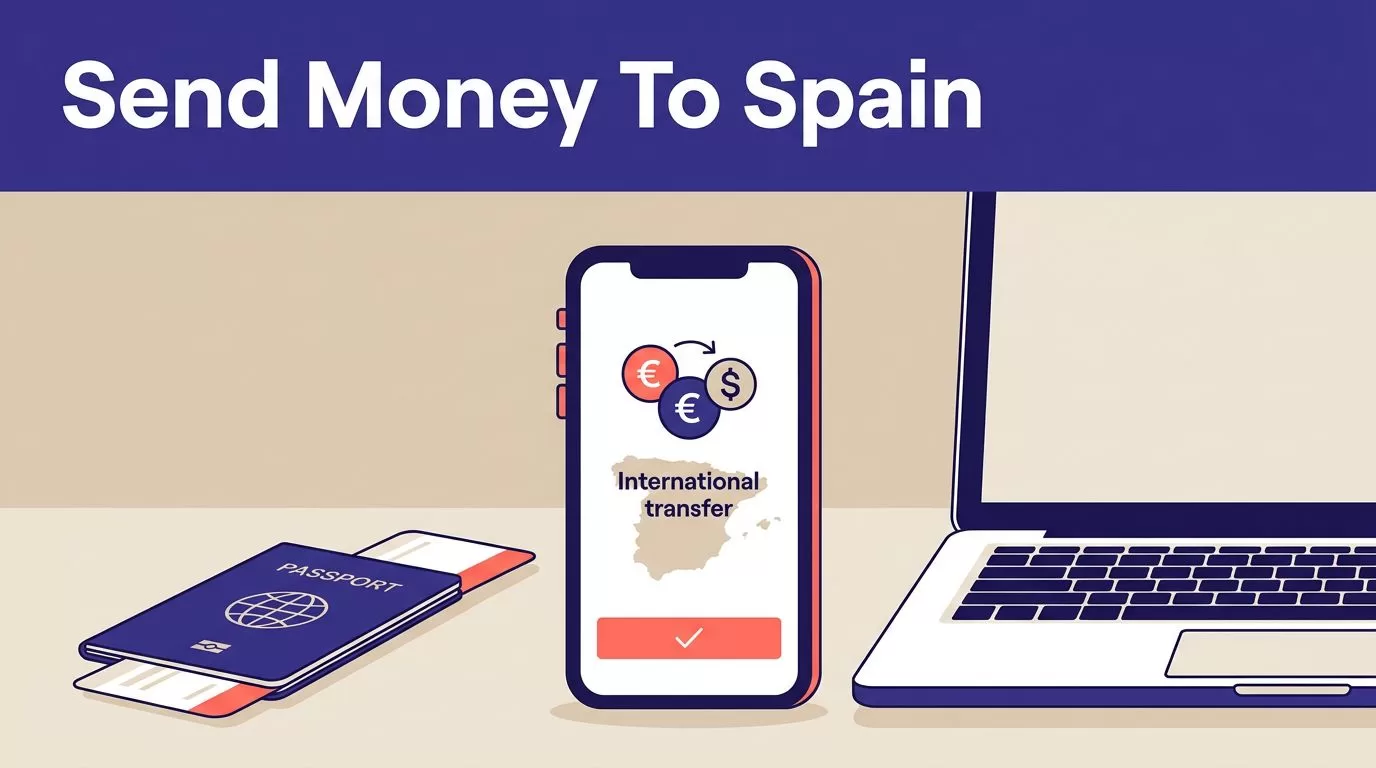
If you searched for “send money Spain,” you probably want a clear answer, not a long list of exchange-rate promises. Remitly lets eligible users set up an international transfer, choose a delivery method, review the total cost, and track the payment online.
The exact offer depends on your sending country, transfer amount, payment method, recipient location, and delivery option. Fees, exchange rates, promotions, limits, and delivery estimates can change. Use the final Remitly quote as your decision point before every transfer.
Searching for “send money Spain”? Check the route first
Remitly availability starts with your sending country. The service isn’t available on every origin-to-Spain route, and a recipient in Spain may not qualify for every delivery method.
For example, Remitly’s United States-to-Spain transfer page lists bank deposit, cash pickup, and debit card deposit options for recipients in Spain. The available choices may differ when you send from another country.
Confirm your sending country
Open Remitly’s website or official app. Select the country where your money is currently located. Then choose Spain as the destination.
Don’t choose a nearby country because its exchange rate looks better. Remitly uses the selected route to determine available payment methods, pricing, verification requirements, and delivery options.
If you’re sending money while located in Spain, use the relevant Remitly transfer page for Spain. A Spain-based sender may see a different setup from someone sending dollars, pounds, or another currency into Spain.
Match the recipient’s needs
Ask the recipient how they want to receive the money before you create the transfer. A bank deposit may be convenient for regular household support. Cash pickup may work better when the recipient doesn’t want to share bank details.
The recipient’s city and local provider network can also affect availability. Never promise a payout method or delivery time until that option appears in your live quote.
Prepare the recipient details before sending
Most avoidable transfer problems start with incorrect recipient information. Collect the details before opening the final payment screen.
Use the recipient’s legal name
Enter the recipient’s name exactly as it appears on their identification or bank account. Don’t use a nickname, shortened first name, or different spelling.
A small mismatch can delay a cash pickup. It can also cause a bank deposit to fail or require a correction. Ask the recipient to send their details in writing, then compare them with their official documents.
For a bank transfer, have the account holder’s name and IBAN ready. Remitly may request additional bank information, depending on the route and delivery method. Its money transfer terms guide explains common details such as IBAN and SWIFT codes.
Keep pickup and contact details accurate
Cash pickup may require the recipient’s phone number, address, and identification details. The exact requirements depend on the payout provider and local rules.
Check the recipient’s preferred pickup location before sending. A transfer can be available in Spain but not at the specific location the recipient expects.
Don’t copy bank details from an old message without confirming them. Accounts can change, and one incorrect digit can send the payment to the wrong destination.
How to send money to Spain using Remitly
The basic process is simple. The important work happens during setup and the final review.
- Open Remitly’s official website or app. Avoid unofficial app files and download links sent through unexpected messages.
- Create an account or sign in. Enter your real personal information and complete any identity checks Remitly requests.
- Select your sending country and Spain as the destination. Choose the amount and confirm the sending and receiving currencies shown on screen.
- Add the recipient. Enter their legal name, contact details, bank information, or pickup information based on the selected method.
- Choose an available delivery option. Review the estimated arrival time and any difference between faster and lower-cost options.
- Select a payment method available in your sending country. The choices can include a bank account, debit card, credit card, or another supported method.
- Review the full quote. Check the fee, exchange rate, total charged, amount the recipient receives, delivery method, and estimated arrival time.
- Confirm and pay only after every detail matches. Save the receipt or confirmation number, then track the transfer inside your Remitly account.
If Remitly asks for an identity document or additional information, submit it through the official app or website. Don’t send identity documents or passwords to a person who contacts you through social media.
Review fees and exchange rates before payment
There isn’t one fixed price for every transfer to Spain. Remitly calculates the quote based on the route, amount, currency, funding method, delivery method, promotions, and account eligibility.
The headline exchange rate doesn’t show the full cost. A transfer with a low fee can still produce a smaller payout if the exchange rate is less favorable. Compare the amount the recipient receives, not the fee alone.

Use this review table before you confirm the payment:
| Quote detail | What to check |
|---|---|
| Sending amount | The amount and currency leaving your account |
| Transfer fee | The Remitly fee shown for this route |
| Exchange rate | The rate used to convert your money |
| Total charged | The complete amount your payment method will fund |
| Recipient amount | The exact amount shown for delivery |
| Delivery method | Bank deposit, cash pickup, debit card deposit, or another option |
| Arrival estimate | The current expected delivery time |
Promotional rates may apply only to new customers, certain amounts, or selected payment methods. Don’t assume a welcome offer applies to every future transfer.
Reopen the app or website when you’re ready to send. Yesterday’s quote may no longer be available. Remitly states that the full cost, including fees and the exchange rate, appears before you send, so use that screen instead of an old estimate.
Choose the right delivery method in Spain
The best delivery option depends on what the recipient can use and how quickly they need the money. The fastest option isn’t always the lowest-cost option.
Bank deposit
A bank deposit is useful for recipients who already use a Spanish bank account. It avoids a trip to a pickup location and may suit recurring support or approved personal payments.
Check the recipient’s legal account name and IBAN before confirming. Ask the recipient to verify the details too. If the account information is wrong, the transfer may be delayed, rejected, or require support intervention.
The live quote should show whether bank deposit is available for the recipient’s location. It should also show the amount delivered and the estimated timing.
Cash pickup and debit card deposit
Cash pickup can help when the recipient doesn’t have a suitable bank account. The recipient usually needs matching identification and the correct transaction details at the pickup location.
Give the recipient the reference information shown in the confirmation. Don’t share it publicly or with someone who claims they can collect the money on the recipient’s behalf.
For transfers from the United States, Remitly’s Spain route also lists debit card deposit. That option isn’t automatically available for every origin country or recipient. Check the method in the quote before you rely on it.
Protect your account and payment
International transfers combine personal information, identity documents, and payment details. Treat your Remitly account like a bank-related account.
Avoid fake support messages
Use Remitly’s official website or app. Don’t install an APK from a random website. Don’t log in through a link sent by an unknown person.
A scammer may claim that you must pay an extra fee to release a transfer. They may ask for your password, one-time code, card number, or identity document. Contact Remitly through its official support process instead of replying to the message.
Use a unique password and keep your email account secure. Turn on available account security features. Never share a verification code with the recipient or another caller.
Expect identity and compliance checks
Remitly may ask you to verify your identity or provide more information. Requirements can vary by sending country, amount, payment method, and transaction risk review.
A larger transfer may receive additional review. The recipient may also need identification for cash pickup. These checks don’t follow one universal rule for every country.
Provide accurate information and respond through the official account workflow. Don’t try to split a transfer or change details to avoid a review. If the requirement is unclear, ask Remitly support. This guide is practical information, not financial or legal advice.
Check the status if something changes
A delivery estimate is not a guarantee. Bank processing, provider availability, identity review, incorrect details, or technical problems can affect timing.
If a transfer is delayed, check its status in your account first. Keep the confirmation number, payment receipt, and relevant screenshots. Contact support through the official channel if the status doesn’t explain the delay.
If you entered incorrect information, act quickly. A transfer may be difficult to change after processing or delivery.
When Remitly may not fit your transfer
Remitly may not be the right option when your preferred payout method isn’t available, the recipient needs a different currency, or another provider offers a better total payout for the same route.
Compare the recipient amount, delivery estimate, payment method, and cancellation rules. Don’t compare only the promotional rate. A welcome offer can reduce the cost of one transfer without being the best choice for recurring payments.
Business users should also confirm whether the payment belongs in a consumer account. Remitly has a separate business payments service for Spain, and business onboarding or compliance requirements may differ from personal transfers.
Conclusion
The safest way to send money Spain users search for is to start with the correct origin country, add the recipient’s legal details, and select a delivery method the recipient can actually use.
Before payment, review the live fee, exchange rate, total charged, recipient amount, limits, promotion terms, and delivery estimate. Check the quote again each time you send. The final review screen is more reliable than an old rate, a search result, or a promise from someone else.

