Send Money to Spain With Remitly: Bank Transfer Guide
A Spanish bank transfer needs accurate recipient data, a supported route, and a quote you review before payment. Most avoidable problems start before the money leaves your account. If you need to send money to Spain, Remitly lets you arrang...
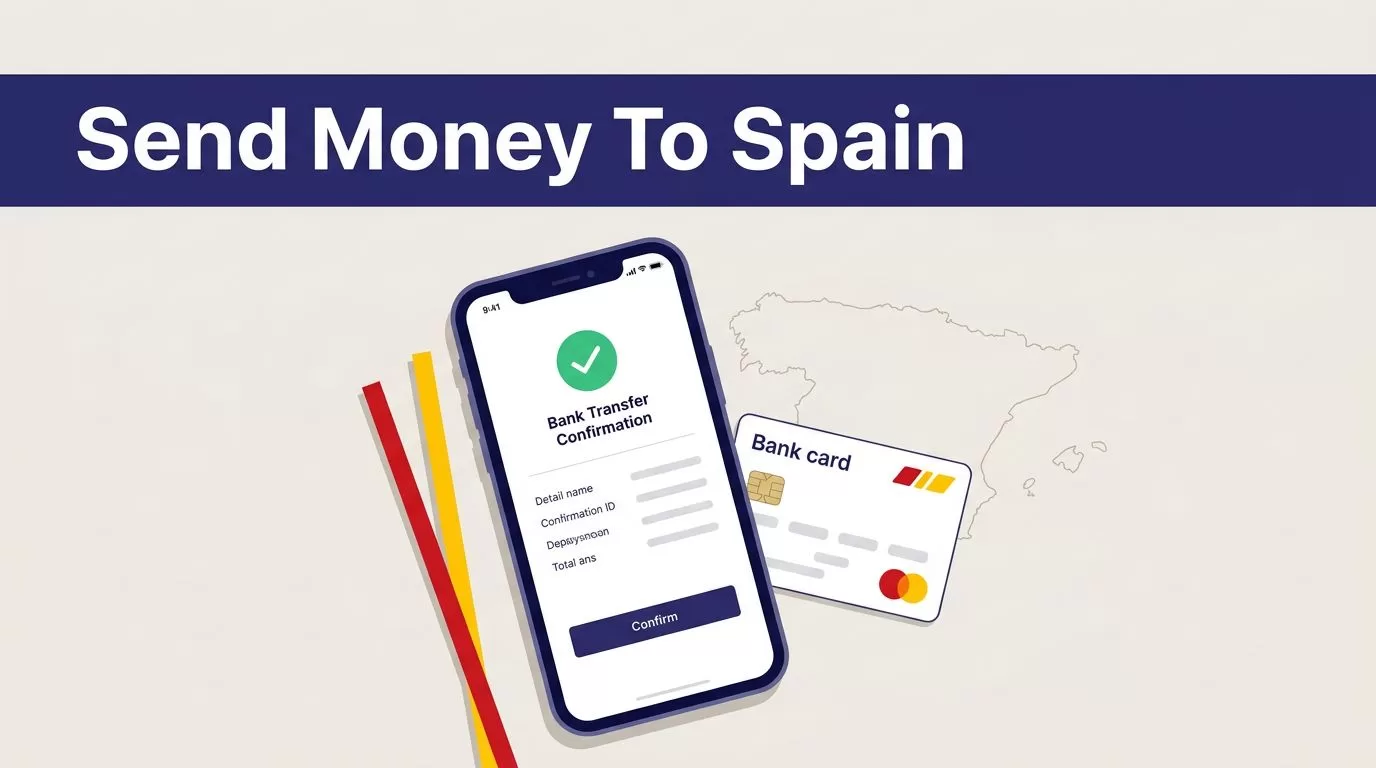
A Spanish bank transfer needs accurate recipient data, a supported route, and a quote you review before payment. Most avoidable problems start before the money leaves your account.
If you need to send money to Spain, Remitly lets you arrange a bank deposit through its website or app, then track the transfer after payment. Your sending country, payment method, amount, recipient bank, delivery option, and current promotion can change the final cost and timing.
Use bank deposit when the recipient has an eligible Spanish account. Confirm the route and bank details before you build the transfer.
How to send money to Spain with Remitly
Remitly’s United States-to-Spain service supports bank deposit and cash pickup. The available options can vary by recipient location and local provider. Check the official Remitly Spain transfer page before starting.
Select bank deposit for a Spanish account
Choose bank deposit when the recipient wants the money credited to a Spanish bank account. The recipient normally needs to provide an eligible account and accurate bank details.
Cash pickup is different. It sends the money to a participating payout location instead of the recipient’s bank. It can help when the recipient doesn’t have a suitable account, but it isn’t the correct choice for a direct account deposit.
Remitly’s Spain provider directory shows that available banks and payout providers can depend on the route. Don’t assume that every Spanish bank appears for every sender.
Photo by Monstera Production
Confirm your sending country first
Remitly prices each corridor separately. A person sending from the United States may see different fees, payment methods, exchange rates, and delivery estimates than someone sending from the United Kingdom, Canada, or another country.
Set the real sending country in the app or website. Don’t copy details from an old transfer. A previous quote may no longer apply, even if the amount and recipient stay the same.
Information to collect before starting
Prepare the details before opening the transfer form. This reduces typing errors and helps you identify missing information before the payment step.
Remitly’s guide for first-time senders recommends collecting the recipient’s name, address, contact information, and receiving details. Its money transfer terms guide also explains why an IBAN matters for transfers to Spain.
Use this transfer checklist
Have these details ready:
- Your legal name, email address, phone number, and current address.
- A valid payment method supported in your sending country.
- The recipient’s full name, entered exactly as requested by Remitly.
- The recipient’s address and phone number.
- The recipient’s Spanish IBAN and bank name.
- The amount you want to pay or the amount the recipient should receive.
- The recipient’s preferred delivery method.
- Any information Remitly requests for identity or transaction verification.
A Spanish IBAN starts with the country code ES. Copy it directly from the recipient’s banking information. Check every character, including numbers near the end of the account identifier.
Confirm the recipient’s bank details
Ask the recipient to send their bank information through a secure channel. Don’t rely on a screenshot that is too small to read or a bank detail copied from an old invoice.
The recipient’s name should match the account information and any identity details requested during setup. Name differences can trigger a review or delay. If the recipient recently changed their name or bank account, confirm the current record before sending.
Spain is part of the wider Single Euro Payments Area, but a Remitly transfer still follows Remitly’s own route, provider, and verification rules. SEPA membership doesn’t mean every sending country, payment method, or transfer type has the same conditions.
Set up the Remitly bank transfer step by step
The exact screen labels can change by country and app version. The main workflow stays consistent.
Create the transfer
- Open Remitly’s official website or its official mobile app. Create an account or sign in.
- Select your actual sending country and choose Spain as the destination.
- Enter the amount. Read whether the field shows the amount you pay or the amount the recipient receives.
- Select bank deposit as the delivery method.
- Add the recipient’s name, address, contact details, and Spanish bank information.
- Choose an available payment method and delivery speed.
- Review the full transaction summary before approving payment.
- Save the confirmation and track the transfer through your Remitly account.
New customers may need to complete identity checks before sending. The requested information can depend on your sending country, transfer amount, account history, and account status. Complete verification inside your Remitly account. Don’t send identity documents through an unexpected message or an unofficial link.
Check the payout before paying
The review screen should show the amount you pay, transfer fee, exchange rate, amount the recipient receives, delivery method, and estimated arrival time. Check each field.
Remitly may show different totals for bank deposit and cash pickup. A delivery-speed option can also change the price. Select the method that matches the recipient’s actual need instead of choosing the first option displayed.
If you want to send money to Spain regularly, save the recipient only after checking the original record. A saved contact can make future transfers faster, but it doesn’t replace a review of the current IBAN and payout amount.
Understand Remitly fees and exchange rates
There isn’t one universal Remitly price for every transfer to Spain. Pricing can change with the sending country, amount, payment method, delivery speed, recipient location, receiving provider, and promotion.
For the U.S. dollar-to-euro route, Remitly’s current public examples have shown a $0 fee for bank deposit and a $2.99 fee for cash pickup. These are route examples, not permanent prices for every account or transaction.
Review the complete cost
Don’t judge the transfer by the fee alone. Compare these figures on the final screen:
- Total amount charged to your payment method.
- Transfer fee and any payment-method charge.
- Exchange rate used for the transaction.
- Exact euro amount credited to the recipient.
- Delivery option and estimated arrival time.
A transfer with a lower fee can still produce fewer euros if the exchange rate is less favorable.
The recipient payout is the practical price of the transfer. Check it beside the fee and total amount charged.
Promotional rates may apply only to new customers, certain amounts, selected payment methods, or a limited period. Reopen the current transfer quote when you’re ready to pay. Don’t use a saved screenshot or yesterday’s calculation.
Treat delivery estimates as estimates
Remitly lets you choose a delivery speed when the route supports more than one option. The estimate depends on the method, payment confirmation, recipient provider, and account review.
A bank deposit may be convenient, but no delivery estimate is a guarantee. Delays can occur when information needs review or a receiving provider has an issue. Use the estimate for planning, not as proof that funds will arrive at a precise time.
Track the transfer after payment
Remitly provides transfer status information through the account and app. The U.S. Spain route page describes real-time transfer tracking, although the status detail can vary by transaction.
Check the status before contacting the recipient. The account may show that the transfer is pending, being reviewed, sent to the provider, or completed.
Don’t submit a second transfer too quickly
A delayed notification doesn’t always mean the first transfer failed. Check the transaction history, confirmation number, and current status before sending again.
Duplicate transfers can create a separate correction problem. If the status is unclear, use Remitly’s support process and keep the receipt, screenshots, and related messages.
Correct errors through the account
If you notice a wrong IBAN, recipient name, or amount, stop and review the transfer status. Some active transfers may allow changes, but availability depends on the route and transaction stage.
Don’t assume that a submitted bank transfer can be edited or canceled. Contact Remitly through the official account workflow as soon as possible. The earlier you report an error, the more useful the available correction options may be.
Avoid common Spain transfer mistakes
Small setup errors create most problems. Use these controls before every payment.
Enter the name and IBAN carefully
Don’t shorten the recipient’s name. Don’t use a nickname. Don’t replace the recipient with the name of the person who gave you the bank details.
Paste the IBAN carefully, then compare it with the original information. An incorrect character can route the payment for review or prevent the bank deposit from completing.
Check that the selected recipient and bank account belong together. If the recipient has more than one Spanish account, ask which account should receive the funds.
Don’t confuse payment and payout amounts
Remitly may let you enter either the amount you want to pay or the amount the recipient should receive. These are not the same number when fees and exchange rates apply.
Read the field label before continuing. Then check the final euro amount in the summary. This control matters when you need to cover a fixed expense such as tuition, rent, or a family bill.
Use a fresh quote
Currency rates change. Fees can change when you switch payment methods, adjust the amount, or select a different delivery speed.
Enter the amount again when you’re ready to send. Review the complete quote. Don’t treat a welcome promotion as the normal price for future transfers.
When Remitly fits your transfer
Remitly can fit personal transfers when the recipient wants a bank deposit and the Spanish bank appears as an available provider. It can also work for family support, student living expenses, and other permitted personal payments.
The service may be less suitable when the required bank isn’t supported, the available payment method doesn’t work for you, or another provider offers a better final euro payout. Compare the total amount received, not only the headline fee.
Large transfers require extra care. Check the current limits shown in your account and allow time for any requested verification. The public Spain pages don’t provide one universal limit for every sender, so don’t rely on a general figure from an old transfer or another country route.
For recurring payments, record the amount paid, fee, exchange rate, recipient payout, and date. This gives you a useful comparison across transfers. A single promotional quote shouldn’t determine your long-term process.
Final checks before you confirm
Run this short review immediately before payment:
- Is the route set to your actual sending country and Spain?
- Is bank deposit selected instead of cash pickup?
- Does the recipient name match the requested legal information?
- Did you copy the correct Spanish IBAN?
- Does the bank or provider match the recipient’s account?
- Is the payment method correct?
- Did you review the current fee and exchange rate?
- Is the euro payout enough for the recipient’s need?
- Did you read the delivery estimate?
- Did you save the confirmation details?
If one answer is unclear, stop before paying. Ask the recipient or Remitly support for clarification rather than guessing.
Conclusion
Remitly gives you a direct way to arrange a bank deposit to Spain when your sending route and the recipient’s bank are supported. The process is simple when you prepare the recipient’s legal details, Spanish IBAN, payment method, and preferred delivery option first.
Fees, exchange rates, limits, providers, and timing can change. Review the live quote every time, compare the amount you pay with the exact euros the recipient receives, then track the transfer until it is complete. Accurate details and a final review matter more than a low headline fee.
