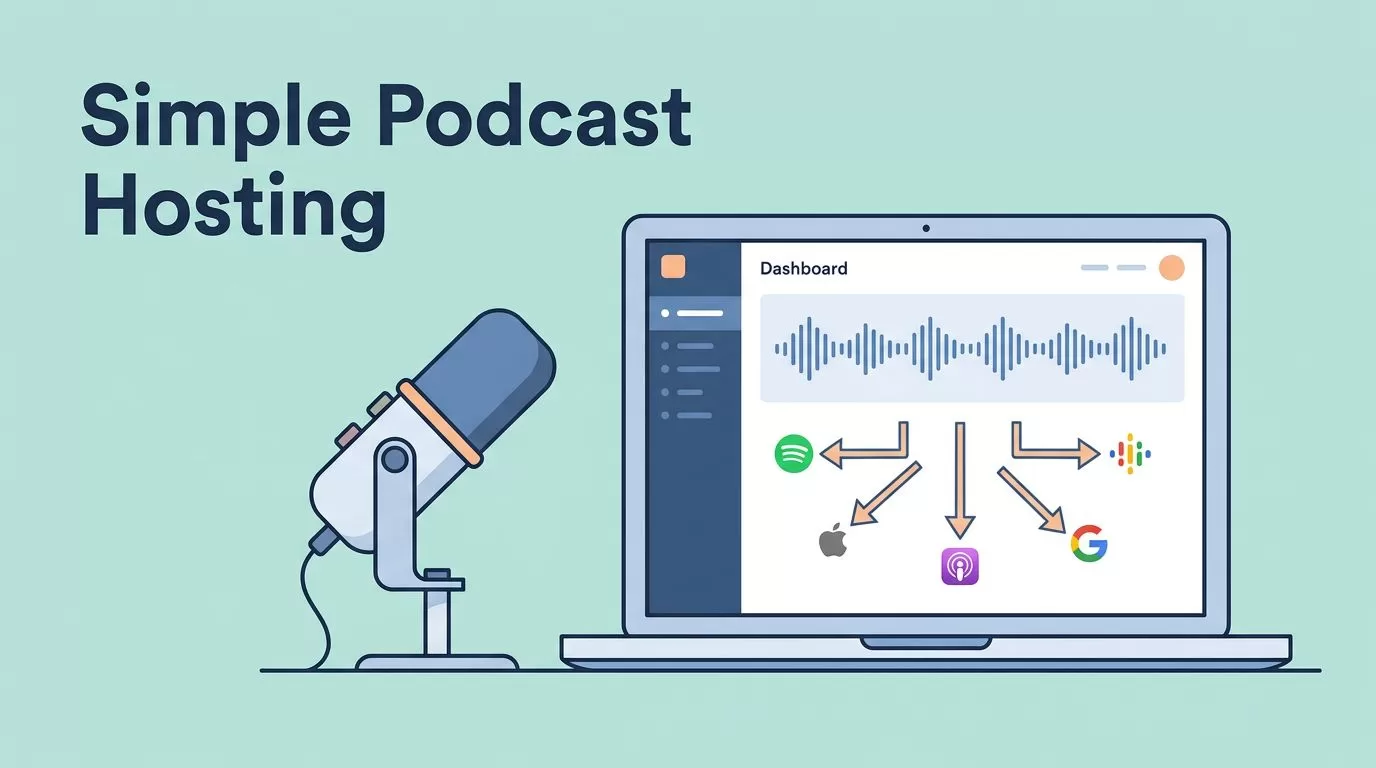
When I need simple podcast hosting, I want three things fast: a clean setup, a place to publish without friction, and enough depth to grow later. Transistor.fm fits that brief better than most hosts I have tried.
I do not want a dashboard that feels like a cockpit. I want to upload an episode, send it everywhere, and move on with my day.
That sounds basic, but basic is hard to build well. Transistor gets close, and that is why I keep it on my short list.
Why simple podcast hosting matters when you are busy
Podcast work can sprawl quickly. One episode turns into distribution tasks, artwork checks, stats reviews, team approvals, and repurposing plans. If your host adds more clutter, the whole workflow starts to feel heavier than the show itself.
I like platforms that remove decisions I do not need to make. A good host should handle RSS, publishing, and reporting without making me hunt through menus. It should also leave room for growth, because a hobby show can turn into a branded series fast.
That is where Transistor makes sense to me. It gives me the basics first, then layers on tools I can use later. I do not have to set up a complex system on day one just to get an episode live.
It also helps that Transistor is built for people who may run more than one show. I do not always want a separate login, separate bill, and separate workflow for each podcast. One account with multiple shows feels much easier to manage.
My first setup with Transistor.fm
The first thing I noticed was how little setup I needed. I could upload artwork, add show details, and publish without wrestling with a long setup chain. That matters when I am working with a deadline or helping a client launch quickly.


I also like that the interface stays focused on the work. I do not feel pushed into extras before I am ready. If I only need to host one show and publish cleanly, the path is straightforward.
Distribution is another reason I keep coming back. Transistor supports the usual podcast directories, and it also handles newer channels that matter now, like YouTube posting on higher plans. Their feature list lays out the basics clearly, which saves me from guessing what is included.
When I want to repurpose an episode into shorts, I use my Transistor Opus workflow for podcast shorts. That keeps the host part simple while the content gets more mileage elsewhere.
The features I care about after the first upload
The longer I use a podcast host, the less I care about surface polish and the more I care about repeat work. Can I manage multiple shows without confusion? Can I see useful stats? Can my team help without creating a mess?
Publishing, distribution, and a clean podcast site
Transistor handles the publishing flow well. I can upload episodes, add notes, and send them out without leaving the platform. It also includes a built-in podcast website, so I do not need to piece together a separate site just to give the show a home.
That built-in site is useful when I want a quick launch or a simple branded page. It keeps the setup light, which matches the rest of the platform. I can still embed players elsewhere when I need them, so I am not locked into one presentation style.
I also like that I can manage several shows from one account. For creators, agencies, or internal content teams, that saves time fast. One account and one process are easier to maintain than a pile of separate tools.
Analytics, team access, and private podcasts
Good analytics are not about vanity. I use them to see what people finish, where interest rises, and which episodes deserve another push. Transistor gives me the sort of reporting that helps me make decisions instead of just collecting numbers.
Team access matters too. Transistor includes unlimited team members on its plans, which is helpful if I am working with an editor, producer, or client. I do not need to ration access like it is a scarce resource.
Private podcasting is another strong point. I can use it for client updates, paid communities, internal training, or anything that should stay behind a wall. That flexibility makes the platform more useful than a basic public host.
If I want to add captions or video distribution later, I can pair the host with my Transistor video caption setup. That helps when a show needs more reach without adding extra manual work.
What the price looks like in 2026
I checked the current details on Transistor’s pricing page, and the structure is easy to understand. There is a 14-day free trial, yearly billing is discounted, and the plans scale by download volume.
| Plan | Monthly price | Best fit |
|---|---|---|
| Starter | $19 | New shows and smaller audiences |
| Professional | $49 | Growing podcasts that need more room |
| Business | $99 | Teams that want more scale and no branding |
| Enterprise | $199+ | Higher-volume networks and custom needs |
The thing I like here is the clarity. I do not have to decode add-on after add-on just to know what I am paying for. Still, the lack of a free plan may matter if you only want to experiment.
That trade-off is real. I would not pick Transistor if I wanted a free host forever. I also would not pick it if I needed the cheapest possible entry point with no growth in sight.
A recent 2026 Transistor review matches that view. The platform is praised for being clean and team-friendly, but it is not the bargain-bin option.
Who I think Transistor.fm fits best
I think Transistor works best for three kinds of users. First, solo creators who want a calm, reliable host. Second, small teams that need shared access without chaos. Third, businesses that care about private feeds, branded sites, and clear analytics.
It is also a strong fit if I want one host for several podcasts. That alone can make the monthly cost easier to justify. When I compare that with cobbling together separate tools, Transistor starts to look practical instead of fancy.
For me, the appeal is simple. I get enough power to grow, but I do not have to live inside a complicated system.
Conclusion
The best podcast host should feel like a sturdy desk, not a puzzle. Transistor.fm gives me that kind of setup, especially when I want simple podcast hosting that still leaves room for teams, private feeds, and multiple shows.
I keep coming back to it because it respects my time. That matters more than flashy extras when I am trying to publish consistently.