Best E-Signature Tools for Small Teams in 2026
A small team doesn’t need a bloated contract system to get work done. I want an e-signature tool that lets me send, sign, track, and store documents without adding a new admin job to my week. In 2026, the best options for 2 to 20 peop...
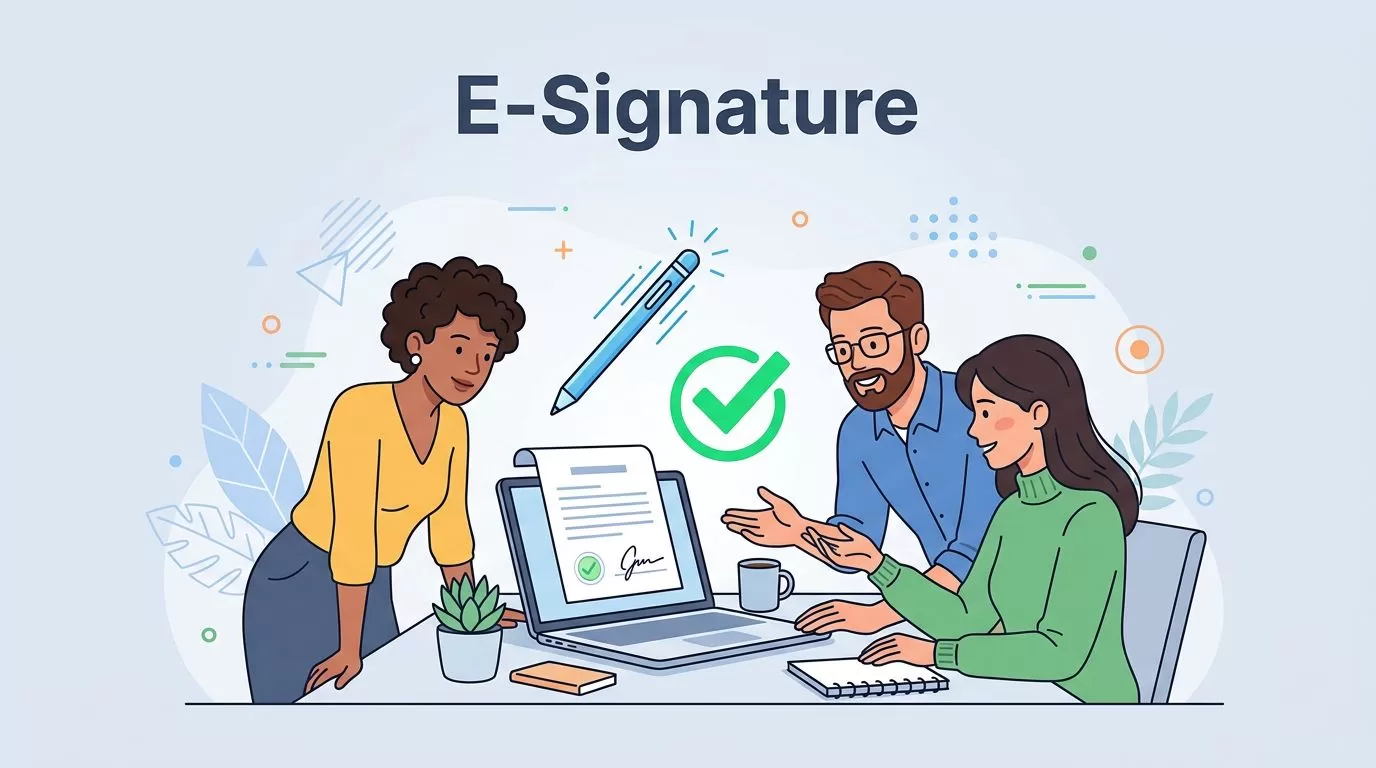
A small team doesn’t need a bloated contract system to get work done. I want an e-signature tool that lets me send, sign, track, and store documents without adding a new admin job to my week.
In 2026, the best options for 2 to 20 people are the ones that balance price, ease, and useful integrations. I care about reminders, templates, audit trails, and how well the tool fits sales, HR, and vendor paperwork.
What I look for before I choose a tool
For a small team, the first question is simple, does the pricing match our volume? If a tool charges by envelope, I check how that plays out in busy months. If it charges by seat, I ask whether everyone really needs a paid account.
I also want a free trial or a free plan, because the first week tells me more than a sales page does. A clean sender experience matters too, since no one wants to spend an afternoon fixing field placement.
DocuSign’s own small-business use cases show the range well, from contracts to HR and finance. That is the right lens for me, because the best tool is the one that fits real work, not a feature checklist.
Quick comparison of the tools I would shortlist

| Tool | Best for | Pricing approach | Free plan or trial | Integrations | Main tradeoff |
|---|---|---|---|---|---|
| DocuSign | Integration-heavy teams | Paid plans, with entry pricing that can start around $10/month for limited use | Trial available | Salesforce, Google Workspace, Microsoft 365, broad app ecosystem | Costs can rise fast, setup feels heavier |
| Adobe Acrobat Sign | PDF-heavy HR and finance | Paid plans | Trial available | Adobe apps, Google Workspace, Microsoft 365, business apps | Less focused on tiny teams |
| Dropbox Sign | Simple day-to-day signing | Per-user plans, starting around $15/month | Limited free option or trial | Dropbox, Google Workspace, basic CRM links | Fewer advanced workflow tools |
| PandaDoc | Sales docs and proposals | Paid plans, with a limited free tier | Trial available | Salesforce, Google Workspace, Microsoft 365 | More than I need for plain signatures |
| SignNow | Budget-conscious teams | From about $8/user/month | Trial available | Google Workspace, Microsoft 365, Salesforce | Fewer premium extras |
| SignVow | Free, basic signing | Free-first | Free plan | Basic workflow tools | Thin on admin controls and depth |
My takeaway is straightforward. DocuSign wins on reach, PandaDoc on sales docs, SignNow on price, Dropbox Sign on ease, and SignVow on raw cost.
Which tool fits each kind of small team

Best for affordability
If I want to keep costs low, I start with SignNow. It gives me a practical feature set without pushing me toward enterprise pricing. A few 2026 comparisons also point to BoldSign’s small-business page as a strong budget fit.
If I want a free-first test, I look at SignVow. The price is hard to beat, but I read the limits closely because free tools often trim the admin layer first.
Best for ease of use
When a team just needs to send a document and get back to work, Dropbox Sign makes sense. The interface is clean, the learning curve is short, and most people can use it without training.
I still see one tradeoff. Once a team starts asking for deeper routing, stronger automation, or heavier approval flows, Dropbox Sign can feel light.
Best for sales documents
Sales teams need more than a signature box. I prefer PandaDoc when quotes, proposals, and follow-up tracking belong in the same file. That matches the approach in Proposify’s e-signature software comparison, which treats the signed document as part of the sales process, not the end of it.
When I build outbound around that workflow, I keep lead data clean with Hunter.io review 2026. Clean contacts make the rest of the process less messy.
Best for HR paperwork
For offer letters, policy updates, and onboarding packs, I want clean audit trails and easy templates. Adobe Acrobat Sign works well when the team already lives in PDFs, while DocuSign is the safer pick when HR also needs wider business integrations. DocuSign’s own guide to small-business signing use cases lines up with that view.
If hiring sits inside a bigger ops stack, I keep candidate records organized with Recruit CRM for hiring workflows. The tradeoff with both Adobe and DocuSign is cost, so I only pick them when the paperwork load justifies it.
Best for integration-heavy workflows
If my team lives in Google Workspace, Microsoft 365, and Salesforce, I lean toward DocuSign or SignNow. DocuSign gives me the widest app reach, while SignNow offers a lower-cost path with solid coverage.
That said, more integrations usually mean more setup. I don’t mind that when the workflow is real, but I do mind it when the team only signs a handful of files each month.
Security and compliance should be part of the price check

A signature tool should leave an audit trail I can explain later.
That means I look for timestamp logs, document history, encryption, and role controls. For many teams, GDPR and SOC 2 are the baseline. For healthcare, HIPAA matters too.
I also check whether the vendor gives me enough proof if a signature is challenged. Gartner’s electronic signature reviews are a useful reminder that the real value is evidence, not decoration. A signature image is nice. A defensible record is better.
The short version I keep in mind
Small teams do best with the tool that fits the way they already work. If I need the lowest cost, I start with SignNow or SignVow. If I need proposals and quotes, I choose PandaDoc. If I need the widest integrations, DocuSign stays near the top.
The right choice feels almost invisible after setup. That is usually the sign I picked the right e-signature tool.
