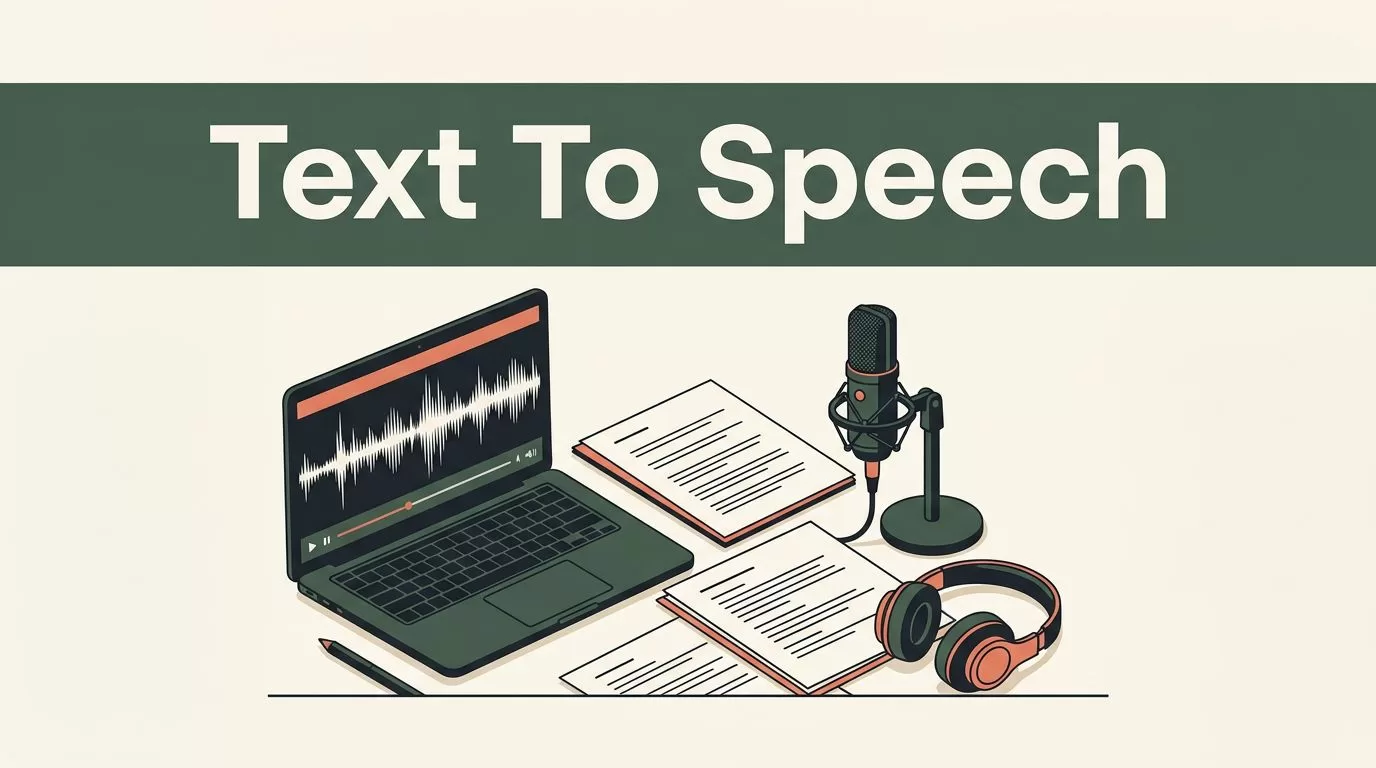
Producing audio content takes time, money, and consistent vocal energy. You spend hours recording voiceovers, fixing background noise, and re-recording flubbed lines. Text to speech for creators solves this bottleneck by turning written scripts into natural-sounding audio files in minutes.
You no longer need an isolated home studio or expensive condenser microphones to launch a podcast or narrate a video. Modern AI voice engines let you generate professional narration on demand.

Key Takeaways
- Deploying AI voice tools cuts down your script-to-audio production time significantly.
- Speechify separates its consumer reading app from Speechify Studio, which contains commercial rights and voice cloning for creators.
- Configured workflows allow you to organize research, export transcripts, and sync audio across desktop and mobile devices.
- Monitoring audio pacing and synchronized word highlighting prevents fatigue during long listening or proofing sessions.
- Segmenting your audio formats by platform ensures your content matches listener expectations on social media, podcasts, or YouTube.
Understand the Speechify Product Ecosystem
Speechify offers two main paths depending on your goal. Speechify Premium is designed for personal reading, converting articles and PDFs into listening material at speeds up to five times normal rates. It features over one thousand realistic voices, offline listening, and document scanning.
For producers, podcasters, and video editors, Speechify Studio is the dedicated workspace. It includes commercial usage rights, stock assets, and advanced production controls. Pricing for Studio starts with a free tier offering limited credits, moves to Studio Starter at $19 per month, and scales up to Studio Creator at $49 per month for higher credit limits and team access. You can review detailed tier specifications directly on the Speechify Studio Pricing page to match your production volume.
The consumer listening tier is priced separately, running around $29 per month or $139 billed annually, while the standalone audiobook library has its own subscription structure. Knowing the difference between the personal reader app and the creator production suite keeps you from buying the wrong license for your commercial videos.
Configure Your Voice Workspace for Maximum Efficiency
Setting up a productive audio workflow requires more than pasting text into an input box. You need to organize your source material into structured folders by project name or content channel to prevent context switching during production sprints.
Configure your playback and voice settings for optimal listener comprehension. Select a natural-sounding voice model that fits your brand personality. Adjust your playback speed gradually. Start at normal speed to check delivery, then scale upward as your review workflow demands.
Enable synchronized text highlighting in your settings view. Seeing words underlined while you listen reinforces retention, especially when reviewing long scripts or dense technical descriptions. Use the bookmarking tool to flag critical passages for later re-recording or segment clipping.
Integrate note-taking directly into your listening routine. Use the application summarization features to generate concise chapter overviews or video outlines. Export your highlighted quotes and notes straight into your writing workspace to streamline your publishing pipeline.
Streamline Video Production and Social Media Narration
Video producers face constant pressure to ship polished voiceovers without breaking their editing schedules. Recording human voice tracks often leads to retakes, uneven room acoustics, and mismatched audio levels across different recording sessions.
Generating voiceovers through a text to speech platform gives you absolute consistency. You can type out your YouTube script, select a custom AI voice that matches your channel tone, and export the audio file directly into your video editor. If you change a sentence in the middle of your script two days later, you just re-generate that single paragraph instead of booking studio time or pulling out your microphone to match room tone.
“A consistent AI voice model eliminates room echo, breathing artifacts, and volume spikes, saving hours of manual audio editing during post-production.”
You can also use synthetic voices for rapid prototyping. Paste your storyboard script into the engine, generate a scratch track, and drop it into your video timeline to test pacing and visual timing before committing to a final voice export.
Build a Repeatable Audio Workflow for Long-Form Content
Scaling up your content output means establishing repeatable steps from drafting to publishing. Start by compiling your research articles, transcripts, and blog posts into an organized digital library.
Load your first script document into your application dashboard. Test different voice models to find one that projects the exact authority or energy your audience expects. Adjust the pronunciation dictionary if the engine stumbles over industry-specific terminology or acronyms.
Queue up multiple documents for continuous listening during commutes or lab work. This passive review method turns downtime into productive editing hours. When audio pacing outpaces your internal monologue, your brain locks onto the incoming word stream and helps you catch awkward phrasing that silent reading misses.
For a broader look at assistive tools and community production tips, you can explore discussions in this assistive technology group. Comparing notes with other creators helps you uncover shortcuts for pronunciation tuning and script formatting.
Conclusion
Integrating text to speech tools into your creator workflow removes physical recording bottlenecks and accelerates your publishing schedule. By selecting the right production tier, organizing your script folders, and utilizing custom voice models, you maintain audio consistency across every channel. Set up your workspace library today, dial in your preferred voice settings, and start turning your written drafts into professional audio content.