Travelpayouts Affiliate Program for Travel Creators
Travel content can earn more than views. A guide that helps someone choose a flight, hotel, or airport transfer can also send that reader to a booking partner. The Travelpayouts affiliate program gives travel bloggers, creators, and site ow...
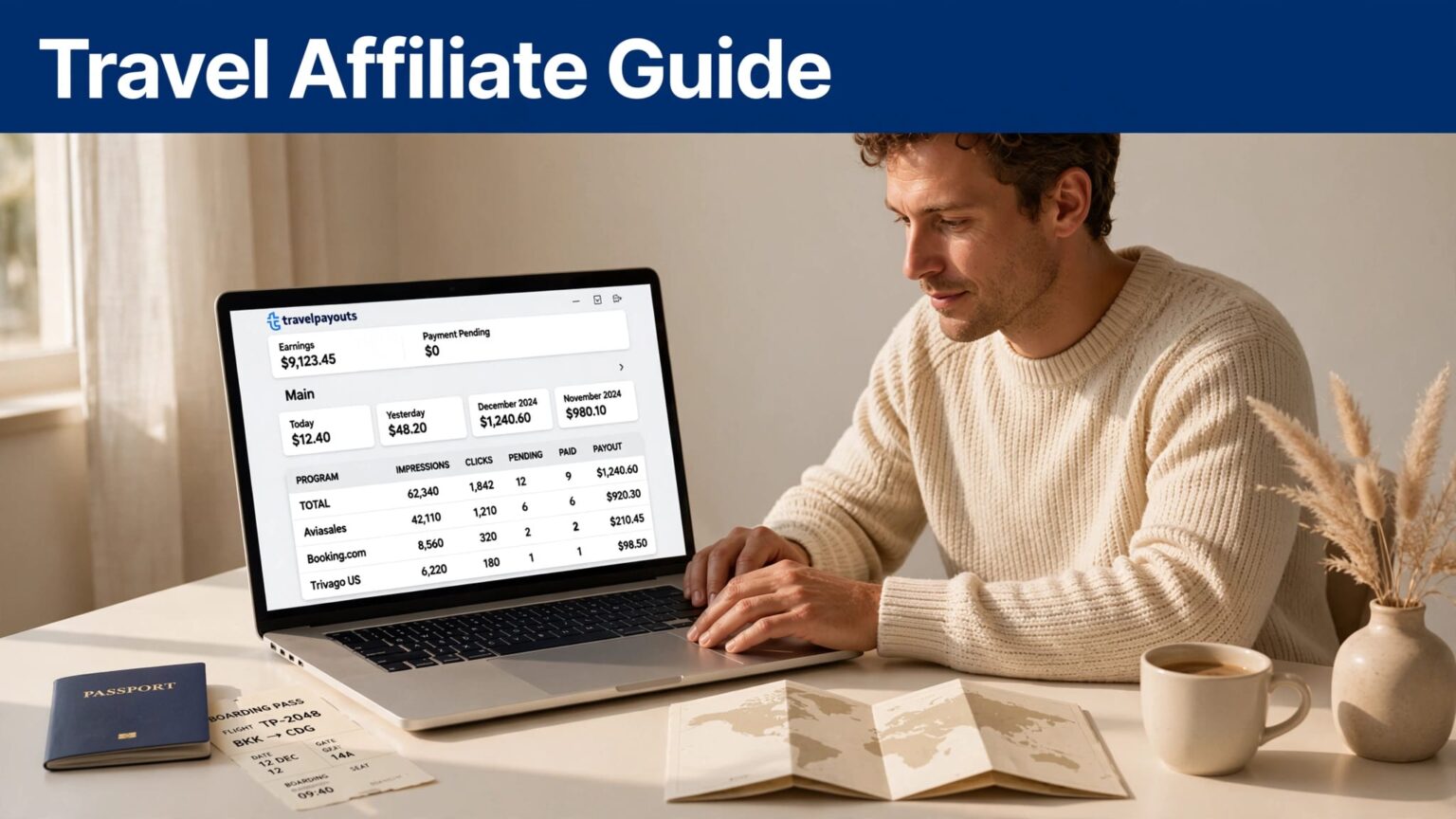
Travel content can earn more than views. A guide that helps someone choose a flight, hotel, or airport transfer can also send that reader to a booking partner.
The Travelpayouts affiliate program gives travel bloggers, creators, and site owners one account for promoting travel brands with tracked links and widgets. You earn a commission when a referred booking meets the partner’s rules. You don’t earn money because someone clicked.
The work is simple in principle. Build useful pages, match each offer to real booking intent, then measure approved earnings instead of vanity metrics.
How the Travelpayouts affiliate program works
Travelpayouts is a travel affiliate platform. You join the network, connect to individual travel programs, publish tracking tools, and receive a share of eligible booking revenue.
The platform is free to join, according to the Travelpayouts platform overview. It supports publishers such as bloggers, YouTube creators, travel agents, and website owners.
Revenue, commission, and profit are different
Keep these three numbers separate.
- Revenue is the booking value paid by the traveler, such as a $600 hotel stay.
- Commission is your affiliate reward under the offer terms. It may be a percentage of booking value, a percentage of the brand’s revenue, or a fixed amount.
- Profit is what remains after your business costs, including writers, hosting, paid traffic, software, and taxes.
A $600 booking does not mean you earned $600. If a qualifying offer pays 4%, the illustrative commission is $24. A cancellation, a changed rate, tax treatment, or a reversed transaction can reduce that amount.
Travelpayouts says partners can earn up to 70% of revenue from referred bookings. That is not a network-wide promise. Each brand uses its own reward model.
Attribution decides who gets credit
Travelpayouts uses cookie-based tracking. For many brands, the general cookie period is 30 days, but a program can use a shorter period.
The network also follows a last-click model. If your reader clicks your link, then clicks another affiliate’s link before booking, the later affiliate can receive credit. The Travelpayouts cookie explanation covers this rule in more detail.
A click proves interest. An approved booking, less reversals, proves commercial fit.
You need content that gives readers a reason to use your link at the moment they are ready to compare or book.
Set up your account before publishing links
Create your account, then add every channel where you plan to publish. A project can be a website, YouTube channel, Telegram channel, social account, or another approved property.
Don’t treat the account as a link generator. Treat it as your operating record for traffic, programs, payments, and reporting.
Add clean project details
Use the real URL or channel address. Describe your audience in plain terms. A site about backpacking in Southeast Asia needs different offers than a channel focused on luxury family resorts.
Travelpayouts terms state that new partners are added by default to Aviasales or JetRadar, Hotellook, and related referral programs after first authorization. Other offers may require a separate connection or approval.
Start with a small group of programs that fits what you already publish:
- Flight search can fit route guides, airport guides, and fare comparison pages.
- Hotels fit destination pages, neighborhood guides, and property roundups.
- Tours, insurance, car rentals, and transfers fit only when the page gives readers useful booking context.

Verify the live offer rules
Never build projections from a rate quoted in an old blog post. Open the program page and check the current rate, eligible products, cookie duration, restricted promotion methods, reversals, and approval requirements.
The Travelpayouts network terms state that fees depend on the public offer and the special terms for each program. The program page is the source of truth.
Also check payment terms before you spend money on content production. Payout methods, minimum balances, country availability, bank fees, and processing dates can change. Your dashboard should be the final check before each payout cycle.
Build content around booking intent
Travel pages attract different reader types. Someone searching “best time to visit Lisbon” may still be planning. Someone searching “Lisbon hotels near Rossio Station” is much closer to a booking decision.
Your strongest Travelpayouts affiliate program pages usually answer a decision question. They reduce the reader’s research time and point to a relevant next step.
Publish pages with a clear booking path
Use your real experience, original research, and current details. A hotel roundup should explain location, transit access, room types, likely trade-offs, and who each option suits.
A flight page should cover airports, route options, timing, baggage limits, and arrival logistics. Don’t insert a generic flight link after a paragraph about local food. The offer and page need to match.
For hotel content, review the terms before publishing. The Booking.com offer page on Travelpayouts is one place to confirm current program information before you use that booking path.
Use comparisons that help readers decide
A comparison page earns trust when it exposes differences. Don’t give every option the same praise.
This format works because readers can scan it:
| Reader need | Content angle | Relevant offer |
|---|---|---|
| First visit to Tokyo | Best neighborhoods near major rail links | Hotel search |
| Budget trip to Europe | Flight routes, flexible dates, baggage costs | Flight search |
| Family beach holiday | Resort location, room setup, airport transfer time | Hotel or package offer |
| Long layover | Terminal guide, transit rules, nearby hotels | Hotel or transfer offer |
The page should still work if the reader never clicks. That standard keeps the recommendation useful.
Place travel affiliate links without weakening trust
Readers expect travel recommendations to include booking options. They do not expect hidden commercial intent or links that interrupt every sentence.
Use a clear affiliate disclosure near the first relevant recommendation. Follow the rules that apply in your country, platform, and audience market. Keep the disclosure plain.

Photo by Gustavo Fring
Link where the reader needs to act
A useful placement comes after you have answered a question. For example, a Rome hotel guide can place a booking search link after explaining which neighborhood fits early-morning train departures.
Avoid these weak patterns:
- Adding the same flight link after every heading.
- Linking to a general hotel search from a page about a specific airport transfer.
- Sending readers to an offer unavailable in their market.
- Using outdated prices, availability claims, or seasonal details.
Links and widgets are tools, not the content itself. Use one relevant call to action, then return to the practical information the reader came for.
Keep destination pages current
A booking link can work technically and still fail commercially. The hotel may be closed. The route may no longer operate. The reader may land on an irrelevant search result.
Review high-traffic pages before peak travel periods. Update airport procedures, visa links, transit schedules, property details, and seasonal warnings. Then test every affiliate link on desktop and mobile.
The Travelpayouts hotel affiliate program guide shows why reward conditions can differ across hotel offers. Confirm the current details in your account before updating a recommendation.
Track approved earnings, not clicks
Clicks are early funnel data. They tell you a reader noticed the offer. They don’t tell you whether the booking was completed, approved, paid, or later reversed.
A small dashboard prevents guesswork. Use a spreadsheet, Notion database, Airtable base, or analytics system. Keep one row for each page, campaign, or video source.
Build a fixed earnings record
Track the same fields every month:
- Content URL, traffic source, and publication date.
- Travelpayouts program, offer name, and rate checked date.
- Link clicks and click-through rate.
- Pending commission, approved commission, and reversals.
- Booking period, payout method, and payment date.
- Content and promotion costs for profit reporting.
Use a simple calculation:
Net affiliate earnings = approved percentage rewards + approved fixed rewards – reversals
Do not overwrite prior rates or old performance records. If a rate changes, add the new rate with its effective date. This gives you a usable audit trail when a strong month turns into a weak one.
Review booking quality by source
A page with 40 clicks and one approved booking can be more useful than a page with 500 curiosity clicks. Compare content groups, not only individual posts.
Review these questions monthly:
- Which articles generated approved bookings?
- Which channels created clicks but no approved rewards?
- Are pending commissions moving to approved status?
- Did cancellations or attribution loss affect a content group?
- Is one destination, reader segment, or offer producing better results?
Travel bookings often have delays and seasonal swings. Don’t judge a page after five clicks or one weekend of data.
Improve pages with controlled conversion tests
Don’t rewrite your entire site after one strong result. Start with pages that already receive traffic and have a clear booking action.
Change one meaningful variable at a time. Move the hotel comparison closer to the first recommendation. Add a route map. Replace a vague button with a specific booking action. Then keep the date range and traffic source in your report.

Fix weak pages before chasing more traffic
A page with many outbound clicks and low approved commission has a conversion problem. More visitors will not automatically solve it.
Check the offer match first. Then review page freshness, mobile speed, reader location, link destination, and booking intent. A reader may want a specific hotel, while your link opens a broad destination search with no useful filters.
Keep a before-and-after record for each change. Include the original placement, revised placement, clicks, approved earnings, reversals, and notes. Reuse changes only after they produce better approved results.
Protect your audience and your account
Don’t make unsupported price claims. Don’t publish copied hotel descriptions. Don’t hide affiliate relationships. Don’t encourage readers to make fake bookings or click links without real interest.
Travelpayouts affiliate marketing works when the recommendation helps a traveler make a better decision. Shortcuts damage reader trust and can violate partner rules.
Build a Travelpayouts system that can grow
The Travelpayouts affiliate program can turn useful travel content into commission revenue. It does not guarantee income. Your result depends on traffic quality, audience intent, offer terms, conversion rate, cancellations, and attribution.
Start with a few pages that answer real booking questions. Track approved earnings by source. Then improve the pages that send readers who book, not readers who only click.
Useful travel content is the asset. Affiliate commission is the result of matching that content to the right offer.
