A Tripadvisor affiliate alternative can fix a common travel publisher problem. You send readers to a useful travel page, but the program has limited inventory, weak attribution, or terms that don’t match the way your audience books.
The right replacement depends on your content. A city guide needs different offers than a flight-deals newsletter or a hotel comparison site. Start with the booking path, then choose programs that can track and pay for it.
WHY PUBLISHERS LOOK FOR A TRIPADVISOR AFFILIATE ALTERNATIVE
Tripadvisor is still a known brand with a wide travel audience. Its affiliate program advertises a minimum 50% share of Tripadvisor’s commission and a 14-day referral window. That can work well for content built around research and comparison.
It isn’t the right fit for every publisher.
A reader may want to book a tour, reserve a hotel, compare flights, or find a rental car. If your link goes to a broad research page, the visitor may leave before reaching a booking decision. You get the click but not the commission.

Your content may need a direct booking path
A “best food tours in Rome” page has strong experience-booking intent. A direct experience partner usually fits better than a general travel research link.
The same rule applies to hotels. A reader comparing neighborhoods, dates, and room types needs a hotel booking option. Don’t force every page through one advertiser because it is easy to manage.
One program creates concentration risk
A single partner can change rates, attribution rules, approved markets, or creative requirements. Your revenue can drop even when traffic remains stable.
Use more than one suitable partner. Keep each link relevant to the page. That gives readers a better booking path and gives your business a backup when a program changes.
A higher commission rate has little value when the reader cannot complete the booking they came to make.
HOW TO CHOOSE THE RIGHT TRIPADVISOR AFFILIATE ALTERNATIVE
Don’t start with the headline commission rate. Start with the transaction you want to earn from.
A travel affiliate offer has four moving parts: inventory, attribution, approval rules, and payment operations. Missing one can turn an attractive rate into weak net revenue.
Match the program to search intent
Map your highest-traffic pages before you apply. Label each page by what the reader is likely to do next.
- Destination guides often need hotels, tours, transfers, and attraction tickets.
- Flight deal pages need route and fare-search tools.
- Road-trip content needs rental cars, insurance, and accommodation.
- Cruise, safari, and luxury-trip content may need specialist suppliers with longer consideration periods.
Place the affiliate option near the point where the reader needs it. A detailed hotel link after a neighborhood comparison is more useful than a generic booking banner at the bottom of the page.
Read the commission rule behind the percentage
A stated percentage can apply to booking value, collected revenue, or the advertiser’s own commission. Those are not the same thing.
Check exclusions. Some programs don’t pay on taxes, insurance, add-ons, cancelled bookings, refunded trips, or certain markets. Others approve earnings only after travel is complete.
Write down the live rate, what it applies to, cookie period, approval event, and date checked. Rates and attribution terms can change by advertiser, region, and partner account.
TRAVELPAYOUTS VS. DIRECT EXPERIENCE PARTNERS
Travelpayouts and Viator solve different problems. Neither is automatically the better choice.
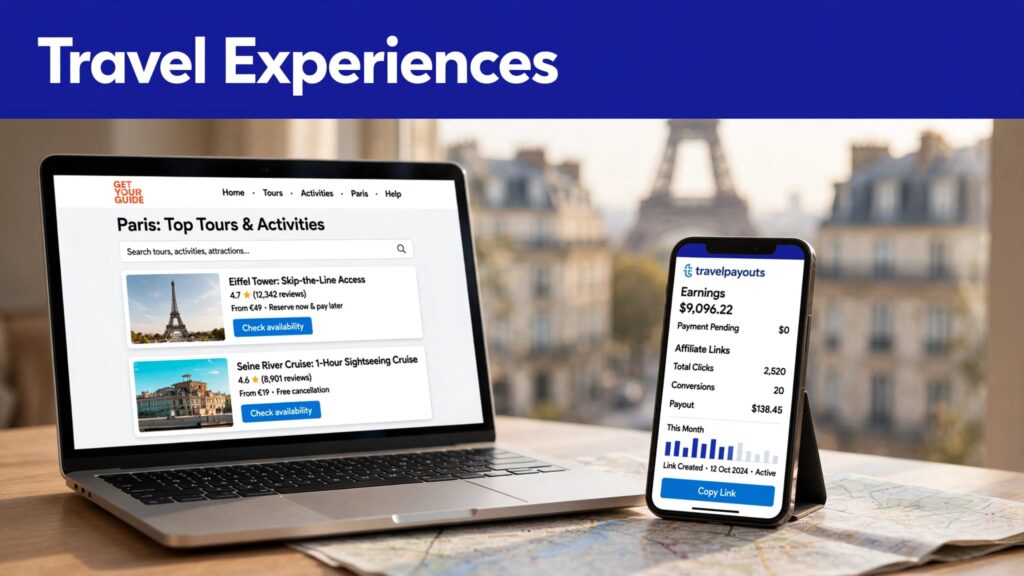
Travelpayouts is a travel affiliate platform. You open one publisher account, then apply to individual travel brands and offers within its dashboard. It can be practical when your site covers several travel categories.
Viator is a direct experience option. Its creator affiliate program publicly advertises 8% commission on booked experiences within a 30-day cookie window.
When Travelpayouts fits
Travelpayouts is useful when you need breadth. A publisher can manage flight, hotel, rental-car, insurance, and tour offers from one platform, subject to each advertiser’s approval rules.
The platform says partners can earn up to 70% of referred booking revenue. That is not one fixed rate. Its public guidance lists typical ranges such as 1.1% to 1.5% for flights and 4% to 5% for hotels, but every advertiser sets its own terms.
Most Travelpayouts brands use a 30-day cookie. Some use different periods. The platform also uses last-cookie attribution, so a later affiliate click can replace your referral.
Use Travelpayouts when your publishing model needs several categories, one reporting environment, and flexible link tools.
When Viator fits
Viator fits pages where experiences are the main decision. Think museum tickets, cooking classes, guided day trips, airport transfers, and local tours.
Its public terms are clear: 8% commission, a 30-day cookie, and earnings on experience bookings made after the reader uses your link. Viator says bank transfers are paid monthly with a $50 minimum. PayPal payouts are weekly with no minimum threshold.
For publishers with experience-led content, that direct match can beat a broader network offer. Review the current terms before you build revenue forecasts.
OTHER PROGRAM TYPES WORTH TESTING
A Tripadvisor affiliate alternative does not need to be another review platform. It can be a focused partner that matches one profitable content group.
Add hotel options to accommodation content
Hotel partners work best on pages with clear stay intent. These include hotel reviews, neighborhood guides, event accommodation pages, and “where to stay” articles.
Don’t place a hotel widget on every destination page. Use it where the page already helps a reader choose an area, property type, or travel date. A useful comparison creates qualified clicks. A random widget creates noise.
Booking.com and Expedia affiliate arrangements can be available through partner platforms or regional networks. Their access routes and terms are not always public before approval. Confirm the exact commission basis, supported markets, cookie rule, and payout method inside the partner agreement.
Use experience partners for action-ready readers
GetYourGuide is often used by travel creators for activities and attraction bookings. Public program summaries commonly list an 8% rate and about a 30-day referral period, but check the live dashboard after acceptance. Public sources don’t always agree on payout details or cookie length.
For a stronger operational fit, compare your pages with Viator’s affiliate link options. Direct destination and product links usually fit better than a generic homepage link.
Keep offers narrow. A page about a Louvre visit should link to a relevant ticket or Paris experience category. It should not send readers to an unrelated global deals page.
APPLY WITH A SITE THAT LOOKS READY
Affiliate managers review more than visitor volume. They need to see legitimate traffic, useful content, and a clear promotion method.
Your application should state your main audience, geographic reach, traffic sources, and the travel categories you cover. Include real examples of pages where you plan to use links.
Prepare the basics before applying
Have these items in place:
- A working site with original travel content and clear navigation.
- A contact page, privacy policy, and affiliate disclosure.
- Analytics that show real traffic sources and audience locations.
- A business or payment profile that matches the account holder.
- A short media kit if you have meaningful newsletter, social, or search reach.
Don’t inflate traffic. A small destination site with focused search traffic can be more valuable than a broad site with unqualified visitors.
If an application is declined, fix the obvious gap. Add useful content, remove thin pages, clarify your disclosure, and apply again later. Don’t create duplicate accounts to bypass a review.
TRACK APPROVED EARNINGS, NOT CLICKS
Clicks show interest. They don’t show revenue.
A reader can click, compare options, book later through another site, cancel a reservation, or use a different affiliate link. Pending commissions are not paid earnings either.

Build a simple earnings record
Use a spreadsheet or database with one row for each content page and partner. Record the content URL, traffic source, offer name, rate, date checked, clicks, pending earnings, approved earnings, reversals, payout date, and payment method.
Calculate net affiliate earnings with a fixed formula:
Approved percentage rewards + approved fixed rewards – reversals
Keep the original commission entry when a booking is cancelled or refunded. Add a separate adjustment row with the reason and amount. Don’t overwrite history. You need to explain a payout months later.
Review the numbers that matter
Run a monthly review by article, channel, and SubID or tracking parameter. Look for pages that produce approved bookings with low reversal rates.
Check these measures:
- Approved commissions and paid commissions
- Booking conversion rate after the outbound click
- Reversals, refunds, and cancelled reservations
- Earnings per click by page and placement
- Time between booking, approval, and payout
A page with fewer clicks may produce more cleared revenue. That page deserves more attention than a high-click article with constant reversals.
PAYOUTS, DISCLOSURES, AND CONTROL RULES
Payout terms matter when you operate a small content business. Cash sitting below a payment threshold is not available cash.
Travelpayouts states that it pays automatically each month through selected methods such as PayPal or bank transfer. The minimum amount can depend on the payout method and currency. Check the current threshold inside your account before you plan around it.
Viator’s published payout setup gives you a useful contrast. Its bank transfer minimum is $50, while PayPal has no minimum and is paid weekly. Payment timing can change, so save the live program terms with the date you checked them.
Put affiliate disclosures near the link
Your readers should know when a link may pay you. Use plain language.
A short disclosure can say: “We may earn a commission when you book through links on this page, at no extra cost to you.”
Place it before or close to the first affiliate link. Don’t hide it in a footer, privacy page, or vague site-wide notice. Clear disclosures protect reader trust and reduce avoidable complaints.
Also review local advertising, tax, and privacy rules. If you use cookies, analytics, or email links, your consent and privacy notices need to match how your site collects data.
FINAL DECISION: CHOOSE FOR THE BOOKING, NOT THE BRAND
The strongest Tripadvisor affiliate alternative is the one that gives your reader a relevant next step and gives you a clear, auditable payout path.
Use Travelpayouts when you need multi-category travel offers under one account. Use direct partners such as Viator when a page is built around bookable experiences. Keep the terms on record, measure approved earnings, and replace links that create clicks without cleared commissions.
Useful travel content earns trust first. The commission follows when the booking path fits the reader’s decision.