Unlimited A/B Testing on Mida.so: Setup Guide
A/B testing becomes less useful when every experiment competes for a limited slot. You delay ideas, combine unrelated changes, and lose the learning cycle that improves conversion rates. Unlimited A/B testing on Mida.so gives growth teams r...

A/B testing becomes less useful when every experiment competes for a limited slot. You delay ideas, combine unrelated changes, and lose the learning cycle that improves conversion rates.
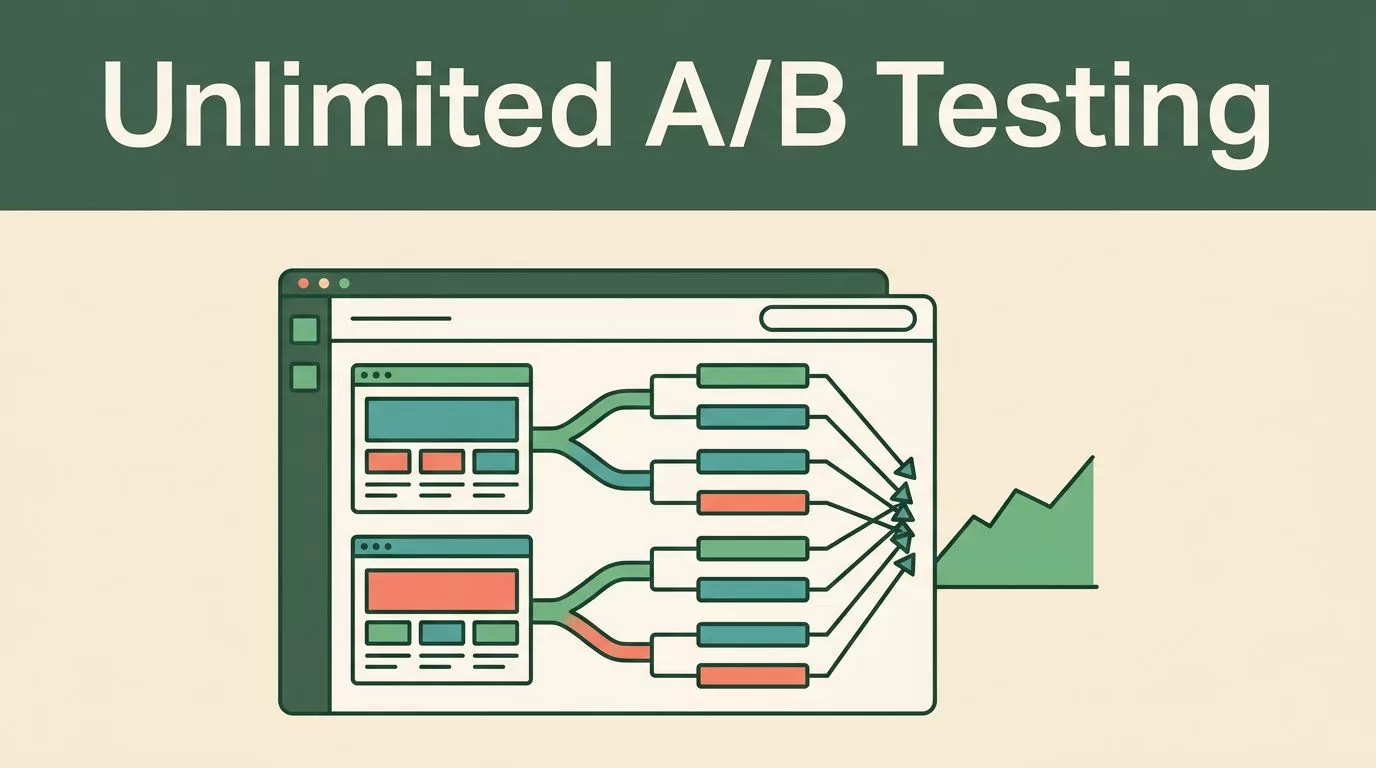
Unlimited A/B testing on Mida.so gives growth teams room to test landing pages, pricing, checkout flows, and calls to action without treating each experiment like a scarce resource. The advantage is flexibility, not permission to launch random tests. You still need clear hypotheses, enough traffic, clean tracking, and disciplined decisions.
The right process turns Mida.so into an ongoing experimentation system instead of a tool you open once a quarter.
Key Takeaways
- Unlimited experiments remove artificial limits, but they don’t remove the need for adequate traffic.
- Start every test with one clear hypothesis and one primary conversion goal.
- Use Mida.so’s no-code workflow to test page elements without waiting for development support.
- Avoid overlapping tests that target the same visitors and create unclear results.
- Read results with statistical discipline before promoting a winning variation.
Why Unlimited Testing Matters for Conversion Teams
Most conversion teams don’t run out of ideas. They run out of testing capacity.
A marketing team may want to test a new headline, a shorter form, a different pricing layout, and a stronger CTA. If the platform limits active experiments, the team must choose one. The other ideas wait. By the time the next test starts, the campaign, offer, or traffic source may have changed.
Mida.so gives teams a different operating model. You can maintain a larger testing backlog and select experiments based on business value, traffic, and readiness. The Mida.so A/B testing platform is built for no-code experimentation, so marketers can make controlled changes without creating a development ticket for every variation.
That matters for three reasons.
First, you can test more parts of the funnel. A landing page test may improve initial engagement, but the pricing page or checkout flow may contain the larger conversion problem. Unlimited capacity lets you study each step instead of stopping after one page.
Second, you can run tests for different audiences and campaigns. A SaaS homepage may need one experiment for paid search visitors and another for returning customers. These tests require separate hypotheses and separate success criteria.
Third, you can keep learning after a winning test. A successful CTA variation answers one question. It doesn’t prove that the page has reached its best possible performance.
Unlimited testing means unlimited room for questions. It doesn’t mean every question deserves immediate traffic.
The constraint moves from software access to experiment quality. That is a better constraint, because your team can improve the process.
Build the Experiment System Before You Launch
Start with a backlog. Record every test idea in one place and connect it to a measurable problem.
A useful experiment entry includes the page, audience, problem, proposed change, primary metric, and expected outcome. Keep the format simple:
“Changing the pricing page from three equal plans to one highlighted recommended plan will increase paid-plan clicks because visitors currently struggle to compare the options.”
That statement gives your team a clear control, a clear variation, and a reason for the test. It also prevents vague experiments such as “try a better pricing page.”
Rank tests before building them. Score each idea against three factors:
- Potential impact, based on the size of the conversion problem.
- Traffic, based on how quickly the page can produce a useful sample.
- Confidence, based on analytics, customer feedback, session recordings, or support data.
A high-impact test with low traffic may need a longer run. A small CTA test on a high-traffic page may produce a decision faster. Neither should be judged by the same schedule.
Define the primary metric before launch. For a lead-generation page, that may be completed forms. For a pricing page, it may be clicks into checkout. For an ecommerce flow, it may be completed purchases.
Add a guardrail metric as well. A variation that increases button clicks but reduces qualified leads isn’t a winner. Track downstream actions such as trial activation, payment completion, average order value, or sales-qualified leads.
Your tracking setup needs consistent events. Google’s event measurement guidance explains how interactions can be recorded for analysis. Use the same event definitions across the control and variation. If one version records a click differently, the comparison is unreliable.
Finally, check traffic overlap. Two experiments that change the same headline, form, or checkout step can interfere with each other. Run them separately, divide the audience carefully, or test one after the other.
Set Up No-Code Experiments in Mida.so
Once the hypothesis is ready, create the experiment in Mida.so.
The exact interface can change over time, but the operating sequence stays consistent:
- Select the page or URL you want to test.
- Create the control and variation.
- Change one meaningful variable in the variation.
- Choose the primary goal and guardrail metrics.
- Set the audience, traffic allocation, and experiment schedule.
- Review the preview and launch the test.
- Monitor the data without changing the rules mid-test.
The first step is page selection. Use a page with enough qualified traffic and a clear role in the funnel. A high-traffic blog post may produce many visits but few buying decisions. A pricing page may have fewer sessions but stronger commercial intent.
Next, create a focused variation. A landing page test can change the headline, hero layout, form length, or proof section. Avoid changing all four at once. If the variation wins, you won’t know which change caused the improvement.
Mida.so’s no-code approach is useful here. Marketers can make visual and content changes directly instead of waiting for a developer to edit templates, create a deployment, and reverse the change later. Development teams can focus on product work while marketers handle controlled experiments.
Set the goal before you launch. Don’t watch every available metric and choose the most flattering result later. Select one primary outcome. Supporting metrics can help explain the result, but they shouldn’t replace the original decision rule.
Preview the page on desktop and mobile. Check forms, buttons, links, tracking events, and page speed. A variation that looks correct in the editor can fail at a different screen size.
Keep a launch record. Note the start date, hypothesis, audience, traffic allocation, and planned decision date. This record protects the test from changes made because the first few days look exciting.
Practical Tests for Every Conversion Stage
Unlimited A/B testing becomes useful when it covers the full customer path. Use these examples as starting points, then connect each test to your own data.
| Page or flow | Test idea | Primary metric | Guardrail |
|---|---|---|---|
| Landing page | Benefit-led headline versus feature-led headline | Form completion | Lead quality |
| Pricing page | Highlighted recommended plan versus equal plan cards | Checkout starts | Paid conversion rate |
| Checkout flow | One-page checkout versus shorter two-step flow | Completed purchases | Payment errors |
| CTA | Specific action, such as “Start free trial,” versus generic “Get started” | CTA clicks | Trial activation |
On a landing page, test the first message visitors see. A product marketing page may lead with a feature list, while visitors care more about the business outcome. Keep the rest of the page stable so the headline’s effect remains visible.
You can also test form friction. Compare a short form with fewer fields against the existing version. Measure completed submissions, but check lead quality afterward. More submissions don’t help if sales receives incomplete or irrelevant leads.
Pricing pages need careful testing because visual changes can affect both attention and trust. Try a highlighted recommended plan, a monthly versus annual toggle, or clearer descriptions of who each plan suits. Don’t hide important costs or remove information to force clicks. A higher click rate is not a win if purchase completion falls.
Checkout tests should focus on friction. Test guest checkout against account creation first, or compare a shorter form with the current flow. Watch payment errors, abandonment, refunds, and completed orders. Checkout changes can affect revenue even when the conversion rate moves only slightly.
CTA tests are easy to launch, but they need a specific question. Compare “Start free trial” with “Create your workspace” when the product requires setup. The best wording depends on what the visitor expects to happen next.
Keep tests aligned with intent. A CTA for first-time visitors may not work for existing customers. Use audience targeting when the message, offer, or next step differs.
Read Results Without Rushing the Decision
A test result is not a command to ship the variation. It is evidence that must meet your decision rules.
Give the experiment enough traffic and time to capture normal variation. Weekday traffic may behave differently from weekend traffic. Paid campaigns can change audience quality. Product launches, promotions, and holidays can also distort the result.
Don’t stop a test because the variation leads after one afternoon. Early results often move sharply because the sample is small. Wait until the test reaches the sample size and confidence level your team defined before launch.
Statistical significance helps estimate whether the observed difference is likely to reflect a real effect instead of random variation. Optimizely’s guide to statistical significance provides a practical explanation of the concept.
Your decision framework should cover three outcomes:
- Ship the variation when the primary metric improves, guardrails remain healthy, and the result meets your confidence standard.
- Keep the control when the variation fails to improve the primary outcome or creates a downstream problem.
- Continue learning when the result is inconclusive and more traffic can produce a useful answer.
Record the result and the lesson. A failed test still tells you something about the page, audience, or message. Avoid rewriting the history by calling every inconclusive test a failure.
When a variation wins, roll it out through your normal release process. Keep monitoring performance after launch. A test result applies to the audience, traffic mix, and conditions under which you ran it. It isn’t a permanent guarantee.
Run the next test against the new baseline. This is how unlimited experimentation compounds. Each decision gives the next experiment a better starting point.
Conclusion
Unlimited A/B testing on Mida.so removes the need to ration experiments, but it doesn’t replace sound CRO practice. Build a hypothesis, choose a primary metric, protect against overlapping tests, and wait for enough evidence before making a decision.
Use the no-code workflow to test landing pages, pricing pages, checkout steps, and CTAs across the funnel. Then keep the winning ideas, document the lessons, and move to the next question.
If restrictive experiment limits are slowing your team, explore Mida.so and build a testing process that can keep running.

