Promote the VRBO Affiliate Program With Travelpayouts
Vacation rental content can bring high-intent readers to your site. A reader searching for a family home in Orlando or a beachfront stay in Cornwall is close to a booking decision. The VRBO affiliate program gives travel publishers a way to...

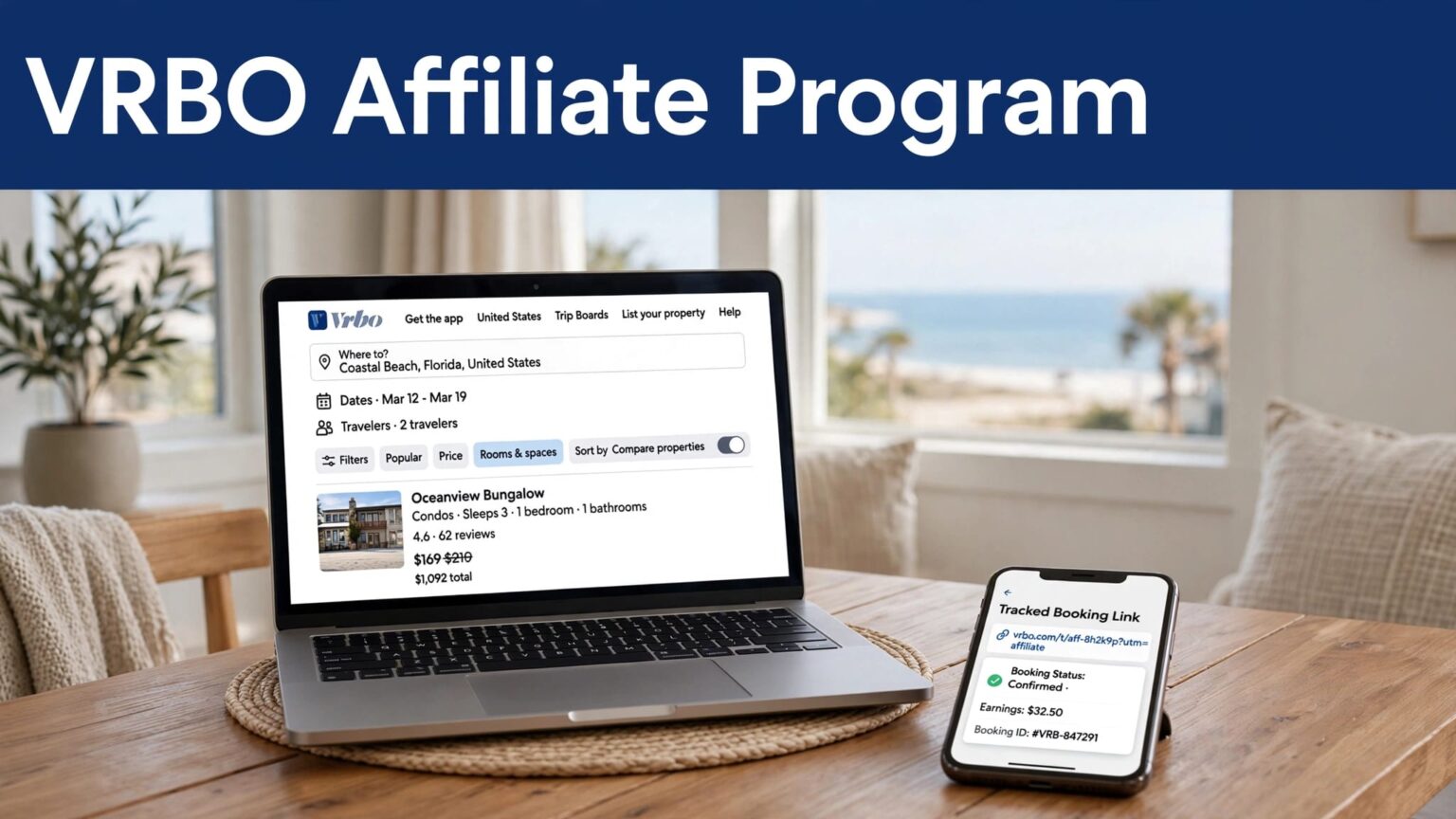
Vacation rental content can bring high-intent readers to your site. A reader searching for a family home in Orlando or a beachfront stay in Cornwall is close to a booking decision.
The VRBO affiliate program gives travel publishers a way to earn when a tracked referral results in an approved rental booking. Travelpayouts provides the partner dashboard, links, widgets, reporting, and payment workflow.
The system is simple. The work is not. You need the right pages, accurate tracking, current terms, and a clear disclosure before you publish.
How the VRBO Offer Works Through Travelpayouts
Travelpayouts is a travel affiliate network. You create a publisher account, add a project for your website or channel, then activate offers that fit your audience.
Its VRBO affiliate program offer page describes earnings on approved online booking requests. You promote a tracked link or approved tool. A reader clicks, completes an eligible booking, and the booking moves through the advertiser’s approval process.
Travelpayouts publicly lists a 1.8% reward rate and a seven-day attribution window for Vrbo. Treat both figures as live offer details, not permanent promises. Travelpayouts pages have also referenced rewards of up to 2%, so check the active offer inside your dashboard before you publish a rate on your site.
Approval timing affects your cash forecast
A booking is not paid affiliate income when it appears as a click. It is not final income when it first appears as pending.
The public Vrbo offer information says confirmation can occur within 60 days after guest check-out. A guest may cancel. The booking may fail validation. Another affiliate link may receive the final attribution before checkout.
Build your cash forecast around approved rewards, not clicks or pending commissions.
What you can promote
Travelpayouts supports affiliate projects for websites, blogs, YouTube channels, newsletters, and social pages. The platform provides tools such as deep links, banners, widgets, search forms, and WordPress options.
That does not mean every promotion method is automatically approved for the Vrbo offer. Check the current program page and your account terms before you use paid search, email automation, coupon sites, browser extensions, or incentives.
The Travelpayouts network terms can change. Program pages and dashboard updates can change too. Review them before each new campaign.
Set Up the VRBO Affiliate Program in Travelpayouts
Start with one defined audience and one project. Don’t open five channels, add random links, and hope the dashboard explains what worked later.
Create your Travelpayouts account. Add the site, social account, or newsletter where you plan to publish. Then locate the Vrbo offer, review its current conditions, and select the tools that match your content format.


Use deep links for pages with clear booking intent
Deep links send readers to a relevant Vrbo destination or search result instead of a generic homepage. They work best when the destination, property type, and travel need are already clear.
A guide called “Where to Stay in the Florida Keys With Kids” can link readers to vacation rentals in the Florida Keys. A ski guide can link to homes near the resort area. Match the landing page to the paragraph that earned the click.
Avoid placing a generic Vrbo link after every sentence. One useful link near the accommodation recommendation often performs better than five vague prompts.
Add SubIDs before traffic arrives
Use SubIDs or another available tracking parameter to separate your campaigns. A link from a blog post should not share the same tracking label as a link in an email or Instagram bio.
Use a fixed naming pattern:
article-destination-topicemail-month-campaignsocial-platform-postvideo-destination-description
For example, use article-rome-family-rentals for a destination guide and email-june-rome for a newsletter. Keep a record of every label. You need it when a page earns bookings six months later.
Disclose Affiliate Relationships Before the Link
Affiliate disclosure is not a footer detail. Readers should see it before, or close to, the first affiliate link. Use plain language.
This article may contain affiliate links. If you book through one, the publisher may earn a commission at no extra cost to you.
Place the statement where a reader can see it without searching. Add a fuller disclosure page if your site uses multiple affiliate programs. Your wording should match how you actually earn.
You also need to follow applicable advertising rules in the countries where you operate and market. In the United States, the FTC expects disclosures to be clear and difficult to miss. Social platforms may require their own paid-partnership labels.
Protect the Vrbo name and your account
Do not use Vrbo logos, brand terms, destination images, or claims outside the permissions granted by the program and platform rules. Don’t imply that Vrbo endorses your site. Don’t present Vrbo as Airbnb. They are separate vacation rental brands with separate inventories, policies, and commercial terms.
Paid-search restrictions matter here. Brand bidding, trademark use in ad copy, direct linking, and coupon language may be limited or prohibited. Check the live offer terms before you launch an ad.
Content That Can Drive Vacation Rental Bookings
Vrbo links convert when the content solves a lodging decision. A broad post about “things to do in Spain” may attract visitors. A guide that helps a group choose a home in Mallorca attracts potential bookers.
Build destination guides around real stay requirements
Write for the reason a traveler needs a rental. Families need bedrooms, kitchens, laundry, parking, and space to reset. Groups need bed counts, shared areas, transport access, and clear booking expectations. Remote workers care about location, work space, and internet reliability, but you should never promise an amenity without verifying the live listing.
Useful angles include:
- Best neighborhoods for a group stay near a major event.
- Beach destinations where a full home suits multi-generation travel.
- Weekend trip guides built around drive time, local access, and room needs.
- Seasonal guides for ski cabins, lake houses, or holiday gatherings.
The Travelpayouts guide to choosing accommodation affiliate programs makes a useful point for publishers: select partners that fit the reader’s intent. Apply that rule at page level too.
Publish comparison content with care
Comparisons can work when they answer a narrow question. Think “hotel versus vacation rental for a six-person stay in Lisbon” or “city-center apartment versus suburban home for a week-long family visit.”
State the trade-off. Hotels may offer predictable service and central locations. Vacation rentals can suit travelers who need a kitchen, several bedrooms, or a shared living area. Availability, cleaning fees, cancellation policies, and house rules differ by property.
Don’t claim one option is always cheaper. Use the reader’s trip type as the decision point.
Promote Through Your Blog, Email, and Social Channels
The VRBO affiliate program needs distribution. Your strongest traffic source depends on what your audience already uses to plan trips.
A search-driven blog usually has the longest shelf life. Email can bring repeat readers back to seasonal guides. Social content creates discovery, but it rarely replaces a page that answers detailed booking questions.
Use your blog as the source record
Publish the complete guide on your website first. Include location details, property-type advice, transport notes, seasonal constraints, and your tracked Vrbo links.
Then use social media to send readers to that guide. A short video can show three areas to stay in. A carousel can compare group-trip needs. A pin can point to a seasonal destination page.
Don’t rely on a social caption to explain a complex accommodation decision. The post disappears quickly. Your guide remains searchable and updateable.
Keep email recommendations focused
Email works when the reader already trusts your travel advice. Send a useful recommendation tied to a season, event, school break, or new guide.
For example, a family travel newsletter can feature “Homes for an October half-term break in the Lake District.” Link to the relevant guide first. Add a Vrbo link where readers are ready to search available rentals.
Don’t mail affiliate links to purchased lists. Don’t hide the commercial relationship. Include the disclosure and any unsubscribe process your email platform requires.
Track Approved Earnings, Not Vanity Metrics
A click means a reader showed interest. It does not show that the accommodation page matched their needs.
Travelpayouts uses cookie-based attribution. Its general model is last click wins, so a reader who later clicks another affiliate’s link may no longer be attributed to you. Clear content and relevant links reduce wasted clicks.
The Travelpayouts platform overview explains the wider network model. Your operating record should focus on the numbers that survive the full booking and approval cycle.
Build a deterministic earnings record
Use a spreadsheet, Airtable base, or database table. Create one row per content source and campaign.
Record these fields:
- Content URL, channel, and SubID.
- Offer name and reward rate, plus the date you checked it.
- Clicks, pending rewards, approved rewards, reversals, and paid earnings.
- Booking period, payout date, and payment method.
- Notes on updated links, changed terms, or discontinued pages.
Use this formula:
Net affiliate earnings = approved percentage rewards + approved fixed rewards – reversals
Keep the original record when a reward changes. Add an adjustment row with the reversal amount, date, and reason. Don’t overwrite history. You need to know whether a weak month came from low traffic, poor intent, cancellation, or changed terms.
Review pages that send weak traffic
Sort your report by outbound clicks and approved rewards. Pages with high clicks and low approvals need attention.
First, test the link. Then check mobile layout, destination relevance, and whether the page still reflects the current travel market. A guide may send readers to an unsupported market. It may suggest the wrong property type. It may attract people researching, not booking.
Fix the page before you chase more traffic.
If your team needs a controlled tracking and review workflow across multiple travel partners, Book A Call.
Keep Your Promotion Process Current
A reliable VRBO affiliate program workflow is a monthly operating task. Review links, live reward terms, approval status, disclosure placement, and channel permissions.
Check your top pages before peak travel periods. Refresh old destinations. Remove claims you cannot support. Replace broken or irrelevant links. Keep screenshots or exports of key offer terms when you change a campaign.
Travel affiliate income has a delay built into it. Travelers may book late, cancel, alter dates, or choose another channel. Your reporting must account for that delay.
Final Takeaway
Promoting Vrbo through Travelpayouts works when each link has a clear job. Match the rental search to a real travel need, disclose the relationship, and use tracking labels that show where approved bookings originate.
Don’t judge the program by traffic spikes or pending balances. Judge it by approved earnings, reversals, and pages that keep sending travelers to relevant rental options.

