Wise Business Vs Payoneer for International Payments in 2026
Wise vs Payoneer comes down to how money reaches you. Wise Business suits direct bank payments from clients and low currency conversion costs. Payoneer suits marketplace payouts and platform based income. Published fees back this split, and...

Wise vs Payoneer comes down to how money reaches you. Wise Business suits direct bank payments from clients and low currency conversion costs. Payoneer suits marketplace payouts and platform based income. Published fees back this split, and the details below show where each tool costs more.
This guide compares both services for freelancers, agencies, and online sellers. Fee figures come from the Wise US pricing page and the Payoneer fees guide. Both companies change prices by country and route, so confirm every figure on the official Wise Business pricing page and on the Payoneer site before you decide.
Wise vs Payoneer: The Quick Answer
Choose by income source. If clients pay you by invoice and bank transfer, Wise usually costs less. If a marketplace or platform pays you, Payoneer often fits better, because many platforms offer Payoneer as a payout method.
| Feature | Wise Business | Payoneer |
|---|---|---|
| Account opening | Registration free, 31 USD one-time set-up fee | Fees vary by plan and activity. Payoneer lists 29.95 USD per year for the first card if activity stays low |
| Receiving from clients | Free domestic receiving in AUD, CAD, EUR, GBP, HUF, NZD, PHP, SGD, USD | Free from Payoneer users, up to 1 percent on direct bank details, up to 3.99 percent plus 0.49 USD for client card payments |
| Currency conversion | From 0.23 percent, varies by currency | 1 to 2 percent above the market rate, according to Payoneer |
| Sending to others | From 0.23 percent, varies by currency | Up to 3 percent for a recipient without Payoneer |
| Marketplace payouts | Not the main focus | Marketplaces set their own fees |
| Best for | Direct client invoices and low conversion cost | Platform income and payouts |

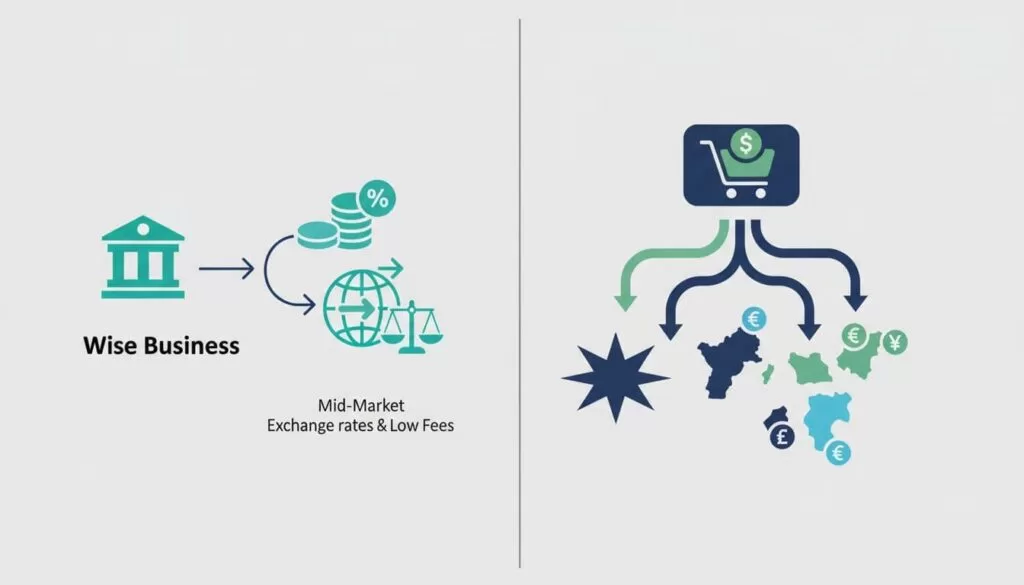
The main takeaway is simple. Wise usually wins on price for direct payments. Payoneer usually wins on platform fit.
How Each Service Works
Wise Business is built for small businesses, startups, and freelancers who move money between currencies. You open a business account, pay a one-time fee for account details, and receive client payments like a local supplier. You then hold, convert, or send the money. Wise shows the fee before you confirm each transfer.
Payoneer works as a payout and receiving network. Clients can pay through bank details or card payments, and marketplaces can pay out to a Payoneer balance. You then withdraw to a bank account, spend with a card, or send money to another Payoneer user. Each step carries its own fee, so total cost depends on the path your money takes.
Fees Compared in Detail
Wise Business Fees
Wise lists registration as free and a 31 USD one-time set-up fee for all Wise Business features. Domestic receiving is free in nine currencies. SWIFT receiving costs 6.11 USD for USD, 2.16 GBP for GBP, and 2.39 EUR for EUR per payment. Conversion and transfer fees start at 0.23 percent and vary by currency. Card payments are free. ATM withdrawals are free up to 250 USD per calendar month, then cost 1.95 USD plus 1.95 percent. For a full breakdown, read the guide to Wise business fees.
Payoneer Fees
Payoneer publishes its own guide to Payoneer fees. The guide lists these items.
- Payoneer to Payoneer. Receiving from another Payoneer user is free.
- Direct bank details. Receiving costs up to 1 percent.
- Client card payments. Receiving costs up to 3.99 percent plus 0.49 USD.
- Marketplace payments. Fees vary by service.
- Recipients without Payoneer. Withdrawals cost up to 3 percent.
- Currency conversion. Internal conversion costs 1 to 2 percent above the market rate.
- Annual fee. The guide lists 29.95 USD per year for the first card if account activity stays low.
- ATM withdrawals. Cost 3.15 USD, plus up to 1.8 percent, plus a conversion fee of up to 3.5 percent in some cases.
Payoneer describes its guide as marketing content and notes terms change. Treat the figures as a starting point and check the account fee page for your country.
A Simple Cost Example
Arithmetic shows why conversion costs matter. Assume you convert 5,000 USD into another currency. This example uses the starting Wise rate of 0.23 percent and the Payoneer range of 1 to 2 percent above the market rate. Real costs depend on the currency pair and route.
| Provider | Rate used | Cost on 5,000 USD |
|---|---|---|
| Wise Business | 0.23 percent | 11.50 USD |
| Payoneer, low end | 1 percent | 50 USD |
| Payoneer, high end | 2 percent | 100 USD |
The gap grows with volume. A business converting 50,000 USD each month would see the same ratio, so the choice of tool matters most for frequent converters. The mid-market exchange rate matters more than the visible transfer fee, so compare the final amount received.
Receiving Money: Clients vs Marketplaces
Wise gives you local account details so clients pay like local suppliers. Free domestic receiving applies in AUD, CAD, EUR, GBP, HUF, NZD, PHP, SGD, and USD. The one-time fee of 31 USD unlocks account details in 22 currencies. Wire payments carry a fixed fee, so ask clients to use local transfers.
Payoneer fits income paid through platforms. Many marketplaces and freelance sites pay out through Payoneer, and each platform sets its own fee. Payoneer to Payoneer transfers are free. If most of your income comes from one platform, check the payout fee on the platform before you compare accounts.
Withdrawals, Cards, and Day to Day Use
Both companies offer cards. The Wise Business card has free card payments and a monthly ATM allowance. Payoneer lists card fees for ATM cash and for spending in non-base currencies, so heavy card users should read the fee list first.
Speed varies by route and country. Neither company promises one speed for every payment. Check the estimated delivery time on the transfer screen before you confirm.
Common Scenarios
- A consultant invoices three overseas clients each month. Wise fits. Clients pay by local transfer, and conversion starts at 0.23 percent.
- A seller earns through a marketplace. Payoneer fits when the marketplace offers Payoneer payouts. Check the payout fee on the marketplace.
- An agency pays contractors abroad. Wise fits for bank payouts. Compare the final amount received for each country.
- A creator earns from platforms and pays suppliers. A two account setup can fit. Collect on Payoneer, then move money to Wise after you check the withdrawal fee.
Who Should Choose Wise or Payoneer
- Choose Wise Business if clients pay by invoice, you convert currency often, and you value a visible fee before each transfer.
- Choose Payoneer if marketplaces or freelance platforms pay you and offer Payoneer as a payout option.
- Choose both if you collect platform income and also pay suppliers or contractors by bank transfer.
A two account setup works like two tools on a bench. Use Payoneer to collect from platforms. Then move money to Wise when you need cheaper conversion for supplier payments. Check withdrawal fees before you move money, because each step adds cost.
Mistakes to Avoid
- Comparing only the headline transfer fee and ignoring the exchange rate.
- Using a wire when a local transfer is available.
- Moving money between accounts several times without checking each fee.
- Trusting an old comparison article. Fees and features change often, so verify on the official pages.
- Skipping a small test payment before moving your main income.
Checklist Before You Decide
- List your income sources: clients, marketplaces, or both.
- Check which payout methods your platforms support.
- Estimate monthly conversion volume and compare the conversion rates above.
- Check the receiving fee for your main currency on both pricing pages.
- Check card and ATM needs if you plan to spend from the balance.
- Confirm availability in your country on both websites.
- Test with one small payment before you move your main income.
Frequently Asked Questions
Is Wise Business cheaper than Payoneer?
For currency conversion, the published figures favor Wise. Wise starts at 0.23 percent. Payoneer lists 1 to 2 percent above the market rate. Marketplace payouts can change the math, because platforms set their own fees.
Is Payoneer better for marketplace sellers?
Often, yes. Many platforms offer Payoneer as a payout method. Confirm your platform supports the payout route and check the fee.
Can I use Wise and Payoneer together?
Yes. Many businesses collect through platforms with Payoneer and then use Wise for supplier payments. Check the withdrawal fee before you move money.
Does Wise charge a monthly fee?
The Wise US pricing page lists no monthly fee. The page lists a 31 USD one-time set-up fee.
Do fees change by country?
Yes. Both companies set prices by country, currency, and route. Use the live calculator or fee page for your account.
Which service suits a new freelancer?
A new freelancer with a few direct clients usually starts with Wise because costs are visible. A freelancer who gets work through a platform should check whether the platform pays through Payoneer.
Conclusion
Wise Business is the better buy for direct international business payments when conversion cost matters most. Payoneer makes more sense when your income lives on marketplaces or depends on platform payouts. Pick the tool matching how money enters your business, compare the final amount received on a small test, and confirm all fees on the official pages before you commit.

