Wise USD Receiving Details: What Users Abroad Should Know
Looking for a Wise US bank account? Wise is not a traditional US bank. Eligible customers who live in supported countries may be able to open a USD balance and get account details for receiving certain US payments. Those details can help fr...
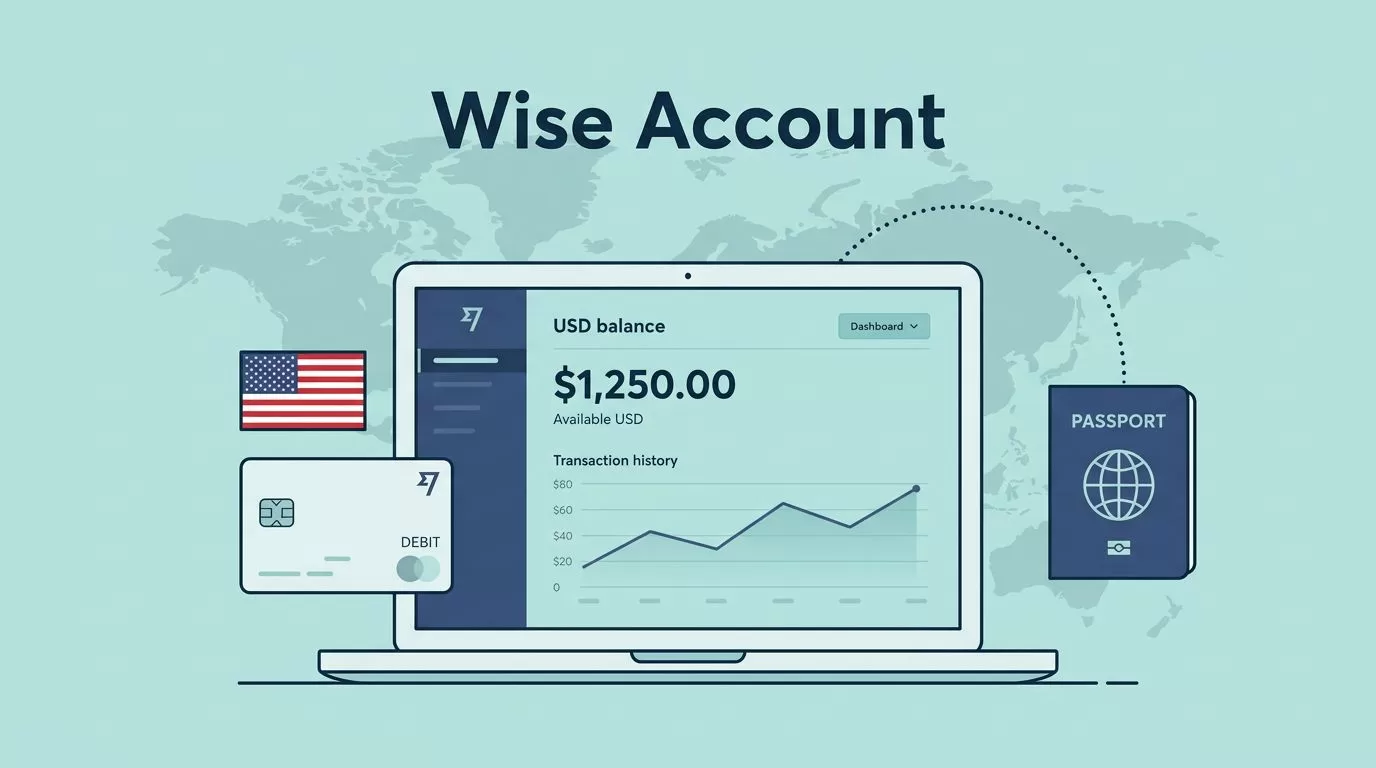
Looking for a Wise US bank account? Wise is not a traditional US bank. Eligible customers who live in supported countries may be able to open a USD balance and get account details for receiving certain US payments. Those details can help freelancers, remote workers, and businesses get paid in dollars, but they do not turn a Wise account into a full checking account.
This guide explains what Wise USD receiving details can do, how they differ from a US checking account, which payment rails may work, and what to check before you rely on them for payroll or client invoices. Availability, fees, and verification depend on your country, account type, and payment.
Quick answer: Wise or a US checking account?
| Your need | Option to explore | Why |
|---|---|---|
| Receive eligible USD payments, hold multiple currencies, or transfer money internationally | Wise, if your country and account qualify | USD account details may support certain domestic ACH, wire, and international SWIFT payments. |
| Write checks, deposit cash, use branch services, or access bank-specific products | A traditional US checking account | A bank may offer features that a Wise balance does not, subject to its account terms. |
| Set up payroll or recurring client payments | Verify both options with the payer first | Confirm the payment rail, receiving fee, account name, and acceptance rules before sharing details. |
Wise can be useful for receiving and moving money. It should not be treated as a workaround for a bank’s residency or identification rules. If you need a conventional bank account, check eligibility with that bank directly.
What Wise USD account details are, and what they are not
Wise is a financial technology company, not a bank. Depending on where you live and the product available to you, your Wise account may let you open a USD balance and request US account details. Those details can include numbers used to route supported payments into your Wise balance. They are not proof that you opened a checking account at a US bank.
Think of the stages separately: opening a Wise profile, passing verification, opening a USD balance, and getting USD receiving details are not the same step. Having a Wise account does not guarantee that the USD details feature is available to you. Check Wise’s current USD account-details eligibility rules and look in your own account before giving numbers to a payer.
Wise USD details vs. a traditional US checking account
The right choice depends on what you need to do with the money after it arrives. This comparison is about common product differences, not a promise that every bank or Wise account includes every feature.
| Feature | Wise USD balance and details | Traditional US checking account |
|---|---|---|
| Debit card | A Wise card is available only in supported countries and to eligible customers. Check current card availability for your residence. | Often offered, subject to the bank’s account terms and approval. |
| Paper checks | Wise says it cannot receive cheque payments, and it does not issue checks for USD accounts. | Many checking accounts offer checks, though terms vary. |
| Payroll or direct deposit | USD details may receive domestic ACH, including some direct deposits. Ask the employer or payroll provider to confirm it accepts these details. | Commonly supports direct deposit, subject to bank and payer rules. |
| Bill pay | Do not assume it includes a bank’s bill-pay service. Check whether a payee accepts a Wise card payment or transfer. | Many banks offer online bill pay, but features differ by account. |
| Interest | A standard USD balance is not the same as an interest-bearing deposit. Wise Interest is a separate opt-in feature for eligible US customers, not a general benefit for every account. | Some checking accounts pay interest, often at a low rate. Savings accounts and CDs are designed for other saving needs. |
| Loans | Wise says it does not lend out customer money. Do not expect a bank loan relationship from the USD balance. | A bank may offer loans or credit products separately, subject to approval. |
| Cash deposits | Wise says it cannot accept cash payments into its accounts. | Many banks allow cash deposits at branches or ATMs, subject to their rules. |
| FDIC insurance | Ordinary Wise balances are not FDIC-insured. Eligible US customers who opt into Wise Interest may receive pass-through FDIC coverage through a program bank, under that feature’s terms. | Eligible deposits at an FDIC-insured bank are generally insured within applicable limits and ownership rules. |
Wise says it protects customer funds through safeguarding, which is different from FDIC deposit insurance. Read Wise’s explanation of how its US entity protects customer funds. The optional Wise Interest feature has separate eligibility and terms. Its US eligibility page says it is for eligible US-based customers. Do not treat safeguarding as FDIC insurance.
Can you open a traditional US bank account from abroad?
There is no single rule for every US bank. Each bank sets its own application, identity, address, and tax-information requirements. Some may require an in-person visit or a US residential address. Others may have different processes for non-US residents. Contact the bank and ask specifically whether it accepts applicants who live in your country.
For example, U.S. Bank’s published checking-account information says applicants must be legal US residents, and its online application asks for a Social Security number. That is U.S. Bank’s policy, not a universal rule for every bank. Its opening deposit and document requirements can also change by product. See the bank’s current checking account information before applying.
A passport or another accepted identity document may help establish who you are, but it does not guarantee that a bank will approve an application. Do not assume that a Wise account satisfies a bank’s residency requirements or gives you access to a bank’s checking, savings, or certificate of deposit products.
When checking, savings, or a CD may be a better fit
A checking account is built for frequent spending and everyday payments. It may suit you better if you need checks, cash deposits, branch service, a bank’s bill-pay tools, or a close link to other bank products. Fees, minimum opening deposits, overdraft terms, and interest depend on the bank and account.
A savings account is usually intended for money you set aside, while a certificate of deposit (CD) generally holds money for a set term under specific withdrawal and rate rules. Those products are not direct substitutes for Wise’s multi-currency transfer and receiving features. Compare the account’s fee schedule and access rules, not just its advertised interest rate or lack of a monthly fee.
Who may qualify for Wise personal or business features?
Personal Wise eligibility is separate from eligibility for USD account details. Wise services vary by residence, so start with its current country and USD-details availability information. If the feature is available, Wise will still need to verify your account before you rely on the details.
Wise Business has its own eligibility rules. Do not assume every non-US owner needs a US LLC or EIN, and do not assume every foreign company qualifies. Requirements depend on the business’s country, legal structure, owners, and the Wise products available there. Wise may ask for registration, ownership, address, director, or identity records. Review its business verification guidance before forming a company or applying. If you are considering an LLC only to get payment details, ask Wise and a qualified tax or legal adviser about your case first.
How ACH, domestic wire, and SWIFT payments work
USD account details do not all accept the same payment route. Wise’s help information says USD details can receive domestic ACH and wire payments from the US. It also describes SWIFT payments in USD from outside the US for supported accounts and locations. Check the exact details shown in your own Wise account, then give the payer the matching set.
- ACH: A US domestic electronic payment. Wise says USD ACH direct deposits are generally free to receive. A payroll company or client may still decide which account types it accepts.
- Domestic US wire: A bank wire sent from within the US. Wise’s US pricing page currently lists a receiving fee for USD wire payments. A wire is not the same as ACH.
- International SWIFT: A USD payment sent from a bank outside the US using international bank messaging. Wise lists a receiving fee for USD SWIFT payments, and intermediary or correspondent banks may deduct additional charges.
Wise currently lists a USD 6.11 receiving fee for domestic USD wire and SWIFT payments on its US pricing page. Treat that as a reference for the pricing page and product shown there, not a guarantee for every country or Wise account. Fees, receiving routes, and limits can change. Check Wise’s live receiving prices and its payment types by currency before asking someone to send money.
For the distinction between domestic and international USD details, read Wise’s current guide to receiving money with USD account details. Do not send international SWIFT funds to domestic ACH details unless Wise’s instructions specifically say that route is supported.
How to check the full cost before you use Wise
A low transfer fee or a statement that an account has no monthly fee does not tell you how much a recipient will receive. Check every part of the payment before you set up recurring invoices or payroll.
- Transfer fee: Check the fee for the amount and route you plan to use.
- Exchange rate: Review the rate and the amount of currency being converted. Compare the final amount, not just the advertised fee.
- Funding method: A bank transfer, card payment, or another funding route may have a different price or processing time.
- Receiving fee: Confirm whether the incoming payment is ACH, domestic wire, or SWIFT, and check the fee for that route.
- Intermediary deductions: International SWIFT transfers may pass through correspondent banks that charge their own fees.
- Final amount received: Use the live quote in your Wise account and check the expected amount after conversion and fees.
Fees and availability vary by country, currency, payment method, and account type. A quote you see today may not match a future transaction. Before relying on Wise for repeating payments, price the exact route in your own account and confirm the payer can use it.
Opening the account and checking for USD details
- Check your country first. Read Wise’s current availability information for USD account details.
- Open the right profile. Choose personal or business based on who owns the money and the account.
- Complete verification. Follow the steps shown in the app or website. Wise may request more information before approving a feature or transaction.
- Open a USD balance. A profile alone does not mean you have USD receiving details.
- Look for account details in your own account. Open the USD balance and check the receiving or account-details options. If no details appear, do not send a payer guessed or borrowed numbers.
- Match the rail to the payer. Ask whether the payment will be ACH, domestic wire, or SWIFT. Share only the matching details provided by Wise.
Wise may ask for extra identity, business, or source-of-funds documents. Examples can include proof of address, business registration, ownership details, invoices, or information about a particular transfer. Verification and transfer limits may vary with your location, account, transaction amount, and funding method. Avoid relying on a limit quoted for someone else’s country or product. Check Wise’s verification guide and its current receiving fees and limits.
Before sharing your USD details: a payment checklist
- Confirm that USD details are visible in your own account and that your location is eligible.
- Ask the payer which rail they will use and confirm Wise accepts that payment type for your details.
- Check any receiving, conversion, intermediary, or withdrawal fees and the expected final amount.
- Make sure the account-holder name matches the name on the payer’s records.
- For a new client or employer, consider testing with a small payment before sending a large invoice or setting up recurring deposits.
- Save the payer’s confirmation and compare the amount received with the quote.
Common questions
Is a Wise USD balance a US bank account?
No. Wise can provide USD receiving details to eligible customers, but Wise is not a traditional US bank and the balance does not include every service of a bank checking account.
Can I receive payroll or direct deposit into Wise?
Wise says its USD details can receive domestic ACH, and it describes ACH direct deposits as generally free to receive. Ask your employer or payroll provider whether it accepts the exact Wise details in your account. Confirm any rules for salary, benefits, or recurring payments before relying on them.
Does Wise provide FDIC insurance?
Ordinary Wise balances are not FDIC-insured. Wise describes safeguarding as a separate way it protects customer funds. Eligible US customers may be able to opt into Wise Interest, which has separate terms and may provide pass-through FDIC coverage through a program bank. Check the current eligibility rules and disclosures before opting in.
Can I open a US bank account online if I live abroad?
It depends on the bank and account. Some published policies require US residency or a Social Security number for online applications. Contact the specific bank to ask about your country of residence, accepted identification, tax information, address, and any opening deposit.
Bottom line
Wise USD receiving details can be useful if you live abroad and need to receive supported dollar payments or move money across currencies. They are not a substitute for a traditional US checking account, and an open Wise profile does not guarantee that USD details are available. Check eligibility, payment type, fees, and the final amount in your own account before you share details or depend on them for recurring payments.
