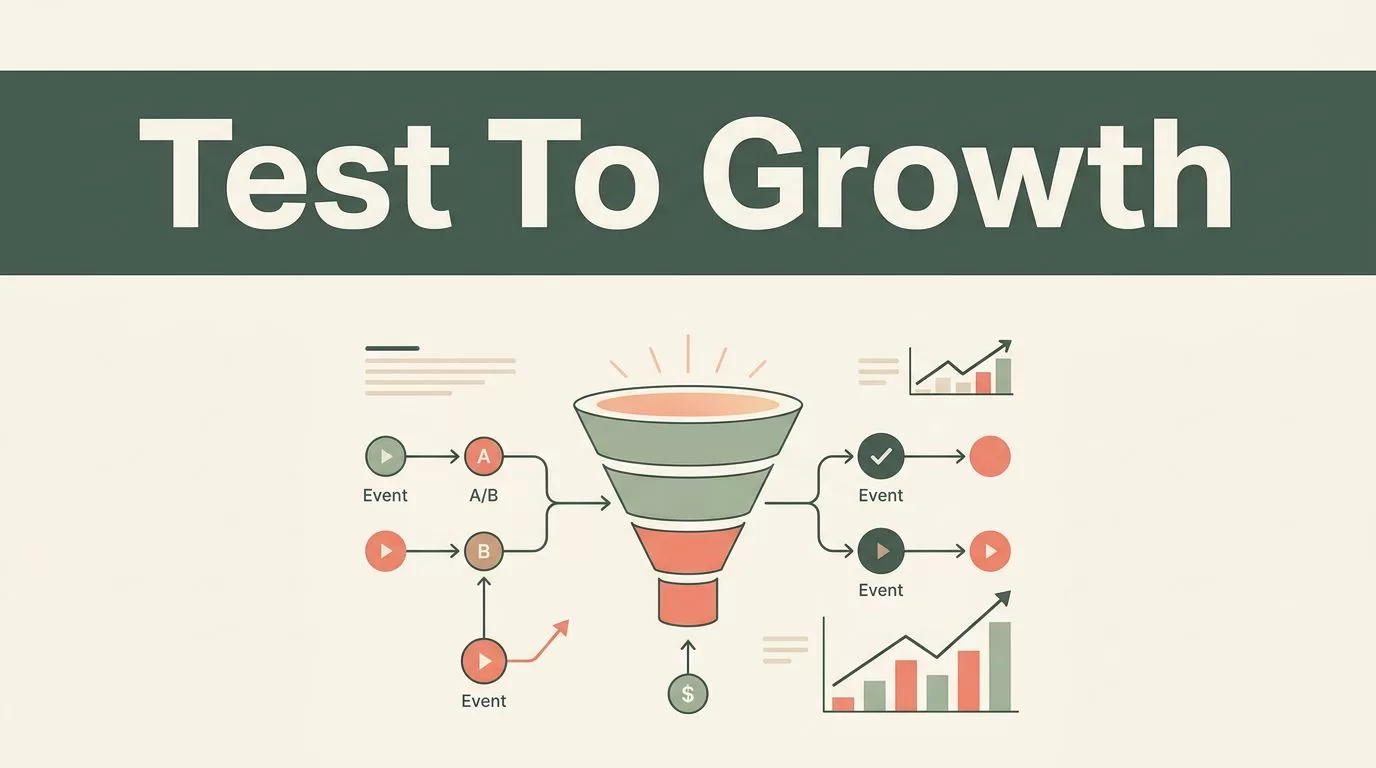
Growth stalls when your team has more ideas than evidence. You can redesign a landing page, change a signup form, or launch a pricing test, but none of it matters if you can’t see what visitors do next.
Growth hacking software gives your team a repeatable way to find friction, test changes, and measure conversion behavior. Mida.so brings those activities closer together, so product managers, founders, and marketers can act on user behavior instead of relying on opinions.
Key Takeaways
- Growth hacking software reduces the time between identifying a problem and testing a solution.
- Mida.so helps teams study visitor behavior and connect it to conversion goals.
- Clear event tracking and funnel definitions make experiments easier to evaluate.
- The best growth process prioritizes high-impact problems before adding more tools.
- Scaling experimentation requires documentation, ownership, and a consistent review cycle.
Why Growth Hacking Software Matters
Most growth teams don’t have a shortage of ideas. They have a shortage of reliable feedback.
A team may suspect that a landing page is unclear. Another team member may blame slow load times. A founder may want to change the offer. Without behavioral data, each suggestion competes with the others on confidence and seniority.
Growth hacking software gives you a working system for resolving that conflict. It helps you collect data, identify a conversion problem, launch a focused experiment, and review the result. The process is simple:
- Find where users stop or hesitate.
- Form a clear hypothesis.
- Change one important part of the experience.
- Measure the effect on the target action.
- Keep, revise, or remove the change.
This approach doesn’t make every experiment successful. It makes failure cheaper and learning faster.
That difference matters for SaaS companies. A small improvement in signup completion can affect activation, paid conversions, and customer acquisition costs. A clearer pricing page can reduce questions before sales calls. A shorter form can remove friction for users who already want the product.
The software doesn’t replace judgment. It gives your judgment better inputs.
Mida.so fits this process by helping teams examine what happens on their website. Instead of reviewing pageviews alone, you can look at the actions that lead to conversion. You can also compare behavior between new visitors, returning users, campaign traffic, and key customer segments.
The result is a more useful question. Don’t ask, “How do we get more traffic?” Ask, “Where does qualified traffic lose momentum, and what can we test there?”
Use Mida.so to Find Conversion Friction
A conversion funnel is only useful when its stages match the buyer journey.
For a SaaS website, the funnel may include:
- Landing page visit
- Product page view
- Pricing page visit
- Signup button click
- Account creation
- Product activation
- Demo request or purchase
Mida can help you monitor these actions and see where users leave the journey. Start with the smallest funnel that answers a real business question. If your goal is to improve free trial signups, don’t begin with every event on the site. Track the pages and actions that lead to account creation.
This keeps the analysis practical. You can see whether visitors reach the pricing page, whether they interact with the signup form, and whether the form creates a measurable drop-off.
Session recordings and heatmaps can add context to the numbers. A funnel may show that users abandon a page. Behavioral views can show what happened before they left. Users may miss the primary call to action, stop at a required field, or spend time opening information that should have been visible immediately.
Don’t treat every unusual interaction as a problem. Look for patterns across enough sessions to support a test. One frustrated session can be interesting. Repeated friction across a high-value page deserves action.
A conversion problem becomes easier to fix when you can describe the user action precisely.
Use plain descriptions for each issue. “The page feels confusing” is difficult to test. “Visitors view pricing but don’t reach the signup form” gives your team a starting point.
Mida.so is most useful when you connect this behavior to a defined outcome. A click is not always progress. A long session is not always interest. The important question is whether the action moves users closer to the result your business needs.
Turn Observations Into Faster Experiments
Data collection alone doesn’t create growth. Your team needs a process that converts observations into experiments.
Begin with a hypothesis. Use a simple structure:
When we change X, users will do Y because Z.
For example:
“When we place a short product explanation beside the signup form, more qualified visitors will complete registration because they won’t need to search for the next step.”
This statement gives you three things to measure. You have the change, the expected behavior, and the reason behind the test.
Next, define the primary metric. For the example above, the primary metric is completed signup. Secondary metrics may include form starts, pricing page visits, or activation within the product. Keep one metric primary. A test with five competing success measures is difficult to call.
Growth hacking software can shorten the work between the hypothesis and the review. You can use Mida to establish a baseline, monitor the relevant events, and inspect how users respond after the change goes live.
Run one meaningful test at a time on a page with enough traffic to produce useful observations. If your site has limited traffic, test larger changes that address clear friction. Tiny button-color tests may take too long to produce a useful answer.
You also need a fixed review date. Don’t stop a test after seeing a promising result in the first few hours. Early activity can reflect campaign changes, traffic mix, or normal variation. Review the agreed period and compare the result with the baseline.
Avoid calling every positive movement a win. Check whether the change improved the full journey. More form submissions don’t help if trial users fail to activate. More demo requests don’t help if sales receives low-fit leads.
A practical experiment record should include:
- The page and audience involved
- The problem observed in Mida
- The hypothesis and planned change
- The primary conversion event
- The launch date and review date
- The final decision and supporting evidence
This record prevents repeated debates. It also gives new team members a clear view of what has already been tested.
Build a Conversion Optimization Workflow Around Mida
Mida works best when it becomes part of the team’s regular operating rhythm, not a dashboard people open once a month.
Assign ownership before you start. A marketer may own the landing page. A product manager may own signup and activation. An analyst or technical operator may maintain event definitions. One person can hold multiple roles on a small team, but every important action needs a named owner.
Create a weekly review focused on decisions. Start with the most important funnel. Review changes in conversion rate, drop-off points, traffic sources, and user behavior. Then select one or two problems for deeper analysis.
Keep the review narrow. A long list of charts creates activity without progress. Your team should leave the meeting with a specific test, a responsible owner, and a date.
Use a consistent naming system for events. Names such as signup_started, signup_completed, and demo_requested are easier to understand than vague labels like button_click_1. Document what triggers each event and what properties it records.
Properties provide useful context. Depending on your setup, you may want to distinguish device type, page variant, customer segment, campaign source, or account type. Don’t collect every possible field. Store the data needed to answer current product and marketing questions.
Review access controls before adding more users. Growth data can include account details, customer behavior, and internal campaign information. Give each team member the access required for their role. Remove unused access when people change teams.
Mida’s data should also connect to the rest of your workflow. Store experiment decisions in your project management system. Link the relevant dashboard or report to the task. Add the final result to a shared experiment log.
This prevents a common problem. The data exists, but nobody remembers why a change was made or what happened afterward.
Prioritize Tests That Can Scale
Your experiment backlog should not be a list of every possible improvement. It should rank problems by likely impact and execution cost.
Start with pages that influence revenue or activation. These often include the homepage, product pages, pricing pages, signup flows, and onboarding screens. A small improvement on a high-traffic page may matter more than a major redesign on a page few users visit.
Use four questions to rank each opportunity:
- How many users encounter the problem?
- How close are they to conversion?
- How strong is the evidence?
- How difficult is the proposed change?
A high-priority test usually has repeated behavioral evidence, a clear business outcome, and a reasonable implementation cost.
Separate discovery from testing. Heatmaps and session recordings help you discover friction. Funnels and event reports help you measure progression. A test framework turns those findings into a controlled change. Each tool answers a different question.
Don’t add new software to solve an unclear process. Many teams purchase separate tools for analytics, session recording, surveys, experimentation, and reporting before defining their measurement plan. That increases cost and creates disconnected data.
Mida.so can support a tighter workflow when your primary need is understanding website behavior and conversion paths. Start with the pages that matter most. Expand tracking only after the initial data produces useful questions.
The goal isn’t to create the largest dashboard. The goal is to create a reliable decision loop.
Scale Experimentation Without Losing Control
More experiments don’t automatically produce more growth. Poorly defined tests can create conflicting changes, inconsistent data, and false conclusions.
Set a limit on concurrent tests for each funnel. If two experiments change the same signup flow at the same time, you may not know which change affected the result. Separate tests by page or audience when overlap is unavoidable.
Keep a change log for production updates. Record the date, page, change, and owner. When conversion shifts, your team can compare the movement with what changed. This is faster than reconstructing the timeline from memory.
Review experiment quality as well as experiment results. A failed test can be valuable when the hypothesis was clear and the measurement was sound. A positive result is less useful when tracking changed during the test or the audience was not comparable.
Create a small set of standard metrics. These may include visitor-to-signup conversion, signup-to-activation conversion, demo completion, trial-to-paid conversion, and revenue per visitor. Choose metrics that match your business model.
Protect customer data throughout the process. Configure tracking to avoid collecting sensitive information in session recordings or event properties. Restrict access to behavioral reports and review your consent requirements before deployment.
Growth hacking software should reduce operational friction, not add another source of confusion. Mida becomes more valuable as your definitions, ownership, and review process become more consistent.
Conclusion
Growth doesn’t come from collecting more dashboards. It comes from finding a real conversion problem, testing a focused change, and making a decision based on usable evidence.
Mida.so gives growth teams a practical way to connect visitor behavior with funnel performance. Use it to find friction, define better experiments, and keep a record of what your team learns.
The next step isn’t another idea. Open the funnel with the largest business impact, identify where qualified users stop, and build one test around that evidence. That is how growth hacking software becomes an operating system for steady experimentation.


