Launch AI Marketing Experiments Faster With Mida.so
Most marketing teams don’t lack test ideas. They lack the time and technical support to launch them. AI marketing experiments reduce that delay by helping teams turn a hypothesis into a working page variant faster. Mida.so adds a prac...
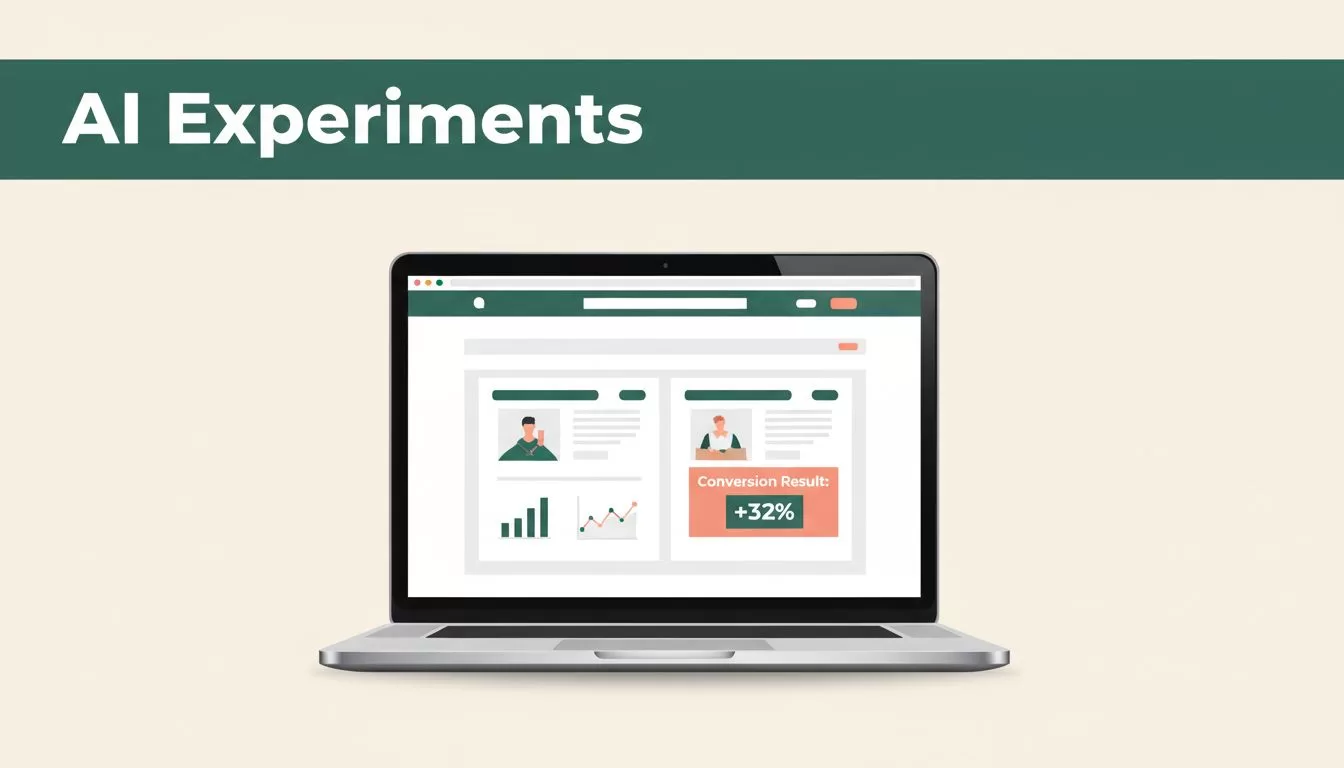
Most marketing teams don’t lack test ideas. They lack the time and technical support to launch them.
AI marketing experiments reduce that delay by helping teams turn a hypothesis into a working page variant faster. Mida.so adds a practical testing layer, allowing marketers to create and measure website changes without waiting for every front-end task to reach the engineering queue.
The right process still matters. Start with a clear business question, use AI to build the variation, then let reliable data guide the decision.
Key Takeaways
- Mida.so helps marketing teams create website test variants from plain-language instructions, screenshots, or Figma designs.
- A strong experiment starts with one clear hypothesis and one primary conversion metric.
- AI can speed up production, but it can’t replace QA, analytics setup, or sound decision rules.
- Mida.so fits landing page, messaging, layout, personalization, and conversion-rate tests.
- Start with a small, measurable experiment before expanding the workflow across your site.
Why AI Marketing Experiments Often Stall
A typical experiment begins with a simple idea: change the headline, shorten the form, move the product image, or add proof near the call to action.
The delay starts after the idea is approved. A marketer writes a ticket. A designer creates a mockup. A developer builds the change. Analytics adds event tracking. Someone checks mobile layouts. The test finally launches weeks later, when the original question may no longer matter.
This process creates two problems. First, teams run fewer experiments than their traffic could support. Second, the tests they do launch often contain too many changes to produce a useful answer.
AI can reduce the production delay, but it doesn’t make weak testing useful. You still need a defined audience, a measurable outcome, and enough traffic to interpret the result.
Tools used for AI conversion rate optimization can help with analysis, ideas, and test production. The operating rule remains the same: use AI to increase test velocity, not to remove judgment from the process.
Mida.so is built for this gap between idea and launch. It is an AI-powered A/B testing platform for marketing, growth, and CRO teams. Its MidaGX engine is designed to convert plain-language requests into website variants that can be previewed and tested on a live site.
That makes it useful for front-end experiments where the main challenge is implementation time. It doesn’t remove the need for a good hypothesis. It gives that hypothesis a faster path to production.
How Mida.so Turns a Brief Into a Test Variant
Mida.so uses a prompt-based workflow. You describe the change in plain English, identify the page area, and review the generated result.
A request might look like this:
“Make the product images larger, move the customer rating above the price, and keep the existing checkout button.”
That instruction gives the tool three practical constraints. It identifies the target elements, describes the intended change, and protects a component that shouldn’t move.

MidaGX can also use screenshots and Figma designs as inputs. This helps when your team has a visual direction but doesn’t have a ready-to-deploy version. A marketer can highlight a section with the platform’s pen tool, describe the required change, and inspect the generated code before launch.
The workflow matters because it keeps the experiment close to the original brief. You don’t need to translate every visual adjustment into a separate development ticket. You can move through the working version, review, and testing stages in one place.
Mida.so also supports common experimentation patterns such as A/B tests, URL redirect tests, multivariate tests, feature flags, personalization, and audience targeting. Use only the test type that matches the question.
An A/B test fits a comparison between two versions of a page. A redirect test fits a larger page or flow change. A multivariate test requires more traffic because it evaluates combinations of changes. Don’t select a complex test type when a simple split test can answer the question.
The platform’s Chrome extension can help teams prototype changes on websites and preview them quickly. Treat that preview as a working draft, not as proof that the test is ready. Check the actual page, responsive states, analytics events, and browser behavior before sending traffic.
A Practical Workflow for Your First Mida.so Experiment
Your first experiment should be narrow. Don’t test a new homepage, pricing model, and signup flow at the same time. Select one page and one decision.
1. Start with a measurable problem
Use evidence from analytics, session recordings, customer calls, or sales objections.
A useful problem statement sounds like this:
“Visitors reach the pricing page but don’t start a trial. The page may not explain what happens after signup.”
That statement is stronger than “Improve pricing page conversions.” It identifies the page, the behavior, and a possible reason.
Use your existing analytics to confirm the problem. Mida.so can help create the page change, but your data should provide the reason for testing it.
2. Write one hypothesis
Keep the structure direct:
“If we clarify the post-signup experience near the primary CTA, more qualified visitors will start a trial.”
The hypothesis needs one main change. If you include a new headline, a different CTA, three testimonials, and a shorter form, you won’t know which element affected the outcome.
3. Define the primary metric
Choose the action that connects to the experiment’s purpose. For a landing page, that could be form completion. For a product page, it could be add-to-cart rate. For SaaS, it could be trial starts or demo requests.
Add guardrail metrics when needed. A new button may increase clicks but lower completed signups. A personalization test may improve conversion for one audience while reducing performance for another.
Use AI CRO guidance as a reference for using AI in research and analysis. Keep your own measurement plan as the source of truth.
4. Build the variation in Mida.so
Describe the change with clear instructions. Include the target section, the new content, the elements that must stay unchanged, and any layout requirements.
Avoid vague prompts such as “Make this page better.” Use instructions that a designer or developer could execute without asking five follow-up questions.
You can also provide a screenshot or Figma design when the change depends on spacing, hierarchy, or visual placement. Review the output before moving forward.
5. Run QA before traffic
Test the variant on desktop and mobile. Check forms, links, buttons, images, menus, and dynamic content.
Review the page in the browsers your audience uses most. Confirm that analytics events fire correctly. Check that the original page still works for visitors outside the test audience.
Don’t skip this step because the change looks small. A broken form can invalidate the entire experiment.
6. Launch with a decision rule
Set the test duration and success criteria before you see the result. Decide what happens if the variant wins, loses, or produces an unclear outcome.
Mida.so can help with traffic allocation and experiment management. Your team still needs to decide when the evidence is strong enough to act. Don’t stop a test because of one good afternoon. Don’t keep a losing variant running because the idea felt promising.
Measure Results Without Losing Control
AI makes variant creation faster. Measurement keeps the work useful.
Connect Mida.so with the analytics and marketing systems your team already uses. The platform supports integrations with Google Analytics 4 and Google Tag Manager, along with website platforms such as Shopify, WordPress, Webflow, Wix, and WooCommerce.
Keep the tracking design simple. Name the experiment clearly. Record the audience, dates, page version, primary metric, and guardrails. Store the hypothesis beside the result so future tests don’t repeat the same question.
Separate three types of outcomes:
- Clear win: The primary metric improves without breaking a guardrail.
- Clear loss: The variant performs worse or creates a measurable quality problem.
- Inconclusive result: The test doesn’t provide enough evidence to choose either version.
An inconclusive result isn’t wasted work. It may show that the change was too small, the audience was too broad, or the page receives too little traffic for the question.
Use AI to summarize patterns, suggest follow-up ideas, or identify possible segments. Keep final decisions tied to observed behavior and business outcomes. A generated explanation is not the same as validated evidence.
Where Mida.so Fits in Your Marketing Stack
Mida.so fits best when your team needs to test front-end changes without turning every request into a development project.
Good starting use cases include:
- Landing page headlines and calls to action
- Pricing page layout and plan presentation
- Product image placement
- Signup and lead forms
- Social proof and trust elements
- Audience-specific messaging
- Campaign landing pages
- Early personalization tests
It is less suitable as a replacement for every product development system. Backend pricing logic, account permissions, database changes, and complex application behavior usually belong in your product or engineering stack.
Treat Mida.so as an experimentation layer. Keep source code, product rules, consent controls, and critical business logic in the systems responsible for them.
Review the current plan limits, integrations, privacy terms, and traffic model before rolling it out to multiple sites. Mida.so offers a free Sandbox option, while paid access and feature availability depend on the current plan. Your implementation team should verify those details against the latest product information.
A short evaluation is enough to make the decision. Pick one high-traffic page. Run one test. Compare the setup time, QA process, reporting quality, and workflow fit with your existing stack. You can also review current CRO tool discussions to see how marketers compare testing platforms in practice.
Build a Repeatable Experiment System
One successful test doesn’t create a testing program. A repeatable process does.
Create a shared experiment brief with six fields: problem, hypothesis, audience, variant, primary metric, and decision rule. Store the final result with the launch date and follow-up action.
Set a weekly planning session. Choose tests from known user problems, not from random design preferences. Limit each experiment to a change your team can explain in one sentence.
Mida.so can shorten the path from approved idea to live variant. Your team creates the advantage by choosing better questions and recording what each test teaches.
The strongest AI marketing experiments are not the ones with the most automation. They are the ones that produce a clear decision with controlled effort.
Conclusion: Turn Ideas Into Measurable Tests
Marketing teams lose time when every page change waits for a full development cycle. Mida.so gives you a practical way to create, preview, and run website experiments with AI assistance.
Start with one measurable problem, one hypothesis, and one primary metric. Use MidaGX to build the variation, complete the QA, and connect the result to your analytics workflow.
Start an experiment with Mida.so on a page that already receives meaningful traffic. A small test with a clear decision rule is the fastest way to judge whether the platform fits your operating process.
