Affiliate Fraud Detection With Rewardful: A Practical Control Plan
Affiliate fraud can turn a healthy referral program into a payout cleanup project. Affiliate fraud detection works when you check the customer, payment, attribution, and payout record together, not when you only watch clicks. Rewardful give...


Affiliate fraud can turn a healthy referral program into a payout cleanup project. Affiliate fraud detection works when you check the customer, payment, attribution, and payout record together, not when you only watch clicks.
Rewardful gives SaaS teams tracking, commission handling, refund adjustments, and self-referral checks. Your team still needs written rules, a review queue, and evidence for every disputed payout.
Start by defining what a valid referral looks like before you invite more affiliates.
Set the Rules Before You Review a Single Referral
Fraud controls fail when each case gets a different answer. Create operating rules that your affiliate manager, finance owner, and support team can follow.
State who can join, what traffic sources are allowed, when a commission becomes payable, and what activity triggers a review. Put these terms in the affiliate agreement and repeat the payout rules in onboarding.
Define a valid conversion
A valid referral is more than a tracked signup. It should meet your commercial rules.
For most SaaS programs, that means the customer:
- Used an affiliate link or another verified attribution method.
- Completed checkout with a successful payment.
- Is not the affiliate, an employee, or a related account where self-referrals are prohibited.
- Has not received a full refund, chargeback, or cancellation inside your hold period.
- Was acquired through an allowed promotion method.
Decide whether you pay on gross revenue or collected revenue. If a customer uses a discount code, calculate the commission on the amount actually paid. Don’t use list price when the invoice includes a coupon, account credit, or partial refund.
Set a payout hold that matches your refund risk
Rewardful can track commissions and payouts, but your payout timing is still a program decision. A short hold period may attract affiliates. It can also leave you paying for subscriptions that reverse days later.
Pick a hold period based on your billing cycle, refund policy, and chargeback history. Then apply it consistently.
A commission record is not proof of durable revenue. The payment and refund status decide whether the reward should survive.
Document exceptions. Enterprise customers may have delayed payment terms. Annual plans may have a longer refund window. A rule that ignores your own billing model creates false fraud flags.
Affiliate Fraud Detection in Rewardful: Know the Product Boundaries
Rewardful is built for SaaS affiliate and referral programs. Its affiliate tracking platform connects referral activity to customer and commission records.
The strongest documented fraud control is its self-referral workflow. Rewardful also adjusts commission records when a related payment is refunded, upgraded, or downgraded.

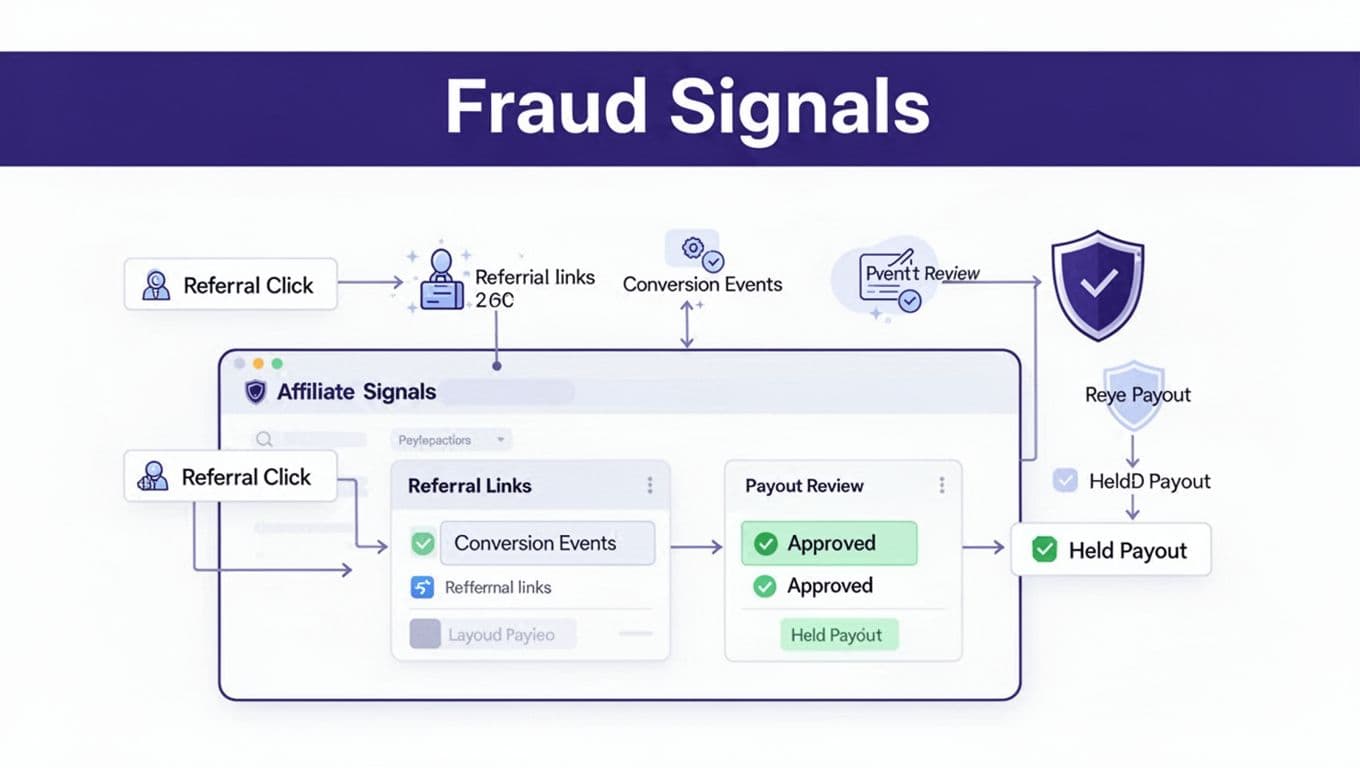
Use Rewardful’s self-referral review flow
Rewardful automatically identifies potential self-referrals and sends the program owner a notification. You can review the case as “Looks Good” or “Looks Suspicious.”
When the evidence supports fraud, deactivate or permanently delete the referral. Rewardful’s self-referral fraud detection is designed to stop that commission from reaching payout.
Review the match before you act. A founder may refer a legitimate customer at a company they advise. A consultant may purchase a client account using their own company card. Those cases need a policy decision and a stored explanation.
Let refund adjustments correct paid revenue
Rewardful’s automated refund handling adjusts commissions when the linked Stripe sale is refunded or changes value. A full refund removes the commission. A partial refund adjusts it.
This is useful, but it isn’t a full fraud engine. It won’t define your prohibited traffic sources, inspect every duplicate order, or decide whether a coupon was leaked. Those controls need your payment data, analytics, custom tracking, or manual review.
Build an Evidence Record for Every Suspicious Case
Don’t investigate fraud from a dashboard screenshot. Create one record per flagged referral. Use a spreadsheet, CRM table, or internal database. Keep the original values unchanged and record the reviewer decision separately.
A completed tracking event proves that the event occurred. It doesn’t prove the affiliate earned a payout.
Capture the fields that explain the conversion
Your review record should include enough detail to reproduce the decision later:
- Affiliate name, campaign, referral date, and conversion date.
- Customer email domain, account ID, plan, payment amount, and invoice status.
- Referral URL, landing page, coupon code, and traffic source when available.
- Refund, cancellation, chargeback, or downgrade status.
- Reason for review, supporting evidence, reviewer, decision, and decision date.
Use neutral statuses: Needs Review, Approved, Rejected, and Returned for Correction. Don’t mark a record as fraud because it looks unusual. Mark the evidence you found.
If your stack needs extra data points, use server-side events. Rewardful supports webhooks for events such as affiliate joins, referred customer signups, and created commissions. Your internal analytics can then compare account creation, checkout, payment, and retention without relying on browser data alone.
Watch for Patterns, Not One-Off Numbers
A high-converting affiliate isn’t automatically fraudulent. A product review site may send fewer visitors with stronger intent. A webinar partner may drive many paid accounts in a short launch window.
The concern starts when multiple signals point to the same problem. Rewardful identifies sudden spikes, unusual conversion paths, suspicious IP activity, and improbable behavior as patterns worth examining in its guide to affiliate fraud tactics.
Check traffic quality against conversion quality
Pull the affiliate’s clicks, trials, paid subscriptions, refunds, and retained revenue for the same period. Compare those figures with the affiliate’s own prior performance and your program average.
Review cases where you see:
- Large conversion spikes with no matching campaign, launch, or traffic increase.
- Repeated signups with similar email formats, payment details, devices, or company domains.
- Very short time between click, signup, and payment across many accounts.
- Many customers cancelling or requesting refunds soon after the commission is created.
- Referral activity that clusters around a few IP addresses, data centers, or locations that don’t match the campaign audience.
Don’t block an affiliate based on one metric. Ask for the traffic source, placement, promotion date, and audience description. A legitimate partner can usually explain a spike with a newsletter, product launch, comparison page, or paid campaign that your terms allow.
Treat coupon abuse as an attribution problem
Coupon abuse often looks like fraud, but the cause may be poor distribution controls. A code intended for one affiliate can reach coupon extensions, deal forums, or customers who were already in your pipeline.
Rewardful documentation reviewed here does not confirm a dedicated coupon-abuse control or a configurable coupon fraud rule. Track coupon use in your billing platform and analytics. Then compare the code, customer source, affiliate, landing page, and prior account history.
Flag codes that appear on customer renewals, employee purchases, direct traffic, or accounts created before the affiliate promotion. Don’t automatically reject every coupon conversion. First confirm whether your program credits coupons, links, or both.
Handle Legitimate Edge Cases Without Creating Bad Partner Relationships
A rigid fraud rule can punish good affiliates. Build exception paths before the first dispute arrives.
Process refunds and duplicate conversions correctly
A refund is not always fraud. A customer may have chosen the wrong plan, hit a product issue, or received a duplicate charge. Rewardful adjusts affiliate commissions for connected refund events, but the business reason still matters.
For duplicate conversions, verify the payment processor’s invoice or charge ID. Check whether two commission records point to the same customer, subscription, or order. Rewardful’s public materials reviewed here do not document a duplicate-conversion suppression setting.
Use your billing data or custom webhook logic to identify duplicate records before payout. Void the incorrect internal payout decision only after you confirm which invoice is valid. Keep both records and explain the correction.
Give high-volume affiliates a different review path
High volume creates more noise. It doesn’t create guilt.
Set a review threshold that scales with the partner. A partner sending 20 paid accounts per month needs a different baseline than a major integration partner sending 500. Compare current activity against that affiliate’s historical conversion rate, refund rate, payment success rate, and retained revenue.
Ask high-volume partners for campaign calendars and approved traffic sources. Pre-approve major launches when possible. This reduces false alerts and gives your team context before a spike appears.
Review, Contain, and Respond Before Payout
When a referral looks suspicious, stop treating it as a reporting problem. Open a case and follow the same sequence every time.
Use a simple investigation workflow
Start with the customer and invoice. Confirm that the account paid, the payment cleared, and the subscription wasn’t refunded or duplicated.
Next, check attribution. Compare the affiliate, referral date, coupon, landing page, and first-touch source. Then check relationship signals, such as matching email domains, payment details, company identity, or repeated account patterns.
Finally, record one of three outcomes:
- Approve the commission because the evidence supports a valid referral.
- Reject or reverse it because the evidence supports a policy violation.
- Keep it under review because the evidence is incomplete.
For a suspected self-referral, use Rewardful’s available review action and deactivate or delete the referral when the case is confirmed. For other patterns, hold the payout in your internal process while you investigate. Don’t claim Rewardful will automatically block every category of fraud.

Communicate decisions with evidence
Tell the affiliate what rule applied and what action you took. Keep the message factual. Don’t accuse someone of fraud when the record only shows an unresolved anomaly.
A clear response might state that the commission is under review because the referred account received a refund, duplicated an existing subscription, or appears connected to a prohibited self-referral. Ask for relevant campaign evidence and provide a decision timeline.
Keep support messages, invoice IDs, screenshots, and reviewer notes with the case. You need this trail when an affiliate disputes a reversal or a finance teammate checks a past payout.
Measure Approved Revenue, Not Affiliate Activity
Click volume is not program health. Nor is the number of commissions created.
Track referred customers, successful payments, cleared commissions, refunds, reversals, retained referred revenue, and total paid commissions. Separate pending, due, paid, and voided amounts in your reporting.
Use a compact monthly scorecard:
| Metric | What it tells you |
|---|---|
| Approved customers | Whether referrals become valid paid accounts |
| Refund and reversal rate | Whether commissions match collected revenue |
| Retained referred revenue | Whether partner traffic produces durable customers |
| Review minutes per case | Whether your controls create too much manual work |
| Paid commissions per affiliate | Where program spend is concentrated |
Review rejected cases by affiliate and campaign. If one channel produces self-referrals, weak trials, or repeated coupon issues, restrict that promotion method before you expand it.
A process that creates many commission records but requires hours of correction isn’t efficient. Measure the payouts your team accepts with little or no correction.
Build a Program Finance Can Trust
Rewardful gives you a practical base for affiliate tracking, self-referral review, and commission adjustments after refunds. Affiliate fraud detection still depends on your rules, payment evidence, and payout discipline.
Track real customer value. Keep exceptions visible. Pay commissions only when the referral can be traced to a valid customer and a cleared payment.

