Execute B2B SaaS CRO With Mida.so
Most B2B SaaS websites don’t have a traffic problem. They have a decision problem. Visitors arrive, compare options, and leave before requesting a demo, starting a trial, or reaching an activation event. B2B SaaS CRO gives you a repea...

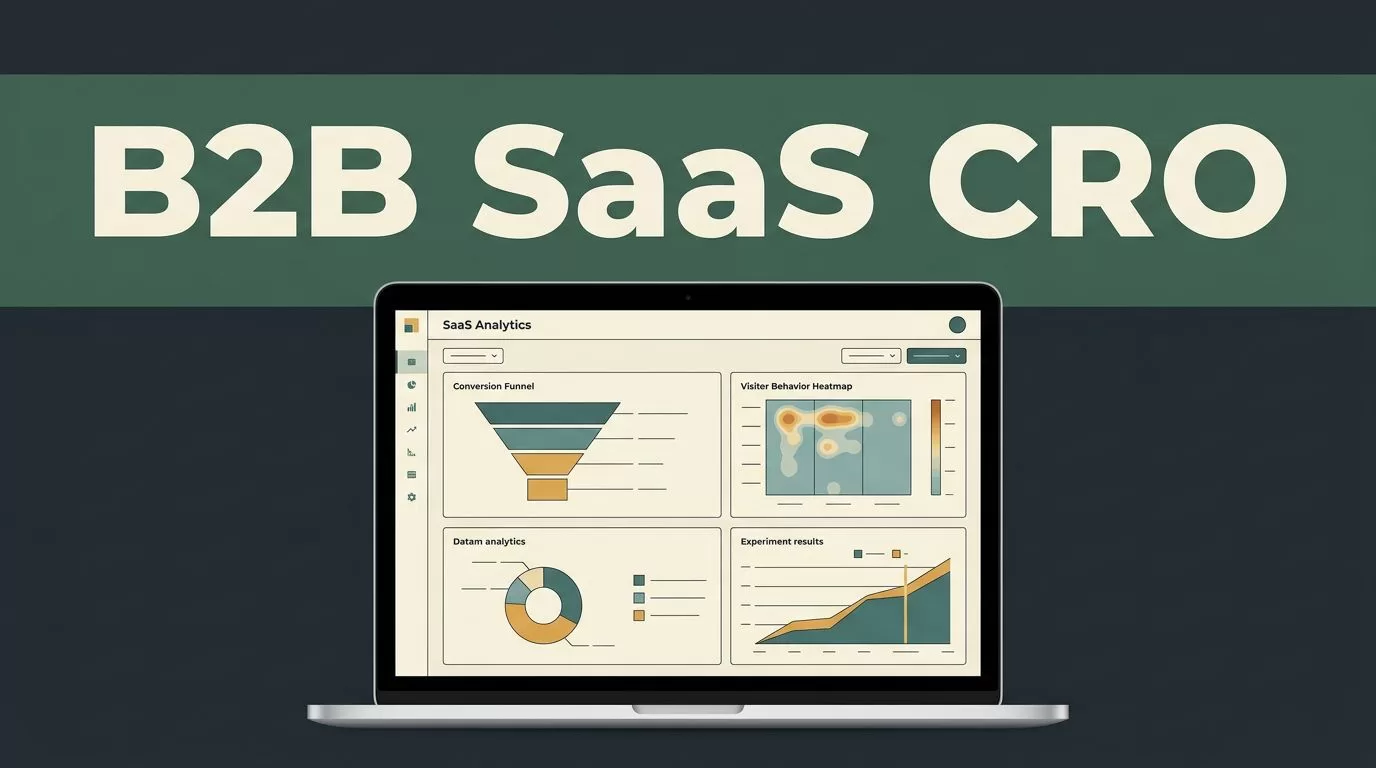
Most B2B SaaS websites don’t have a traffic problem. They have a decision problem. Visitors arrive, compare options, and leave before requesting a demo, starting a trial, or reaching an activation event.
B2B SaaS CRO gives you a repeatable way to find those breaks and fix them. Mida.so can help you connect visitor behavior, conversion data, and controlled experiments in one operating process. Start with measurement, then research, then testing.
Key Takeaways
- Define one primary conversion goal for each funnel stage before launching tests.
- Use Mida.so data to locate friction on high-intent pages.
- Write hypotheses around buyer objections, not personal design preferences.
- Judge tests with statistical and qualitative evidence.
- Track activation and product-qualified leads, not only form submissions.
Set the Measurement Plan Before You Test
CRO starts with measurement. A test without a clear success metric creates noise, not insight.
Map the path from first visit to revenue. A typical B2B SaaS funnel may include:
| Funnel stage | Primary action | Supporting signal |
|---|---|---|
| Website visit | Demo request or trial start | CTA click and form completion |
| Sign-up | Account creation | Email verification and setup progress |
| Product use | Activation event | Core feature adoption |
| Sales qualification | Product-qualified lead | Usage threshold or high-intent behavior |
Pick one primary metric for each experiment. Use secondary metrics to explain the result. For example, a homepage test may use completed demo requests as the primary metric, with CTA clicks, form starts, and sales-qualified leads as supporting measures.
Don’t treat every conversion as equal. A shorter form may produce more submissions while reducing lead quality. A new pricing page may lower trial starts but increase activation among new accounts. Your measurement plan must account for both volume and downstream value.
Mida.so should hold the behavioral and experiment data your team uses for these decisions. Connect each test to a page, audience, event, and date range. Name events consistently. “Demo submitted” and “Request a demo” shouldn’t refer to different actions unless they truly measure different steps.
You also need a baseline. Record the current conversion rate, traffic source, device mix, new versus returning visitors, and relevant segment data before changing the page. B2B conversion rate guidance from Unbounce can help your team frame the difference between a site conversion and a qualified business outcome.
A CRO program fails when the team celebrates a metric that sales and product don’t use.
Set a reporting rhythm before launch. Review early data for tracking errors, then review completed tests on a fixed schedule. Avoid changing the success definition after seeing the results.
Use Mida.so to Find Conversion Friction
Your first job isn’t to create a variation. It’s to find the point where buyer intent drops.
Start with your highest-value pages. Review the homepage, product pages, pricing page, comparison pages, and demo form. Look for pages that receive qualified traffic but produce weak action rates. A low-converting page with little traffic is rarely your first priority.
Use the behavior data available in Mida.so to compare users who convert with users who leave. Check scroll depth, CTA interaction, form abandonment, repeated visits, and the path users take before conversion. Pair those signals with sales call notes, support tickets, and customer interviews.
The numbers show where the problem occurs. Qualitative evidence helps explain why.
A visitor may stop scrolling before the proof section because the page is too long. They may reach the demo form but abandon it after seeing a required phone number. They may click pricing repeatedly because the plan differences aren’t clear. Each pattern supports a different test.
Segment the findings by intent. A visitor arriving through a branded search behaves differently from one who reaches a technical integration page. A founder evaluating a simple workflow has different questions from an enterprise buyer checking security requirements.
Review conversion by:
- Traffic source and campaign
- Company size or account segment
- New and returning visitors
- Device type and browser
- Landing page and user path
- Industry, region, or use case where reliable data exists
Don’t overread a small segment. Use segmentation to form questions, not to manufacture certainty. A SaaS conversion discussion on Reddit shows why teams often compare headline conversion rates without defining traffic quality, funnel stage, or visitor intent.
Mida.so can help organize the evidence, but your team still needs business context. A page may convert poorly because the offer is weak, not because the layout needs work.
Build Testable Hypotheses Around Buyer Intent
A useful hypothesis links a problem to a change and an expected outcome.
Use this format:
Because [observed problem], changing [specific page element] should improve [primary metric] for [defined audience], without harming [guardrail metric].
Avoid vague ideas such as “make the page clearer.” Write a change someone can implement and measure.
Examples for B2B SaaS include:
- Because visitors reach the pricing page but don’t request a demo, adding plan-based use cases above the form should increase completed demo requests from returning visitors.
- Because trial users create accounts but don’t complete setup, showing the first activation step immediately after sign-up should increase activation within seven days.
- Because enterprise prospects leave the security page quickly, placing compliance details and a security contact option near the top should increase qualified demo requests from enterprise traffic.
- Because visitors click the integration section but don’t start a trial, adding implementation time and supported workflow examples should increase trial starts from integration-page visitors.
Each hypothesis needs an audience rule. “All visitors” is often too broad. Start with the segment that shows the problem and has enough traffic for a useful test.
Define the guardrails before launch. For a demo page, guardrails may include lead quality, form completion time, and sales acceptance. For a free trial, monitor activation, invited teammates, and core feature use. A test that increases sign-ups but reduces activation requires a different decision from one that improves both.
Mida.so gives you a place to compare the control and variation when the required testing setup is available in your workspace. Keep the hypothesis, audience, primary metric, guardrails, and decision rule in the same experiment record or project documentation.
Don’t test five unrelated changes at once on a low-traffic page. You won’t know which change caused the result. Start with the highest-confidence problem, then isolate the variable that addresses it.
Run Experiments With Statistical Discipline
A/B testing is not a vote between two designs. It is a comparison between observed outcomes under defined conditions.
Before launching in Mida.so, check the traffic source, conversion volume, current rate, and expected test duration. Your team needs enough observations to detect a meaningful change. If the page receives little traffic or few conversions, a large redesign may take too long to evaluate.
Set the primary metric before launch. Choose a minimum change worth acting on. Set a guardrail for lead quality or activation. Decide how you’ll handle returning visitors, repeat conversions, and users who enter through multiple pages.
Don’t stop a test because one variation leads after two days. Early results move easily when the sample is small. Daily checking is useful for broken tracking, but it shouldn’t become a reason to declare a winner.
Account for:
- Sample size and conversion volume
- Test duration and weekly traffic patterns
- Statistical significance or confidence intervals
- Multiple segments and multiple goals
- Novelty effects and returning visitors
- Seasonality, campaigns, and product releases
Statistical significance doesn’t make a weak test useful. A tiny improvement may be statistically reliable but too small to justify development effort. A large observed lift may remain uncertain when the sample is limited. Review the size of the change, the range of plausible outcomes, and the commercial value.
Qualitative checks add another layer. Read form responses. Review session behavior when available. Ask sales whether the new leads match the target account profile. Check whether trial users complete the action that defines activation.
A second SaaS conversion discussion is a useful reminder that teams often jump to button colors and headline changes before confirming the actual source of friction. Your Mida.so workflow should force the opposite order: observe, hypothesize, test, then interpret.
When a result is inconclusive, record it as inconclusive. Don’t turn every test into a winner or loser. An inconclusive result may mean the change was too small, the page lacked traffic, or the hypothesis addressed the wrong problem.
Connect Website Conversion to Activation
A B2B SaaS CRO program should continue after the form submission or trial start.
Website conversion is an early signal. Activation shows whether the user reaches a meaningful product outcome. Product-qualified leads add another layer by identifying accounts that show buying intent through product behavior.
Define the activation event in operational terms. It could be a completed workflow, a connected data source, an invited teammate, a published report, or repeated use of a core feature. The right event depends on the product. Don’t label account creation as activation if the user hasn’t reached value.
Compare website changes against these downstream measures. A landing page variation may increase trial starts but reduce the percentage of users who complete onboarding. A demo page may produce fewer leads but more sales-accepted opportunities. These results change the decision.
Use a simple review sequence:
- Confirm that the test changed the intended website action.
- Check lead quality, trial completion, and activation behavior.
- Compare results by meaningful audience segments.
- Review sales and customer feedback.
- Roll out, revise, or retire the change based on the full evidence.
Store the result in Mida.so or your connected reporting system. Include the original hypothesis and the decision. This prevents your team from repeating failed tests and helps future marketers understand what the data actually showed.
The strongest CRO teams also connect experiment names to CRM and product analytics records. That connection lets you answer the question that matters: did the page create more valuable customers, or only more activity?
Conclusion
B2B SaaS CRO works when your team treats conversion as a measurable operating process. Use Mida.so to connect page behavior and experiment results, then connect those results to demo quality, trial activation, and product-qualified leads.
Start with one high-intent page and one clear hypothesis. Measure the baseline, test a focused change, review statistical and qualitative evidence, and keep the result tied to revenue quality. More sign-ups matter only when users continue toward product value.

