Implementing Effective CRO Strategy Tools
You want more revenue from your existing traffic. Many businesses burn budget on customer acquisition while ignoring the friction points on their own sites. Implementing robust CRO strategy tools allows you to identify these bottlenecks, te...
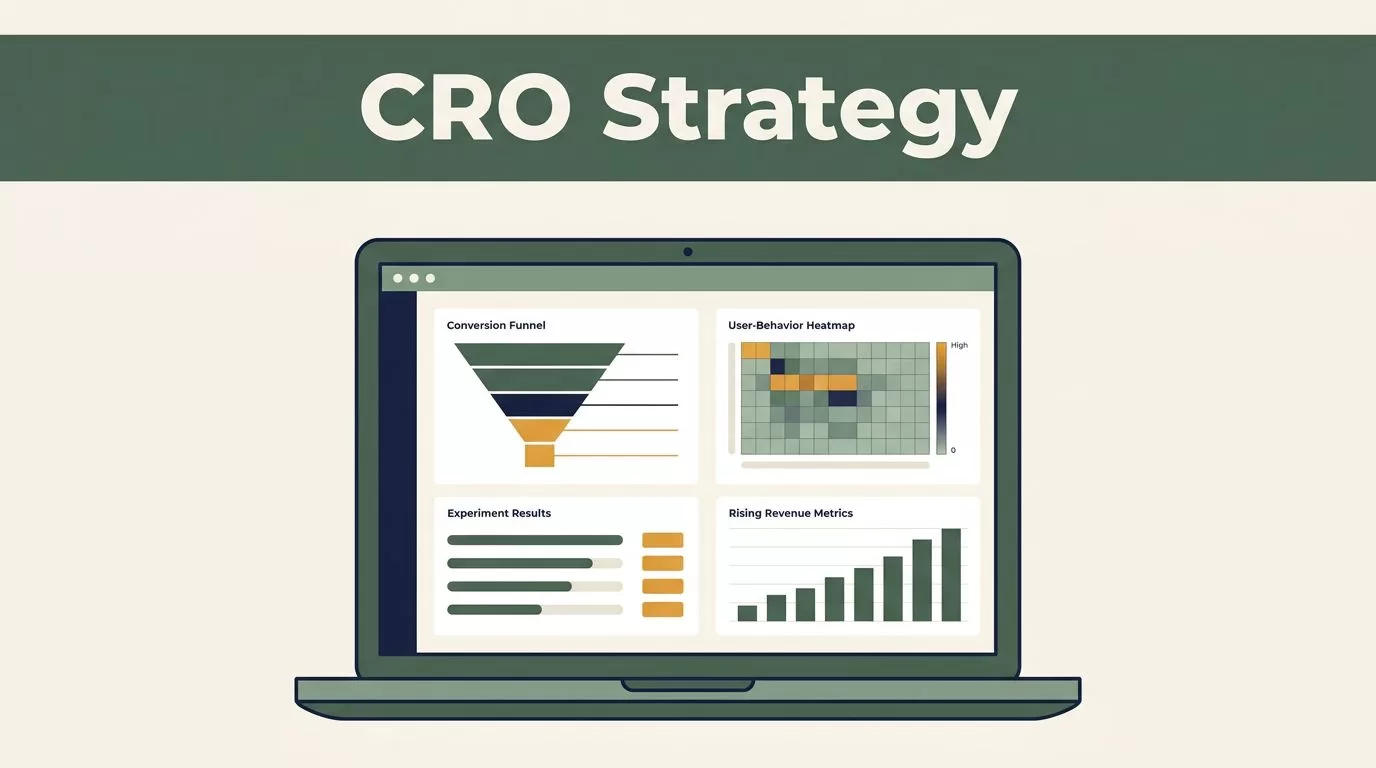
You want more revenue from your existing traffic. Many businesses burn budget on customer acquisition while ignoring the friction points on their own sites. Implementing robust CRO strategy tools allows you to identify these bottlenecks, test potential fixes, and quantify the revenue impact of every change.
Conversion rate optimization isn’t about guesswork or gut feelings. It is an engineering discipline that requires precise measurement, controlled experimentation, and constant iteration. When you adopt a systematic approach, you stop guessing what works and start building an evidence-based roadmap for growth.
Getting started requires moving beyond basic vanity metrics. You need to focus on behavior, intent, and revenue. Let’s look at how to structure your implementation to avoid common pitfalls like low statistical significance and performance degradation.
Key Takeaways
- Focus on Revenue Metrics: Prioritize data that directly ties user behavior to actual sales or conversions, rather than superficial clicks.
- Maintain Performance: Choose tools that integrate directly into your stack without slowing down page load times, as speed is a direct factor in conversion.
- Establish Statistical Rigor: Never conclude an experiment until you reach statistical significance to avoid making changes based on noise.
- Connect Qualitative and Quantitative Data: Use session replays and heatmaps to explain the “why” behind the conversion numbers you see in your analytics.
Planning Your CRO Approach
Strategy begins with identifying high-value pages. You need to know where your visitors drop off before you can optimize for higher engagement. Review your existing sales funnel to pinpoint the specific stages where traffic volume is high but conversion is low.

Successful optimization relies on a solid conversion rate optimization (CRO) strategy that accounts for your target audience’s specific needs. Use your analytics platform to segment data by device, traffic source, and user behavior. This segmentation reveals if your conversion issues are universal or specific to a sub-group.
Set clear, measurable goals for each experiment. If you expect a change to improve checkout completion, that is your primary metric. Secondary metrics might include cart abandonment rates or time spent in the checkout funnel. By keeping goals narrow, you make it easier to isolate the impact of specific changes.
Measuring User Behavior
Once you identify the weak spots, you need to see exactly what users are doing. Standard analytics tell you that a user left a page, but they don’t tell you why. Behavioral tools provide the context missing from your dashboard.

Use conversion heatmaps to visualize which page elements actually drive action. Effective heatmaps distinguish between interactions that contribute to revenue and simple non-converting clicks. This distinction is vital when performing an ecommerce conversion rate optimization audit.
Session replays are another essential component. Tools like Mida.so provide order-level session recording, which allows you to link a specific Shopify order or abandoned cart directly to a recording of that session. Seeing the checkout process from the user’s perspective reveals friction points—like broken form fields or unclear error messages—that aren’t captured by aggregate data.
Deploying A/B Experiments
After identifying a problem, formulate a hypothesis. A strong hypothesis follows a simple format: “If we change X, then Y will happen because of Z.” For example, if you change the primary checkout button color, you expect a higher click-through rate because of increased visual contrast.

Use a testing engine to deploy your variations. Tools that offer visual editors make it easy to push changes without constant developer intervention. However, prioritize platform-native tools that ensure your test variants don’t cause layout shifts or load speed penalties. A slower site will kill your conversion rate regardless of how well-designed your test variant is.
Monitor your experiments for statistical significance. It’s tempting to stop a test early when you see positive results, but this leads to false positives. Wait until the data set is large enough to confirm that your results are not due to chance. To learn more about how to structure these initiatives, review the fundamentals of conversion rate optimization.
Managing Data Quality and Risks
Data integrity is the bedrock of your optimization program. Ensure your tracking is consistent across all pages and checkout steps. If your tracking breaks, your results are worthless. Regularly audit your tags and integration points to confirm that revenue data flows accurately into your reporting.
Watch out for sample size issues. If you have low traffic volume, you need to test high-impact changes rather than minor tweaks. Testing button text on a page with ten visitors per day will take months to reach significance. In these cases, focus your testing efforts on high-traffic landing pages or critical funnel steps to get faster, more reliable data.
Always account for external variables. Seasonality, marketing campaigns, or even site outages can skew your test results. Run your experiments long enough to account for a full business cycle—typically a full week—to ensure your results are not just a reflection of weekend versus weekday behavior.
Integrating AI in Optimization
Modern tools increasingly use AI to augment human decision-making. You can now use AI to generate test variants or manage experiments via interfaces like the Model Context Protocol. These features accelerate the pace of your testing program, but they do not replace the need for careful oversight.
AI assistants are excellent for drafting content variations or identifying potential test targets based on traffic patterns. Use them to maintain velocity in your testing roadmap, but always review the output against your brand standards and specific business goals before deployment.
Finally, prioritize tools that allow for revenue impact modeling. Being able to estimate the potential conversion lift and calculate the cost of inaction helps you secure stakeholder buy-in. When you can show that a 1% improvement in checkout conversion equals a specific dollar amount in recovered revenue, your CRO program gains the visibility and support it deserves.
Conclusion
Optimization is a long-term investment in your business performance. You don’t need a massive team to run successful experiments, but you do need a disciplined process. By focusing on behavioral data, maintaining strict statistical standards, and prioritizing revenue-linked metrics, you move your site from a static asset to a dynamic growth engine.
Start by auditing your funnel today to find your most significant area of revenue leakage. Implement tracking that connects user actions to real financial outcomes. Once you have a reliable baseline, run controlled experiments and let the data dictate your next steps. Consistency matters more than the complexity of your tests.
