How I Track Cybersecurity Trends With Exploding Topics
Digital security moves fast, but search behavior often moves first. If I wait for headlines, I usually arrive after budgets, vendors, and attack methods have already shifted. That’s why I use Exploding Topics as an early warning lens,...

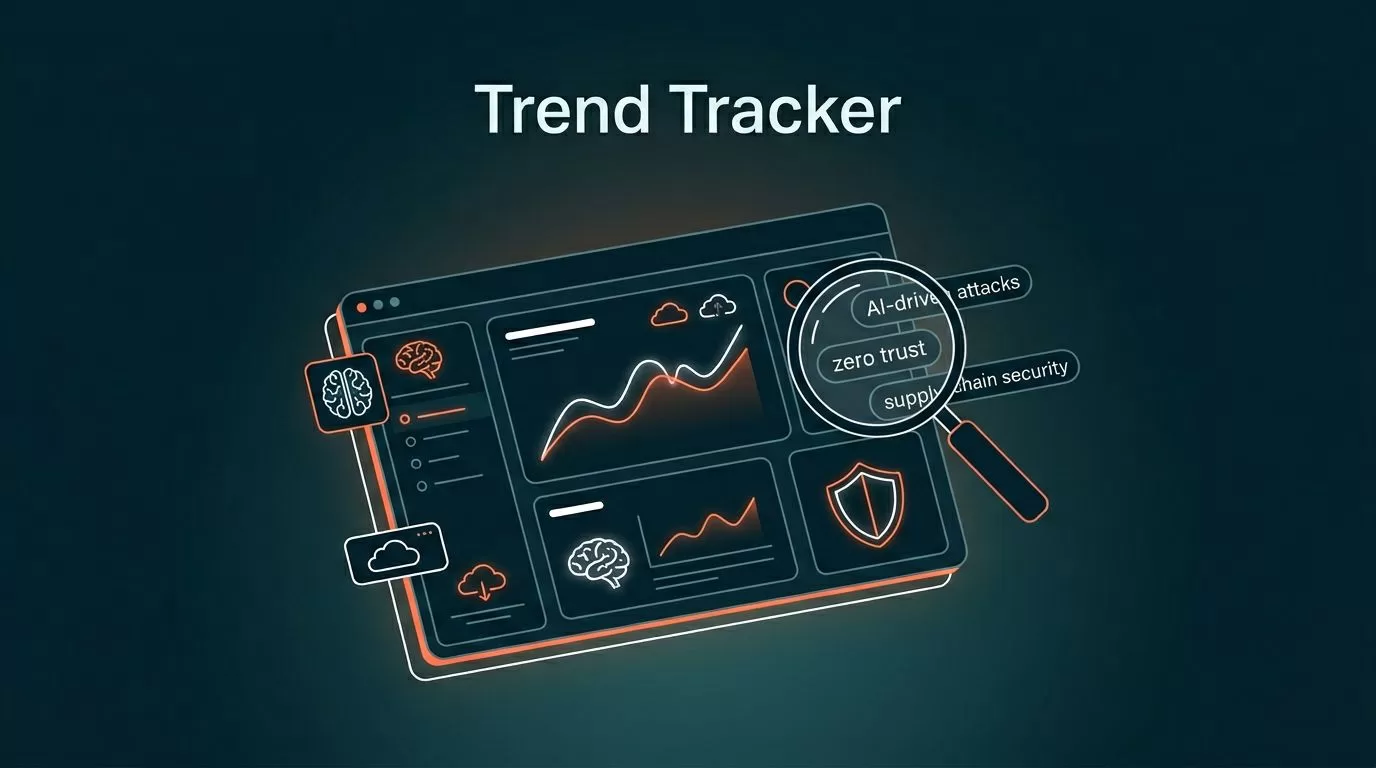
Digital security moves fast, but search behavior often moves first. If I wait for headlines, I usually arrive after budgets, vendors, and attack methods have already shifted. That’s why I use Exploding Topics as an early warning lens, not a crystal ball.
In April 2026, the clearest signals point to artificial intelligence (AI)-driven attacks, cloud controls, privacy tech, tighter compliance, and new abuse of suppliers and edge devices. The challenge is knowing which signals matter and which ones fade in a week. I sort that out by watching trend shape, related searches, and buyer intent.
Here’s how I track those shifts without getting fooled by noise.
Key Takeaways
- Track cybersecurity trends early by monitoring search behavior on Exploding Topics, focusing on steady growth in terms like shadow AI, zero trust, supply chain security, and AI governance rather than vendor names or hype.
- Prioritize 2026 themes including AI-driven attacks, cloud controls, privacy-enhancing technologies, stricter compliance, and shifting attack paths like vulnerability exploits and supplier abuse.
- Separate real signals from noise using longer search curves, related buyer intent (pricing, tools, policies), practical language, and outside validation like reports from the World Economic Forum and Check Point.
- Group rising topics into clusters (e.g., incident response with zero trust, or shadow AI with DLP) monthly to spot broader shifts and move from curiosity to actionable patterns.
I start with behavior, not vendor names
I don’t begin with a product search. I begin with movement.
When a term starts climbing, it often points to evolving cyber threats impacting digital security before it points to a company. That gives me a cleaner view of the market. Inside Exploding Topics, I look for phrases tied to attacks, controls, or policy changes, where machine learning (ML) is often the engine behind the trends being tracked. If I see growth around terms like shadow AI, zero trust, or supply chain security, I know the topic deserves a closer look.
I use the same habit I rely on for spotting emerging cybersecurity startups early, because trends and companies often rise together. The search curve tells me where attention is going. The surrounding terms tell me whether that attention is useful.


Then I compare the curve with context. Is the topic rising across months? Are related searches moving too? If the answer is yes, I keep watching.
The cybersecurity themes I watch first in 2026
In 2026, I keep seeing the same cluster of pressure points. First, attack paths are shifting toward vulnerabilities and supply chain attacks. Second, AI is creating new risk, especially around agentic tools and careless data use. Third, cloud security teams are under pressure to watch every login and every workload. Fourth, data privacy tools are getting more attention. Fifth, compliance keeps getting stricter.
That matches the direction of the World Economic Forum’s Global Cybersecurity Outlook 2026 and Check Point’s 2026 cybersecurity trends report. Both point to sophisticated cyberattacks that are faster and more automated, the overlap between cybersecurity trends and artificial intelligence (AI), and more strain on defenders facing cyber threats.
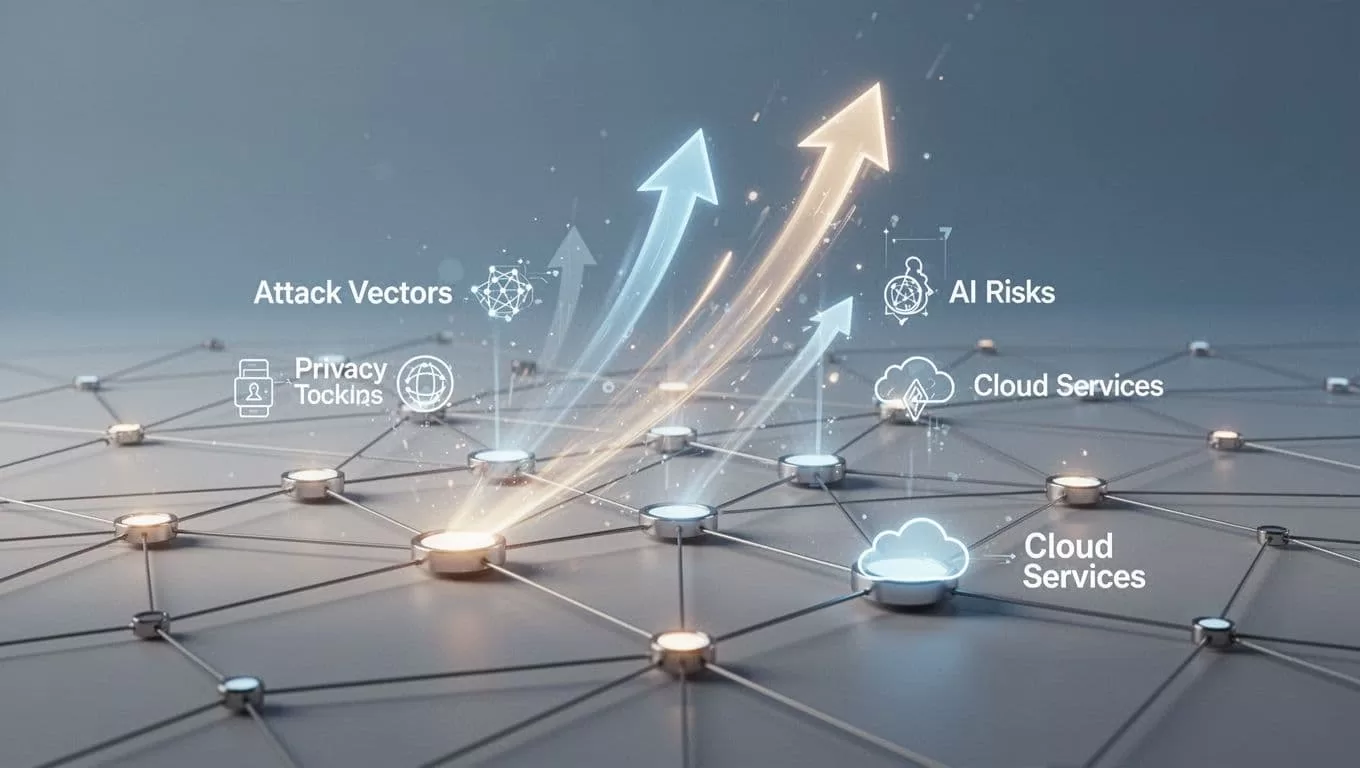
Inside Exploding Topics, I pay close attention to terms like vulnerability exploits, micro-segmentation, privacy-enhancing technologies, AI governance, and zero trust. I also watch for terms that sit beside them. If “shadow AI” climbs with “data loss prevention,” that says more than one isolated spike.
That pairing tells me the market is moving from curiosity to action.
I separate hype from useful trend growth
Hype is loud. Real demand leaves a trail.
This split helps cybersecurity professionals separate hype from reality in emerging threats.
I use the same filters I use when I track fast-growing cybersecurity industries in 2026. A topic needs more than a sharp week or two.
- Longer curve means I want steady growth across months (like ransomware attacks), not a one-day burst; machine learning (ML) tools help process these larger data sets.
- Related intent means I look for searches around pricing, tools, controls, and policy tied to phishing variants or social engineering.
- Buyer language means I care when the words sound like work (such as countermeasures for deepfake technology), not curiosity.
- Outside proof means I check vendor chatter, hiring, and report coverage.
If the chart rises but the surrounding terms stay vague, I treat it as noise.
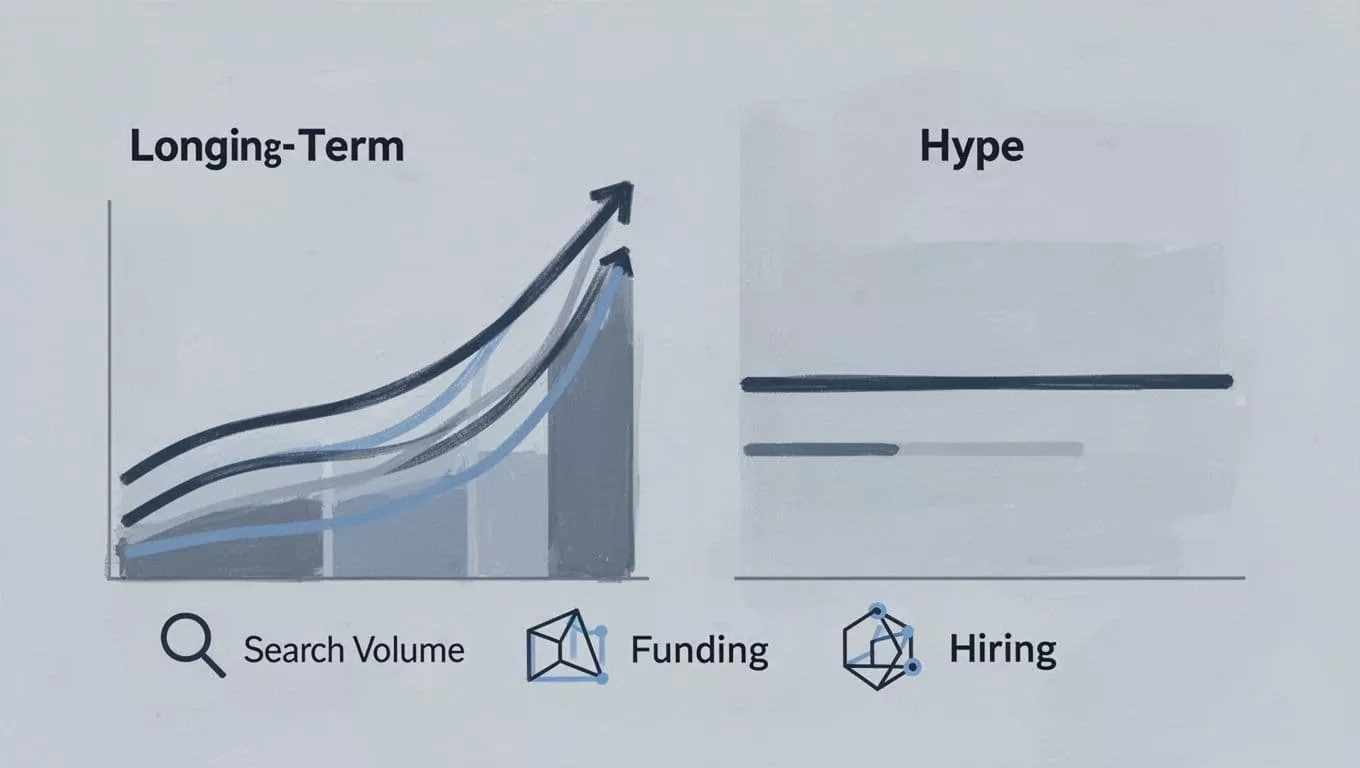
If a term rises but the nearby language stays thin, I slow down. If the topic keeps growing and the search terms get more practical, I pay attention.
That simple split saves me from chasing buzz.
My monthly routine keeps the signal clean
My routine stays simple. I save a handful of topics each week, then group them by problem.
One cluster might include incident response, cloud monitoring, zero trust, and micro-segmentation. Another might include shadow AI, DLP, and AI policy tools. A third might cover breach rules, consent, reporting deadlines, data privacy, and cyber threats. These groupings often highlight device-related shifts in the internet of things (IoT).
I like that grouping because it shows whether a trend stands alone or supports a bigger shift.
If several terms rise together, I treat them as one theme, not a fluke. I also watch whether the words become more specific. When people move from “threat detection” to “extended detection and response,” the buying stage is closer.
That’s where Exploding Topics helps me most. It keeps me from staring at one shiny term in isolation. Instead, I see the web around it.
Frequently Asked Questions
Why use Exploding Topics for cybersecurity trends?
Exploding Topics spots rising search behavior before headlines or vendor shifts, giving an early warning on threats like AI risks and cloud security. It uses machine learning to track trend shapes, related searches, and buyer intent, helping filter noise from real market movement. This approach keeps you ahead of budgets and attack methods.
What are the top cybersecurity themes to watch in 2026?
Key signals point to AI-driven attacks (especially agentic tools and shadow AI), cloud security pressures, supply chain vulnerabilities, privacy tech like data loss prevention, and tighter compliance rules. These align with reports from the World Economic Forum and Check Point on faster, automated cyberattacks. Watch for clustered growth in terms like micro-segmentation, zero trust, and AI governance.
How do you separate hype from real trend growth?
Look for steady curves over months, not one-week spikes; check related searches for practical buyer language around tools, pricing, and policies; validate with vendor chatter, hiring, and reports. If surrounding terms stay vague, it’s noise—real demand shows in actionable clusters. This filter matches habits for spotting fast-growing industries.
What’s your monthly routine for tracking trends?
Save rising topics weekly, then group them by problem clusters like cloud monitoring with zero trust or AI policy with DLP. Watch if terms evolve from general (threat detection) to specific (extended detection and response), signaling buying stages. This reveals bigger shifts beyond isolated spikes.
The payoff is better timing, not perfect prediction
Exploding Topics gives me the earliest shape of a cybersecurity shift in the digital ecosystem. It won’t tell me who wins, but it does show where attention is gathering.
In 2026, I care most about signals tied to attack paths, cloud controls, privacy tools, AI governance, regulatory compliance, blockchain technology, multi-factor authentication, advanced persistent threats to critical infrastructure from malicious actors, and surging cybercrime. When those terms rise together, I know the market isn’t only talking. It’s moving.
That’s the point. I don’t want noise from cybercrime. I want patterns I can act on to prevent data breaches and distributed denial of service attacks.

