How I Spot Early Stage Consumer Trends With Exploding Topics
Some trends look loud because they are already crowded. The smarter move is to catch the small shifts first, while the market still feels quiet. I use Exploding Topics to spot those early stage consumer trends before they turn into everyone...
Some trends look loud because they are already crowded. The smarter move is to catch the small shifts first, while the market still feels quiet. I use Exploding Topics to spot those early stage consumer trends before they turn into everyone’s next talking point.
In April 2026, I’m watching value hunting, phygital shopping, and AI-assisted product discovery. Those shifts matter because they change how people search, compare, and buy. When I read them well, I can plan content, offers, and research before the rush starts.
The trick is not staring at a chart. The trick is reading the shape of human behavior.
What I look for first in Exploding Topics
I start by scanning for clusters, not single spikes. One hot term can be noise. A group of related terms often shows a real habit forming.
That’s why I like to compare the feed with Exploding Topics’ methodology page, because I want to know how the signal gets built. I also check the April 2026 trending topics list when I want a quick read on what’s rising right now.
This month, I keep seeing the same consumer patterns repeat. People want cheaper options, easier buying, and faster answers from AI. That shows up in searches for deals, private labels, second-hand products, one-click perks, and tools that help shoppers decide faster. It also shows up in the way Gen Z shops with tight budgets and less patience.

I don’t treat any of that as proof on its own. I treat it like a weather map. A cloudy sky tells me rain may come, but I still look for wind, pressure, and darkening edges.
That’s why I often pair this scan with my process for spotting trending business ideas. It keeps me from mistaking interest for demand.
Fad or durable trend? I test the shape
A fad pops fast and then fades. A durable trend moves slower, spreads wider, and keeps finding new use cases. I care about the second one.
| Signal | Fad | Durable trend | My read |
|---|---|---|---|
| Search curve | Sharp spike | Steady climb | I trust the climb |
| Buyer motive | Curiosity | Pain, savings, convenience | I look for need |
| Where it appears | One app | Search, reviews, stores | I want repeat echoes |
| Product spread | One item | Many variants | Branching matters |
For example, AI shopping helpers may look trendy at first. Yet if people keep using them to compare prices and save time, the habit can last. The same goes for value hunting. When buyers keep trading down, mixing brands, or choosing smaller packs, that’s not a mood. That’s behavior.
I also watch for branching. If a trend grows from one product into several related products, I pay attention. A simple example is hydration. It can move from bottles into powders, refills, subscriptions, and travel kits. That kind of spread feels more durable than a single fad.
When a topic starts branching into products, I switch to how I track new ecommerce niches with Exploding Topics data. It helps me decide whether the signal can support a real offer.
If the trend only lives on one platform, I stay cautious. If it keeps showing up everywhere, I lean in.
How I validate a trend before I trust it
Once Exploding Topics gives me a lead, I test it against the outside world. I want at least two or three signals pointing the same way. Otherwise, I assume I’m looking at noise.
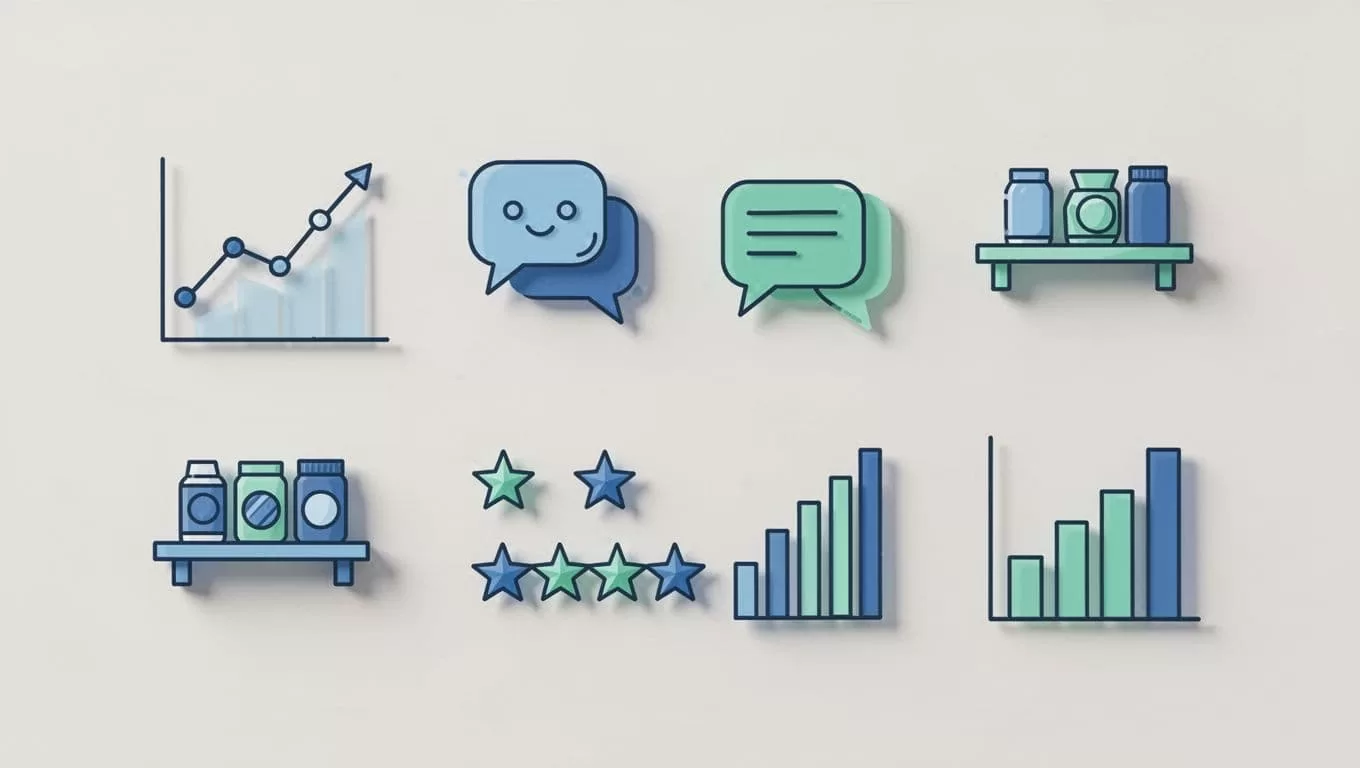
- I check search demand over time.
I use Google Trends and keyword data to see if interest keeps rising across months. A clean climb matters more than a one-week jump. - I read social chatter.
I scan Reddit, TikTok comments, YouTube replies, and LinkedIn threads. I’m looking for repeated pain, wish lists, and workarounds. - I browse marketplaces.
I check Amazon, Etsy, Walmart, and niche stores. I want to see what people buy, what gets bundled, and what’s still missing. - I study reviews.
One-star and three-star reviews tell me where products fail. If the same complaint keeps showing up, I know the pain is real. - I compare competitors.
I look at pricing, product pages, ad angles, and claims. If everyone sounds identical, I may have room for a sharper angle.
This is where current 2026 behavior matters. People are shopping with more price pressure, and they want fewer steps. I see it in value-first buying, AI-assisted search, and the pull toward simple checkout experiences. Trends like that become stronger when they show up in search, social, and stores at the same time.
If I need a tighter content angle, I also use low-competition keywords via Exploding Topics. That helps me turn a rising topic into something I can actually publish, rank, or test.
What I do once the signal looks real
A clean signal is only useful if I act on it. For marketers, I turn it into a content cluster, a newsletter angle, or a new landing page. For founders, I turn it into a small test offer or a waitlist. For researchers, I turn it into a watchlist with monthly check-ins.
I keep the first move narrow. If a trend is about AI shopping, I don’t build a giant strategy deck. I test one use case, one audience, and one message. If a trend is about value hunting, I look for the exact tradeoff people want, such as cheap, fast, or premium with less friction.
That approach saves time. It also keeps me honest. A trend should earn more attention after it passes validation, not before.
If I had to reduce the whole process to one line, it would be this: Exploding Topics helps me spot the spark, but outside validation tells me whether it can burn.
When I watch early stage consumer trends well, I stop chasing noise and start seeing where demand is forming. That’s the edge.
